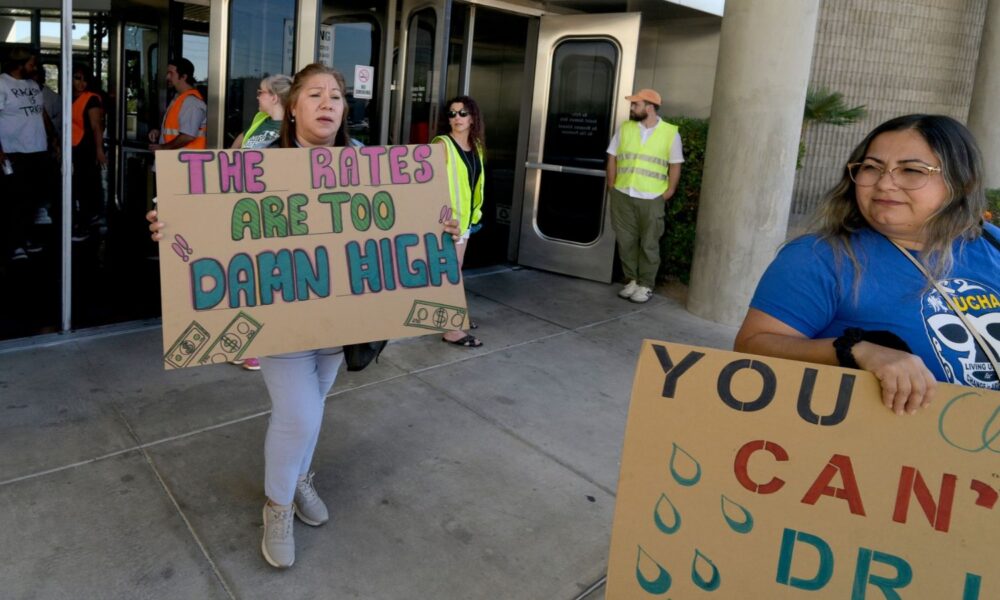

The AI boom—and consequential rush to build a staggering number of data centers across the country—puts electric companies and everyday consumers smack-in-the-middle of an affordability crisis.
The sharp growth of data centers creates unprecedented impacts on our electricity supply. Because electric companies are regulated monopolies—which, in theory, means stricter government control over prices— maybe, just maybe, these companies will protect you and me from paying more on our electric bills. The signs so far don’t look so good, especially on power plant costs.
Utilities crave the growth of data denters
When a data center developer unfurls their blueprints and tells the local electric company it wants to become a customer, big things start to happen at the electric company. From the business perspective, electric utility companies welcome the data centers’ ambitions to be the largest customers in their history. They see data centers as a once-in-a-lifetime opportunity to dramatically increase sales, investment, and profits. For scale, the data centers planned by Amazon is said to need 44 GW of power. That’s roughly the present electric use in all of New York and New England, combined!
Electric companies need to build transmission infrastructure and new power plants to be able to supply these data centers (too often defaulting to fossil fuels, despite UCS research proving renewables could meet these needs). Electric infrastructure construction must keep pace to protect everyone’s electric power reliability. There are already some very real questions about how the utility industry can build the infrastructure fast enough to allow all this growth, or keep the lights on if the growth is not managed.
The answer isn’t only addressed through money, but this blog will focus on who really pays.
The amount of money required
The estimates of how much money is required for the projected AI data center plans require assumptions a few basic aspects, from replacement of obsolescent AI chips to the performance or success of AI business models. I see the optimists speculate as much as $7 Trillion will be spent over the next decade for data centers and grid needs, while others indicate that data center borrowing is already distorting the bond market and the stock market.
With expectations that AI data centers are going to require so much construction based on so much debt, we need to scrutinize what, if any, protective measures the electric companies are taking.
Electric companies require new infrastructure to serve large data center customers, specifically transmission lines and power plants, and the revenue to pay for both these kinds major grid investments. Accepting the data center as a customer requires the transmission side of the electric company to get busy.
In my earlier blogs, I uncovered billions of dollars in new plans for transmission facilities which have no other purpose or use than to connect enormous new data centers. In addition, the electric companies include the demand from these data centers in their plans for new supplies, namely new power plants. In the 13-state region of PJM, the cost to meet the new demand is adding as much as $9 Billion per year to everyone’s electric bills. This began in summer of 2025, continued in 2026 and is not predicted to end any time soon.
A first step
There’s real concern that the data center owners might not stick around and pay the portion of these costs that are assigned to them. UCS and others argue that the protections adopted so far are just half-measures, still allowing most new costs to fall on consumers. Perhaps it is telling that these large load rules are popular with utilities. It is the utilities that draft and propose them to protect their vulnerabilities. In 2026, 25 utilities introduced new large-load service rules for regulators to approve. Over the past few years, a mixed bag of requirements and optional improvements have been applied to new data center customers at the state level.
Utility-sponsored reforms often require the new policy to be woven into other policies and may provide only limited benefits if the assumptions used by the utility actually prove to be accurate. The trajectory of data center businesses is hard to predict, but some results are starting to come in.
Utilities’ attempts are half-hearted at best
In Illinois, the major utility ComEd is dealing with new data center proposals—which “have a cumulative maximum demand that is larger than the all-time ComEd system peak” —by adopting requirements to hold data center developer responsible for paying for some of the initial engineering costs. This is an underwhelming first step, limited to only costs that aren’t part of either transmission or generation. UCS argued ComEd emphasized consumer protection by proposing adjustments to $1 million deposits, while on the other hand overlooking transmission costs caused by the same individual customers that add over $200 million to the bills paid by all ComEd customers. ComEd classifies the largest costs to connect data centers as transmission costs paid by everyone.
The electric companies can bring transmission cost rule updates to the Federal Energy Regulatory Commission (FERC) for consideration, and ComEd’s parent company Exelon has a new process specifically for data centers. ComEd and other utilities now have data center developers sign a Transmission Service Agreement (TSA) to define requirements for data centers’ electric bills and provide a letter of credit as a security deposit.
Still, this doesn’t change how the costs to bring more data centers online are distributed. In the TSAs, ComEd agrees to continue to seek “recovering the costs of the needed transmission facilities through Utility’s rates.” In one case, ComEd got approval from the Federal Energy Regulatory Commission for a TSA with a new data center campus in DeKalb, Illinois in February 2026—only to have the data center cancel in the next month, March 2026. Maybe that’s a win, if this one wasn’t yet counted in the need for power plants. Still, as of July, ComEd is still planning to socialize data center transmission costs.
Here’s one dollar of earnest money
In another example where ComEd signed a TSA with a proposed data center that calls upon ComEd to seek the costs for necessary transmission infrastructure to be collected from all consumers, the data center company is fighting the forced termination of its TSA. The developer of a 1.8 GW, $20-billion data center in Joliet, Illinois is reportedly proposing to meet the TSA security requirement by posting a letter of credit good for a remarkable amount: one dollar. That’s so outrageous, even the utility called foul! Unfortunately, this fight is bouncing around the courts and the Federal Energy Regulatory Commission without a resolution yet.
Uh-oh
This raises the question: what about the power plant commitments needed to supply data centers projects which are now being cancelled? We can see the rising demand, and sometimes cancellation, for transmission from data centers. But it is less clear how downward changes are used in plans for new power plants and the related costs which come to customer bills.
The TSAs and planning process that are used to start the transmission spending also feed new power plant commitments for the future. Utilities such as ComEd bring new “Large Load Adjustments” to the PJM demand forecast. Added together, the demand forecast shapes the amount of power supply purchased in the next few years. The process to contract for future power plants doesn’t have the means to recalculate the previously set need to reflect lower demand due to data center cancellations, in part because the costs for those power plants are spread across all the consumers in the 13-state PJM region. At the moment, conditions create a risk of over inflated need to build power plants at cost to everyone despite utilities beginning to see delays and cancellations from data centers.
Utility plans show delays and cancellations
I returned to the utilities’ planning documents and found a dozen data center transmission projects cancelled in 2026 presentations due to data center cancellations. These combined with the disputed one in Joliet makes over 5.3 GW of reduced need in Pennsylvania, Virginia and Illinois alone. Depending on the maturity and timing of the plans, those changes will be reflected in the utilities provide in the PJM Large Load Adjustments.
The forecasts finalized in 2025 and 2026, as well as the majority of initial presentations for 2027, show the demand anticipated in the next three years (2027-2029) is not growing as fast as predicted earlier. When making predictions, forecasts are more accurate for the near term than the long term. The utilities are saying their data center energy demand is growing slower than had been projected in the years that they can see most clearly.
Unfortunately, in the PJM framework for annual power plant commitments, the initial load adjustments are quickly put into the aggregated demand forecast that sets the amount of supply. That level is set several years in the future and each utility can see clearly how actions to revise the need downward made too late do not affect the power plant commitments already made. Worse, the utilities have included optimistic expectations in reporting about their future customer needs, such as 100% completion success for the data centers included.
This isn’t good for consumers
To summarize, the utilities can see the new data centers increase the demand for more power plants. That demand raises costs for everyone. New transmission is needed, and that also raises costs paid by all consumers. When there are data center cancellations, the utility protections are mostly protecting the utilities and not so much the rest of us consumers.
So, this is a case of private profits and socialized risks.
This doesn’t have to be. This is happening in a regulated industry where the problem of protecting consumers is a well-defined problem and regulatory bodies—looking at you, FERC—are well established. We just need those regulators to show some interest in the job they agreed to do.