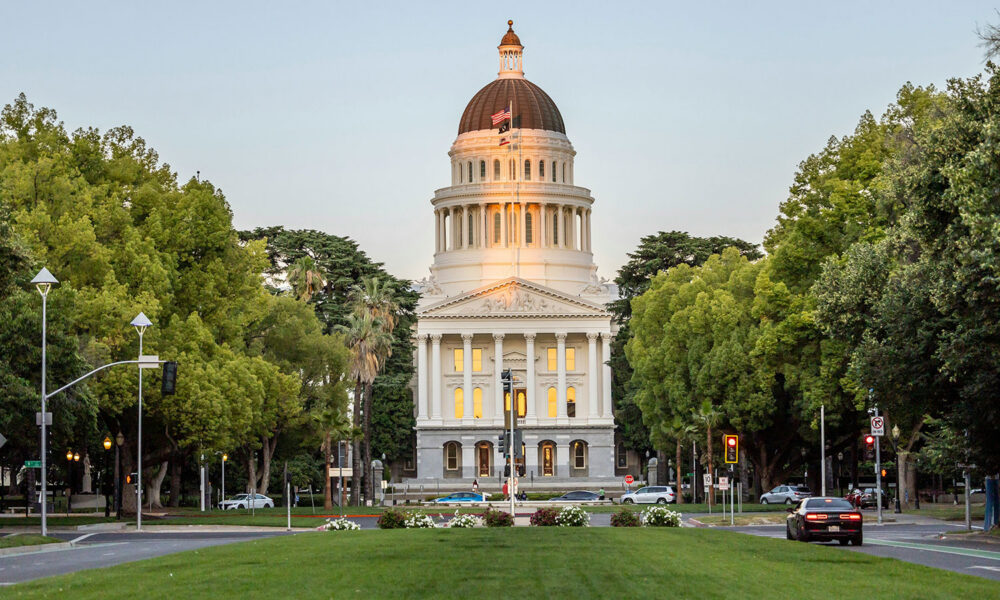

California will elect a new governor in November. The winning candidate will inherit the world’s fourth largest economy and a tremendous history of climate leadership.
California has leveraged enormous economic power to drive ambitious climate policy, fund incredible clean innovation and show the world that progress towards a cleaner, healthier future is possible.
But it is not all rainbows and butterflies here in the Golden State. Our next governor will also face an affordability crisis that threatens progress, an incumbent fossil fuel sector that is clinging to power, and climate emergencies that simultaneously necessitate and challenge continued climate action.
Whoever wins in November must be prepared to do what it takes to overcome inevitable hardships and use them to forge enduring policies that build a stronger and more resilient California.
Priorities for a bold governor
To meet the state’s necessarily ambitious climate and air quality goals, California must transition its state’s transportation sector to zero emissions, responsibly manage the phaseout of fossil fuels, and build out new renewable energy resources at an unprecedented scale.
At the same time, the state must come to terms with a massive transition of historically irrigated agricultural land in the San Joaquin Valley as groundwater depletion and climate-fueled weather whiplash make the status quo impossible.
Responding to each of these necessities will require difficult decisions that address multiple goals: affordability, reliability, resilience, public health and environmental outcomes.
This is the first in a series of blogs UCS experts will release to layout priorities for California’s next governor. I will provide an overview of these priorities here, but if you crave more, fear not! More detailed blogs on the issues highlighted here will be coming to a blog site near you.
Phasing out fossil fuels
One of the most important challenges the next governor will face is the continued transition away from fossil fuels in the transportation sector. This transition is upon us as declining gasoline demand and global movement towards consolidation of refining capacity have caused in-state refineries to close in recent years.
There is no doubt that more will shutter, or at least threaten to, during the next administration. If California plans for this transition, the state could accelerate the adoption of cleaner transportation while ensuring Californians have access to affordable gasoline.
The state has already started this planning, and UCS has been diligently working to ensure that process moves forward thoughtfully and holistically. Meanwhile, the oil industry is working overtime to make the case that the state must roll back its ambition and move heaven and earth to keep polluters happy.
The next Governor must understand that there are policies that can provide Californians with affordable gasoline while also achieving our clean transportation imperative. If they see this clearly and acts accordingly, Californians can have more reliable, more affordable, and cleaner transportation.
Continued clean energy progress
California has made tremendous strides towards achieving its goal of 100% clean electricity by 2045. The state has increased its grid battery capacity by 2500% since 2019 and was powered by 100% clean energy for a portion of 279 days last year.
This is amazing progress, but it is not enough to get us where we need to go. UCS continues to be laser focused on identifying and overcoming barriers to the development of renewable energy.
The next governor must urgently implement policies UCS has championed such as western state grid regionalization and efforts to remedy transmission development delays. At the same time, they must overcome new challenges like massive potential load growth from data centers, wildfire liability, affordability, and bringing diverse clean energy resources online, including wind and geothermal to balance the grid.
Just land transition
The San Joaquin Valley is amid a substantial and necessary transition away from intensive irrigated agriculture to a sustainable future that allows communities to thrive.
Central Valley communities are surrounded by a sea of irrigated agricultural operations. But the groundwater that feeds these operations is rapidly depleting, and as it does, the next administration must work to transition irrigated cropland at an enormous pace and scale.
This transition must be coordinated, thoughtful, inclusive and above all—just. Currently, efforts to transition land are driven by market forces instead of centering community needs.
The next Governor needs to fix this by launching a broad planning process across state agencies, local governments, labor groups, sustainable industries, and most importantly, with communities.
Driving towards a cleaner future
The context of California’s transition to zero-emission transportation has changed significantly in recent years. Prior to President Trump’s second inauguration, UCS was advocating for and passing historic regulations to sell 100% zero emission new cars by 2035 and phaseout fossil fuel trucks.
Today, the federal government is challenging California’s authority to enforce these lifesaving regulations and now the state is having to reimagine what it will take to continue its progress towards widespread adoption of zero emission vehicles.
The next governor will need to think creatively about how to drive the adoption of zero emission vehicles despite the current, hostile federal administration. This will mean doubling down on incentives and pursuing revenue generating policies.
He must also pursue electric vehicles not only for their emission benefits, but for their ability to export their power back to homes and the grid and endeavor to ensure the future of transportation is as sustainable as possible with strong end-of-life battery policies that ensure reuse where possible and recycling.
Time for California leadership
California can continue its historic role as a leader in climate policy while maintaining its spot as one of the world’s leading economies. The state can do this while ensuring that Californians have access to clean, affordable transportation and liveable communities.
If the next governor is serious about combating the interconnected climate, affordability and livability crises and taking on the issues highlighted in this blog, the state can show the world that climate progress and a better future for all humans is possible.
To achieve all this, California needs bold leadership and UCS stands ready to bolster the next administration with the independent science, strong advocacy, and a dedicated network of scientists and supporters.