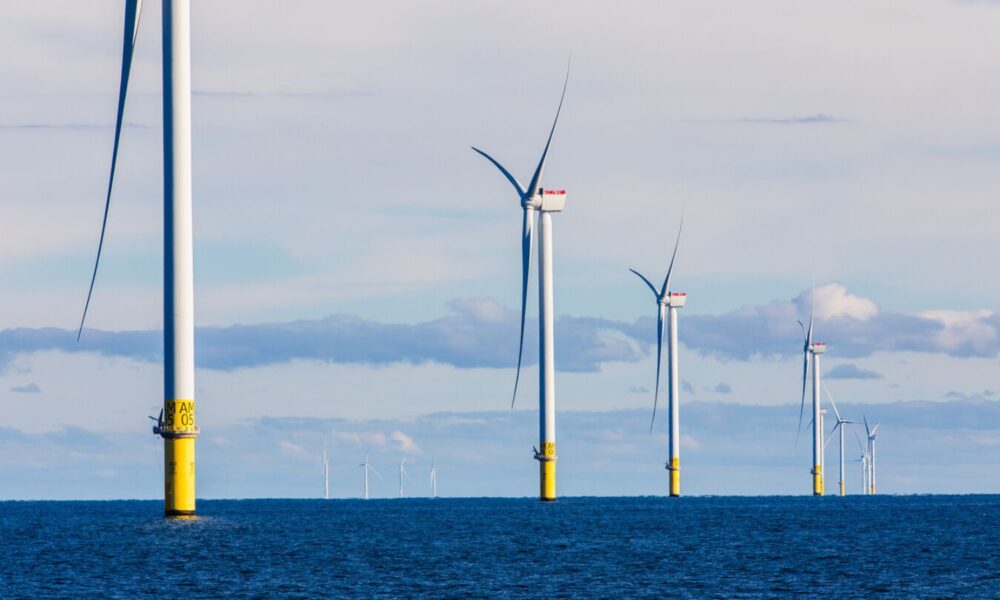

While most of us were prepping for the holiday season by baking cookies or readying ourselves for time with family, President Trump had different plans: just days before the end of the year, he issued a broad work-stoppage order against every major offshore wind project under construction. The cost of his latest attack on the industry, especially at the onset of a particularly cold winter? Less reliable power and higher prices for families.
But with judges already ruling against the move in each of the five cases—granting temporary injunctions and allowing work to restart—one has to simply wonder, will this administration concede to the inevitable, or will they drum up a new, obscure, job-killing measure to target the industry?
It can feel baffling, when you grapple with the staggering number of benefits offshore wind delivers, including robust job creation, zero operating emissions, drastic pollution reduction, consequential public health benefits, and critical energy reliability during winter storms.
So, we turned to UCS Senior Energy Analyst Susan Muller for some insight on the vicious vendetta this administration has against offshore wind (Spoiler: It’s got something to do with the fossil fuel industry and their insatiable thirst for profits.).
Q: What is Big Oil and Gas’ beef against offshore wind, Susan?
SUSAN MULLER: Fundamentally, they are afraid of losing market share across every power system that has access to the ocean—which is to say, a large part of the country. They’re especially worried about that happening in New England and New York, and to some extent in the mid-Atlantic system. It’s hard to overstate just how much energy is available off the northeast coast, but suffice to say, it’s enough to truly threaten the bottom line for a lot of powerful fossil fuel interests.
It’s well-established that the wind resource in this area is a world-class energy resource, and the need for energy is concentrated all down the northeast corridor, from Boston to New York to Philadelphia to Baltimore to DC. So, it just makes sense to connect that world-class energy supply off the coast with the energy demand on the coast. We didn’t have that option before the 2010s, because the technology was not commercially mature, but it is very much an option now, and that’s why fossil fuel interests are so scared.
Q: Why would fossil fuels lose out to offshore wind?
SUSAN MULLER: The truth is when offshore wind–or onshore wind, or solar resources—compete directly with fossil fuels in the wholesale electricity markets, the fossil fuels will lose every time. These markets are designed to select and run the least expensive power plants, and renewables have a built-in advantage because they run on fuel that is free. So renewables will always be chosen to run, and they will displace power plants that have to pay for their fuel. The incredible UCS graphics team created a great animation that explains how it works.
Fossil fuel executives, including some former executives who are now government officials, benefit when people don’t understand that this is the way the energy market works. It’s also in their favor when everyone ignores those pesky fuel costs. Those costs—which can spike incredibly high at times—will all be passed on to electric customers. Even worse for family budgets is that the most expensive fuel sets the price of power for the entire market. That means, simplifying slightly, that in a single hour, a $10 per megawatt hour increase in the operating cost of a gas plant can end up being multiplied by tens of thousands, or hundreds of thousands of megawatt hours. So, we can quickly rack up millions of dollars in extra costs which, again, will all be passed on to consumers.
Last year, I was part of a team that showed a larger fleet of offshore wind turbines could have saved households in New England over $400 million dollars last winter, simply by displacing the most expensive oil and gas plants and lowering that market-wide price. Those enormous savings far outweighed the costs of building the projects, which are recouped over time under long-term contracts.
Q: I’m reading about this freezing cold snap across the United States leading to skyrocketing oil and gas prices and gas wells freezing up. And you’re saying that offshore wind actually excels under these conditions?
SM: You’ll have to let me get a little wonky here. Freezing temperatures mean more people are burning more gas to keep their homes warm. The result? Gas power plants across the region have less fuel—and because many of them are dependent on what we call “non-firm” contracts, they’re only entitled to the gas that’s left after heating needs are met.
Then, on the electric side of things, we start to see a mismatch between supply and demand: demand for electricity is above average levels because of the cold (people are using electricity for heat, too), and supply of electricity is below average levels because of those gas contracting arrangements, and—as we learned in Econ 101—high demand and low supply leads to a sharp increase in price.
To make up for the gap in supply, the market turns to older, oil-fired generators that tend to be more prone to outages. The result? Less reliable power. Higher prices for families. I know what you’re thinking: Susan, if only there were an energy source that actually flourished under the blistering cold!
Well, you feel it every time you step outside in the winter: those bone-chilling, gusty arctic winds. Cold temperatures bring strong winds, and it’s a boon for offshore wind power.
Q: Aside from savings, that reliability is especially important in the winter because of increased risk of outages?
SM: Yes. Winter power outages are especially dangerous, especially as climate change drives even more extreme weather and a wider swath of the country is dealt with blizzards and storms that the grid simply isn’t prepared for. It’s already a climate-changed world, and it’s time our energy sources and grid reflected it.
The latest report from UCS, New England’s Offshore Wind Solution, takes a closer look at the weather conditions from last winter to see how the first few offshore wind projects could have impacted grid reliability. The results? Energy from just two projects would have reduced the risk of demand-driven power outages by 55%. Adding generation from two other proposed projects would have reduced that risk by 75%. In other words, our grid would have been much more reliable last winter with those projects operating.
So, not only are we avoiding the toxic emissions that come with burning oil and gas in the winter, we’re looking at a 75% decreased likelihood of a power outage. It’s a public health win, a safety win, a wallet win. It’s appalling to see the federal government come in at the very start of winter and launch spurious attacks, yet again, against offshore wind.
Q: What is the latest status on the work-stoppage orders issued by President Trump against the five major offshore wind projects in December?
SM: I’m happy to report that the final score is offshore wind, 5 -President Trump, 0. Judges have ruled in favor of the projects in all five cases, granting temporary injunctions and allowing work to restart. Still, the costs of the delays have been enormous. Workers were pulled off their jobs, specialized vessels sat idle, and weeks of good construction weather were lost. Vineyard Wind was already sending a large amount of power to the New England grid, and that’s helped somewhat in terms of reliability, but we are missing out on the additional power that would have been flowing right now. Revolution Wind was also going to start sending some power in January, and that’s been delayed too, so we’re seeing less reliable power in this cold winter and higher prices for families. The same is true for New York and the mid-Atlantic grid, in terms of delayed power deliveries.
And there’s an even bigger cost in terms of how developers now see the United States. The President acts unilaterally and blocks private investment into coastal communities, putting thousands of jobs at risk. We’ve got construction crews at sea, teams of workers on rigs trying to get these turbines up and running, and overnight, they’re stranded. What message does that send to investors about the United States as a place worthy of their consideration? The impact is chilling.
Fortunately, as expected, each and every one of these projects is back on track. And that is just as important an indicator that these projects have momentum, and broad-based support and they will be built, as long as courts continue to uphold the law in the face of these attacks by the administration.
Q: So, if you’ll indulge my bad pun—which way are the winds of change blowing?
SM: When you talk to the people who are building these projects, local leaders who see the economic boost in their communities, and scientists working in this space, they all have the same message—simply, that offshore wind is worth fighting for. The benefits are just too great to ignore. Even the grid operators, who rarely make public statements, have spoken up to say that they need these projects for reliability.
Countries across the world, from Denmark to China and Australia, are embracing it. And here at home, even with the industry in the federal administration’s crosshairs, support and defense of these projects stretches across ideology, across borders, across party lines. It’s happening at every level of government, from city councilmembers to state reps to governors to the literal Speaker of the House.
That’s about as big a tent as one can imagine in the current political climate.
And it’s a demonstration of just how promising offshore wind is as a new power source. We know that fossil fuel interests will continue to push their false narratives and continue trying to pull whatever strings they can to thwart their competition. But they can only distract from the fundamental value proposition of offshore wind for so long. Especially as the first big projects come online in the next year or two, more and more people will experience the real-world benefits that they bring.
And shortly after that, we may have a new federal administration which hopefully will realize that blocking an affordable and reliable power supply for tens of millions of people is just not a smart political move.