

Note: an update on this case was posted in February 2026 here.
On Wednesday, December 17, 2025, Louisiana’s main utility regulatory agency, the Louisiana Public Service Commission (LPSC), will vote on whether it should:
- Open a proceeding to get stakeholder input on how it should handle proposed additions of electricity infrastructure for powering AI data centers and other large loads, or instead
- Skip all the public input and issue a directive finalizing how it can add data centers (and other large loads) to the grid as quickly as possible, in part by having Louisiana ratepayers subsidize up to 50% of the electricity capacity needed to power the massive facilities.
The first option, proposed by Commissioner Davante Lewis, is a reasonable path forward for allowing the public to weigh in on this new challenge of data center load growth, which has significant implications for power grid reliability, public health, and ratepayers’ wallets. The second option, proposed by Commissioner Jean-Paul Coussan, is a gift to Big Tech and Louisiana utility companies at ratepayers’ expense.
After some digging, we were finally able to find a publicly available version of that second proposal. A group of industrial companies recommended a series of changes to Coussan’s directive in this letter. If you scroll to the bottom of the file, you can see the original proposal, and their suggested modifications in tracked changes.
Though Commissioner Coussan says his and Commissioner Lewis’ proposals could be complementary, they could not be more in conflict with each other. If the vote for Coussan’s proposal passes, it will become binding LPSC policy. A rulemaking docket on the same issue could simultaneously be opened, as Commissioner Lewis has proposed; but unlike utility company applications, rulemaking dockets at the LPSC often have no set procedural schedule and can sit unresolved for months or even years. (For example, see these proceedings on utilities’ political expenditures in your rates, a proposed grid resiliency rule, and the potential for implementing an electronic filing system, all of which have effectively been idle for at least a year.)
If Commissioner Coussan’s proposal passes today, a more comprehensive path forward that actually protects Louisiana ratepayers is at risk of sitting on the shelf, while utilities approve costly electricity infrastructure projects and raise your bills as a result.
I’ll first explain what Coussan’s proposal appears to do, and then I’ll give a brief overview of how this is not the first time the public has been shut out of the regulatory process with regard to these massive data centers. (Spoiler: remember the Meta/Entergy project approval just in August?)
“Lightning Initiative:” rushed and expensive for ratepayers
This “Lightning Initiative” directive would set up a process of just seven months to approve infrastructure for powering new data centers, provided the proposals meet certain criteria. This is compared to a 12-month process that was originally proposed for the Meta data center, which stakeholders expressed early on was already rushed for such a large project. These data center facilities can consume as much energy as entire cities, which strains the grid and requires careful study of the power outage risks that can arise. Coming to a decision in just seven months on such large projects does not facilitate full consideration of these risks, it just sets the state up for even more grid reliability problems than it already experiences.
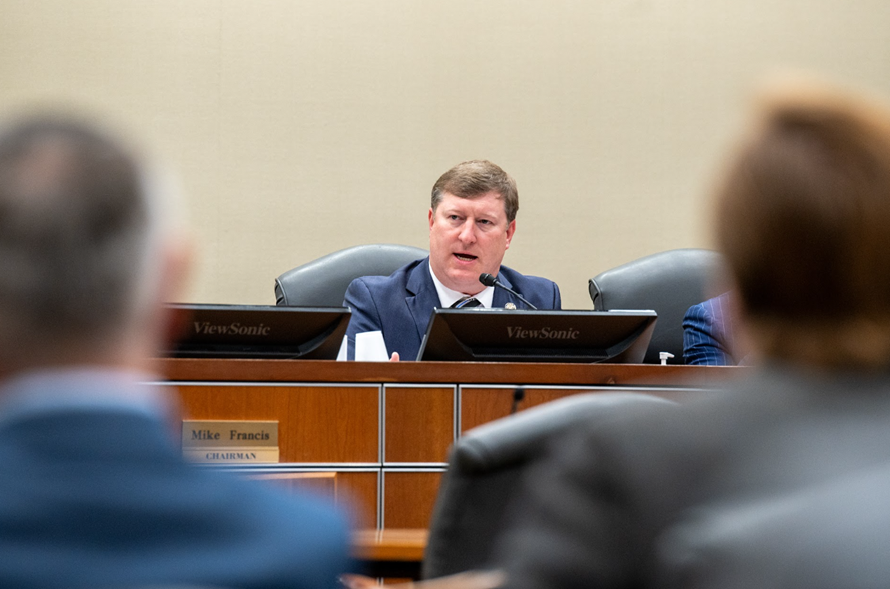
Commissioner Coussan, who put forward the “Lightning Initiative,” speaking at an LPSC meeting prior to fast-tracking the approval of Entergy’s gas plant project for Meta’s data center in Richland Parish. Source: James Cullen/AAE
So, what criteria must a utility meet for this expedited process? Strong ratepayer protections would make sense, or perhaps load flexibility requirements to reduce overall costs?
Nope. There do not appear to be any requirements for the data center to act flexibly, which can be an extremely effective tool that would require the data center to “turn down” just a few dozen hours a year out of 8,760 hours. And here are the proposed ratepayer “protections” that have been reported:
- A utility must have a minimum 10-year electricity supply contract with the data center.
- The data center must cover at least 50% of the cost of the utility’s electricity capacity investment over the contract term.
This leaves ratepayers holding the bag for the remaining 50% of that cost, which can be billions of dollars. And worse, if the data center closes shop after its 10-year contract is up, ratepayers would be on the hook for the cost of the electricity infrastructure that was built solely for the data center. Electricity infrastructure lasts for several decades, and much of the cost of the investment plus the ongoing operating costs end up on your utility bills.
Even worse than the Entergy/Meta deal?
In August, the LPSC approved Entergy’s gas plant proposal for powering Meta’s data center in Richland Parish, which is set to consume three times the amount of electricity that New Orleans does on an annual basis (if it makes it to full capacity). When it was proposed, one electricity-focused legal scholar described the companies’ plan as “possibly the worst deal for ratepayers in the country,” but amazingly, it seems to be actually be better than what Coussan is proposing now for future data centers.
Meta signed a 15-year contract to get electricity from Entergy for its data center, meaning it will be covering a portion of its costs for longer than the currently proposed minimum contract of 10 years, provided that Meta doesn’t terminate the contract early (which it could do, but let’s not go down that rabbit hole for now). For the first 15 years, the tech company agreed to cover much more than half of the estimated $3.2 billion gas plant costs, but ratepayers are subsidizing the operating and transmission costs.
Entergy and Meta also secured an expedited 12-month approval process, which stakeholders said at the beginning was too rushed to consider all the risks at play in the proposal. They skipped a state-mandated requests for proposals (RFP) process to make sure the power was being met at least cost, and in the end, they moved the final vote up by two months with just over a week’s notice to the public. So all of a sudden, it was just a 10-month review process, and the Commission rejected all the calls from community members to hit pause on moving forward.
Now, we are in a similar situation where the LPSC is giving very little notice to the public on a new process of just seven months for reviewing and approving future data center infrastructure projects, with no chance for the public to weigh in on it. That expedited process would also waive the RFP requirements, meaning there won’t be any way to know if the data center is being powered with the least-cost options available in the market.
Tell your Commissioner to keep bills down and enact better data center policy
Even if you’re reading this after the Wednesday, December 17th vote, and you live in Louisiana outside of New Orleans (since the New Orleans City Council regulates utility rates there), you can call/email your Public Service Commissioner and tell them to implement better data center policy.
You can urge them to carefully consider the risks and actually allow the public to weigh in on these consequential new infrastructure projects, which Commissioner Lewis’ proposal would accomplish. The LPSC should not be shutting the public out of this process when there is so much at stake.