
The Trump administration’s abduction of Venezuelan President Nicolás Maduro in order to “get the oil flowing” is like a looter stealing VCRs—taking a major risk for an item of declining value. In this case, the outdated technology is oil, and the risk is borne not by the looter but by the Venezuelan people, US taxpayers, and the global climate.
Hours after Maduro’s January 3 kidnapping, President Trump declared at a press conference that “our very large US oil companies” would spend billions of dollars to rebuild Venezuela’s oil industry. Having viciously fought accountability for its role in climate change, the oil and gas industry may believe that aligning itself ever closer with our authoritarian strongman president will offer protection—and impunity. But this attack, which experts agree is illegal under domestic and international law, endangers people in the United States and around the world, ostensibly for the benefit of a single industry. Expanding oil and gas infrastructure and increasing exploitation of Venezuela’s oil and gas resources will exacerbate the political, economic, and environmental dangers of a fossil fuel–centric energy system.
And it probably won’t enrich anyone but the closest Trump allies.
This latest US aggression in Latin America is another manifestation of the Trump administration’s deep ties to Big Oil and its naked prioritization of private profit and corporate interests over the public interest. It’s a toxic, dangerous combination: an administration that flouts legal obligations and a president who believes he’s above the law attacking another country on behalf of an industry that has largely operated with impunity and is actively lobbying for immunity from liability for the damage it causes.
The administration’s plans for what comes next remain deeply concerning, if vague: the President has confirmed that the United States could stay in Venezuela “for years.” Never mind that ExxonMobil CEO Darren Woods and other oil executives expressed skepticism after their recent White House meeting with the President. Also unclear is what role Congress intends to play with a War Powers resolution debate coming to the Senate floor.
US imperialism, Venezuelan history, and the “Donroe” Doctrine collide
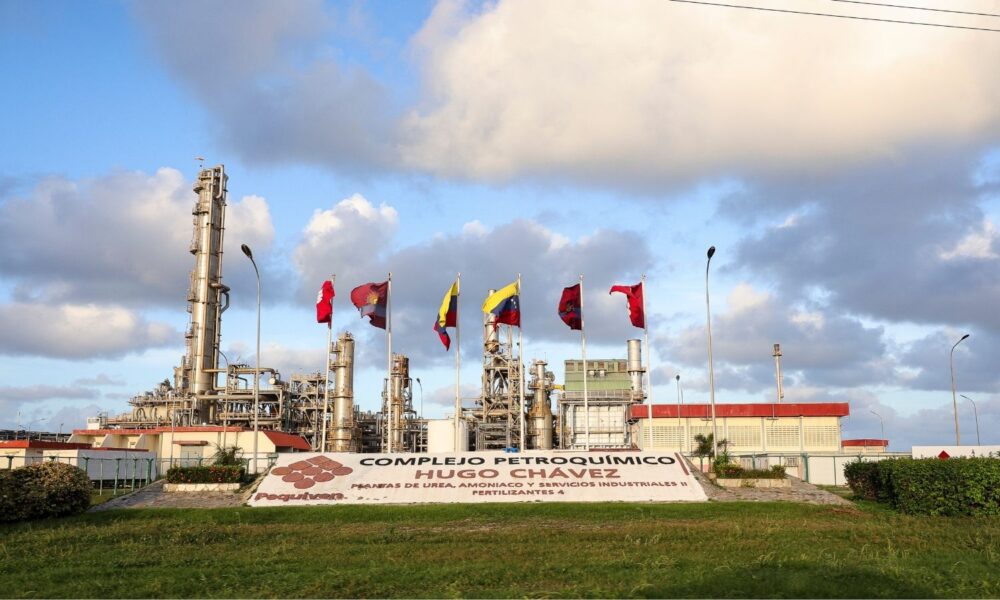
Venezuela has the world’s largest proven oil reserves, but pumps only a tiny percentage of that oil. Many US-based oil companies once operated in Venezuela, but relations with the government became strained after leaders created the national oil company Petróleos de Venezuela SA in 1976. When former President Hugo Chávez further nationalized the oil and gas sector in 2007, ExxonMobil and ConocoPhillips refused the terms of the new contracts, and Chávez seized the companies’ assets. Both companies filed complaints against Venezuela with international tribunals, which eventually awarded the companies billions that Venezuela has not paid.
The United States first targeted Venezuela with sanctions related to drug trafficking in 2005, but the first Trump administration expanded them into the financial realm. Chevron is now the only US-based oil company operating in Venezuela, operating under a sanctions exemption from the US Treasury Department. Chinese, Russian, Italian, and Spanish companies also have a presence in Venezuela. The sanctions compounded strains on Venezuela’s economy, preventing the country from maintaining its oil infrastructure and slowing exports to a trickle. President Trump claims US know-how and Big Oil investment can rebuild that infrastructure and unleash petroleum riches, an assertion experts dispute.
The Venezuela operation is a classic example of imperialism, where countries with larger militaries take control of smaller countries under national security pretenses in order to gain control of their natural resources. Many studies of this pattern show that the benefits of extractivism rarely go to the people of the country where the resources are located. (As I wrote when Russia attacked Ukraine in 2022, “there’s ample evidence from around the globe that nations whose economies rely heavily on oil and gas extraction are less secure and less stable than those that are less dependent on fossil fuel resources. The ‘resource curse’ plagues extractive economies with deep-seated inequity and undemocratic governance.”) Despite President Trump’s rhetoric, the people of Venezuela are unlikely to benefit if US intervention leads to increased oil and gas extraction in the country.—and for now, they are suffering.
According to former fossil fuel CEO and current Secretary of Energy Chris Wright, the United States intends to sell Venezuelan oil “indefinitely,” with proceeds “deposited into accounts controlled by the US government,” but then, “flow[ing] back into Venezuela to benefit the Venezuelan people.”
Senator Chris Murphy of Connecticut commented to POLITICO, “It’s an insane plan. They are proposing to steal Venezuela’s oil at gunpoint forever and use that leverage to run the country.”
Venezuela could be first in a series of attempted South American takeovers under President Trump’s reimagined “Donroe Doctrine,” (a corollary to the 19th century Monroe Doctrine and Manifest Destiny establishing US imperialist claims over the Americas)—aiming to give the US control over more than 40% of the world’s oil and the ability to control commodity prices. ExxonMobil and other US-based corporations are deriving massive revenues and profits from oil production in Guyana, Venezuela’s neighbor, and are anxious to preserve access to onshore and offshore resources (even as ExxonMobil faces multiple environmental lawsuits over its offshore drilling operations). Venezuela and Guyana have been locked in a territorial dispute over their oil-rich border region for years, and Venezuelan military boats have reportedly threatened ExxonMobil tankers.
President Trump has already rattled his saber at Colombia, Cuba, and Mexico. And it’s worth noting that this US military incursion comes just months before the First International Conference on the Transition Away from Fossil Fuels kicks off in Colombia, announced after more than 80 countries called for a roadmap to transition away from fossil fuels at last year’s international climate talks (COP30) in Brazil. President Trump’s illegal actions illustrate that a fair, fast phaseout of fossil fuels is necessary for security in the Americas and around the world.
Big Oil cashing in and currying favor
President Trump has devoted a large part of his agenda to suppressing renewable energy in the United States and internationally while inflating the market for fossil fuels. Killing offshore wind projects months before launch; ending tax incentives for electric vehicles; opening up federal lands to drilling, and withdrawing from international climate bodies: All are efforts to turn back the clock to a time when cleaner energy didn’t exist—and at odds with the reality of the rapidly worsening climate crisis.
President Trump has shifted US domestic and international policy with the expectation that the country’s most powerful industry will support him. His reported meeting with industry leaders during his campaign to solicit $1 billion in contributions—and the industry’s record donations—means the industry is closely associated with Trump administration policy, regardless of whether it tries to maintain a distance publicly. (ExxonMobil has a long-established posture of asserting its independence while benefiting enormously from its influence over US politicians and policies. Former CEO Lee Raymond couldn’t have said it more clearly: “I’m not a US company and I don’t make decisions based on what’s good for the US.”) Yet some industry leaders were reportedly consulted before Congress about the US military incursion into Venezuela and top executives met with the President last Friday.
Venezuela’s heavy oil is expensive to extract and process, so it could take time for US-based oil companies to reap substantial profits. Venezuelan oil is also among the world’s most carbon-intensive, which means that increasing production would be devastating for the climate. Chevron may be best positioned to capitalize—and operate with impunity, as it did in the Ecuadorian Amazon—while ExxonMobil and ConocoPhillips can pursue their multibillion-dollar claims against the Venezuelan government. And if they decide to go back in, the US military may provide security, on the US taxpayers’ dime. Marathon, ExxonMobil, and Citgo are among the owners of major refineries on the Gulf Coast that can refine Venezuela’s oil. But as US refineries look forward to benefiting from the heavy grade of crude oil Venezuela produces, health and environmental harms would worsen in communities along the Gulf Coast in Louisiana and Texas that are already suffering from environmental racism. Furthermore, Elliott Investment billionaire and Trump supporter Paul Singer acquired Citgo days before the invasion, raising questions about insider trading.
President Trump and his corrupt network are attempting to consolidate political power ahead of the midterm elections. This illegal show of force complements stepped-up attacks on US civil society, fossil fuel industry lobbying for immunity from liability for climate change harms, and efforts to get the Supreme Court to throw out climate accountability lawsuits. As the Trump administration pulls the US out of the bedrock international treaty to tackle climate change and the world’s most trusted source of climate science, it relies on fossil fuel industry disinformation tactics while attempting to undermine robust attribution science that underpins climate liability claims.
Oil grabs are a move from the authoritarian playbook
Unfortunately, evidence from around the world shows that authoritarianism is more favorable to the oil and gas industry’s interests than democracy. And the harms caused by the fossil fuel industry disproportionately affect people who have been historically disenfranchised, particularly in the Global South. Transnational oil and gas corporations, their subsidiaries, joint ventures, and business partners have a history of cozying up to military regimes and leaning on local political factions or mercenaries for protection, often leading to horrific human rights and environmental abuses (Examples: Shell in Nigeria, Occidental in Colombia, Chevron in Ecuador and Burma/Myanmar, ExxonMobil in Equatorial Guinea).
The Trump administration’s actions and plans fly in the face of last year’s advisory opinions on climate change by the Inter-American Court of Human Rights and the International Court of Justice, which made it clear that climate inaction is a violation of international law, recognized climate change as a human rights issue, and clarified that nations have an obligation to regulate fossil fuel corporations under their jurisdiction.
By disregarding international law and constitutional limits in its attack on Venezuela, the Trump administration is not only escalating geopolitical risk but also making Venezuela a less viable environment for responsible investment and long-term business operations. Military action without a clear legal basis undermines the predictability, treaty stability, and rule-of-law assurances that companies rely on when making multibillion dollar decisions about infrastructure, financing, and insurance. Rather than “opening” Venezuela to investment, this approach injects volatility, legal uncertainty, and reputational risks for companies.
A losing bet on Big Oil
Despite his best efforts, President Trump cannot stop the clean energy transition. World leaders and markets know that renewable energy today is cheaper, healthier, more available, and more reliable than fossil fuels.
Worldwide oil supplies are expected to exceed demand by more than 2 million barrels a day in 2026, and oil prices are currently the lowest in four years. That means keeping prices down—as President Trump might like to do to placate consumers—would mean investment in Venezuela would not be immediately profitable, especially with the uncertain political climate.
But finance is not the only reason the Trump administration’s all-in position on oil is a losing bet. The continued production and use of fossil fuels threatens our climate, public health, and human rights. Burning fossil fuels is the main cause of the global warming that costs our country billions of dollars each year, despite this administration’s attempts to bury climate science. And the concerns surrounding the Venezuela incursion perfectly illustrate how a fossil fuel-based energy system compounds economic, social, and political inequalities.
President Trump’s addiction to fossil fuels will not make people in the United States safer or richer. In fact, it will do the opposite by dragging us into a 19th-century-style imperial adventure that will impose high costs for everyone on the planet. This illegal imperial oil grab is yet another reason we must all rise up in sustained, public, nonviolent protest and civil resistance.
Laura Peterson co-authored this post.