
Facts are supposed to shape policy—not the other way around. That key principle is being undermined as the Trump administration seeks to reverse an important pillar of U.S. climate policy.
In its proposal last year to repeal the Endangerment Finding—a critical foundation of the Environmental Protection Agency’s (EPA) ability to regulate global warming emissions under the Clean Air Act—the Trump administration relied heavily on shoddy science in a report developed by a “Climate Working Group,” composed of five skeptics well outside the scientific mainstream. The report, which was commissioned by the Department of Energy, has been thoroughly discredited by the scientific community, which found that the report “misrepresents the state of climate science by cherry-picking evidence, exaggerating uncertainties, and ignoring decades of peer-reviewed research.”
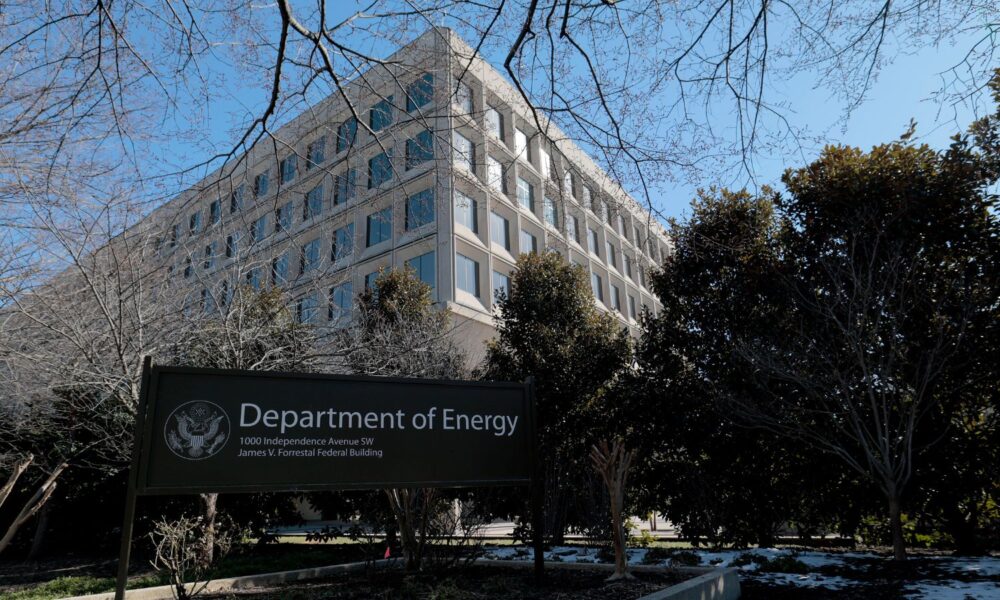
Now, a federal judge has ruled that the Climate Working Group (CWG) report was produced by a process that was so flawed as to be actually illegal—violating the Federal Advisory Committee Act (FACA). The illegality was so clear that the government did not attempt to contest it in court.
The Department of Energy’s violation of FACA is more than just a technicality. FACA is an important pillar of open governance, designed to prevent private interests from determining public policy behind closed doors. It is intended to prevent exactly what the government did here: base policy on advice from a small, hand-picked group whose views are far outside the mainstream, working in secret, with no visibility to the public, no opportunity for public comment, and no effective peer review. To avoid outcomes like this, FACA specifies that committees that advise the federal government must have balanced composition and must operate in full view of the public.
Documents newly turned over as a result of the judge’s order reveal a process which is not just scientifically unsound but essentially rigged. The science in the CWG report was explicitly designed to support a specific policy decision that had already been made: repeal of the Endangerment Finding. The authors were told that, “[T]his summary of the science will be published as a technical support document relevant to a new proposed rule on tailpipe emissions standards for motor vehicles.” One of the Climate Working Group authors wrote “About all I can hope is that what we write will provide sufficient ‘reasonable scientific doubt’ …to call into question the original reasoning for the EPA Administrator’s decision that CO2 presents a threat to human health and welfare. It sounds like the lawyers involved believe they can win this fight without the science (lawyers and judges hate dealing with science).”
These statements show that the decision to change the policy was made ahead of assembling scientific evidence to support that decision.
Of course, this is not how policymaking is supposed to work: the science should drive the policy, not the other way around. Scientific synthesis exercises should not be designed to support predetermined policy outcomes.
DOE documents confirm a flawed process
A key element of science is peer review—an independent assessment of methods and conclusions. Documents turned over by the government reveal that the process used to review the Climate Working Group report was deeply inadequate:
- The reviewers were not independent, but were all affiliated with DOE, the agency which commissioned the report. They answered to the Energy Secretary, whose support for the report was well-known.
- The review took place over roughly 2 days, including a Sunday, which is nowhere near enough time to meaningfully review a technically dense 149-page report;
- The reviewers’ point of contact at DOE undermined the integrity of the review by telling authors that it was expected that they would ignore many of the comments: “It’s my hunch that most comments will be rejected.”
- The same DOE point of contact also characterized the review process to the authors as “partly a CYA exercise,” thus further undermining its integrity.
Even so (and to their credit), DOE’s reviewers repeatedly flagged major problems in the report, often using terms like “misleading,” “inaccurate,” “cherry pick” or “cherry picked,” “not appropriate,” “factually incorrect,” “not factual in nature,” “not true,” and “unjustified” to describe sections of the draft report. These comments were largely ignored: a spreadsheet tallying the reviewers’ comments and authors’ responses shows that most of the reviewers’ comments apparently resulted in no changes to the report. As one example, in 29 instances reviewers described draft text as “misleading,” and in only 9 of those instances did the authors make any changes at all as a result of those comments (and in many cases, the changes made were minimal and arguably inadequate). In 20 of 29 cases, the “misleading” text was preserved in the final report. DOE did solicit public comment on the CWG report, but only after the report was published and used as the basis for rulemaking by EPA–which of course renders the comment process meaningless.
Contrast this with the National Climate Assessment (NCA), which is subjected to multiple rounds of review by federal agency experts, multiple opportunities for public comment, and a review by the National Academy of Sciences (which is made public). The NCA uses “review editors” whose sole responsibility is to ensure that reviewer comments are adequately considered and responded to.
Of course, this raises the point that if EPA wanted a rigorous and thorough review of climate science on which to base a “reconsideration” of the Endangerment Finding, it need not have looked farther than the most recent NCA, published in 2023, which is perfectly suited for this purpose. Inconveniently, however, the NCA did not tell the story that the Trump administration wanted, so the administration deleted it from government websites and commissioned its own report to support the policy it knew it wanted all along.
That’s no way to make policy; the planet and the American people deserve better.