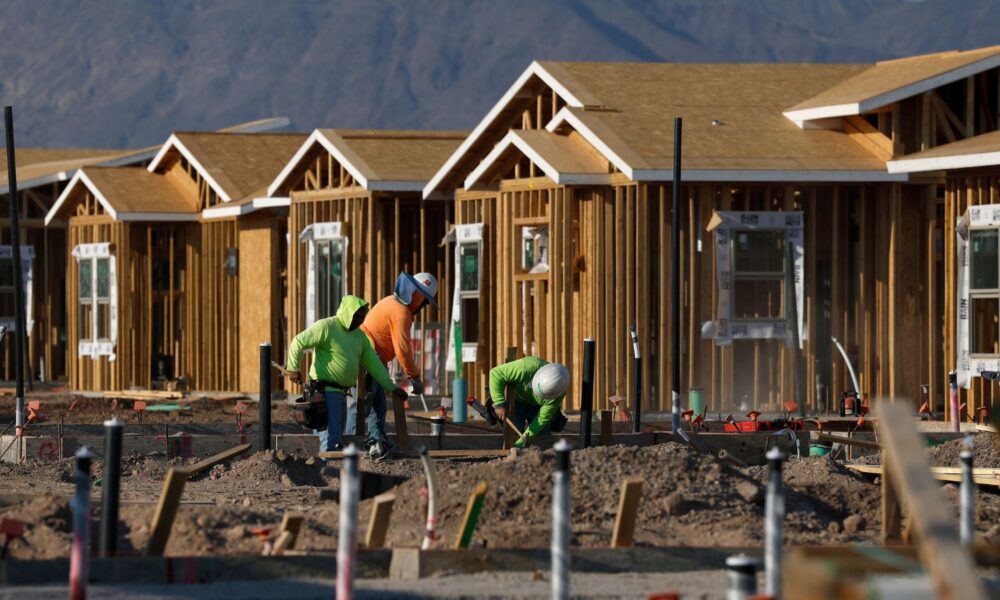

As the American housing crisis worsens, the House and Senate are working on legislation to address it. Each has passed its own legislative responses, and the differences between their two bills—the Senate’s ROAD to Housing and the House’s Housing for the 21st Century—will need to be negotiated and a final package passed in both before much-needed housing investment is jumpstarted.
The housing that Congress funds this session will exist for decades: sheltering families and reshaping economic opportunities in the middle of our current affordability crisis. As the housing and climate crises continue to merge, Congress’ final housing package must be as strong as possible to ensure greater housing affordability, stability, and resiliency. Unfortunately, parts of both bills fall short, and present a false choice between either more housing, greater climate resilience, or meaningful affordability.
Policymakers should know: we need and can have all three.
People in the US are already footing the bill for decades of inaction on both housing and climate. Record-high housing costs, rising insurance premiums and denied claims, and high energy bills in the face of deadly extreme heat are all proof of that fact. We need policy that addresses these problems holistically.
Stronger affordability mandates
Housing for the 21st Century is largely focused on increasing the supply of housing across the United States. However, there is little evidence that solely building new market-rate housing will sufficiently address the shortage of housing nationwide, and no guarantee that building as usual will keep Americans safe from climate impacts. In housing policy, filtering—the process of higher-income residents moving into newer, more expensive housing and freeing up units for those with lower incomes—has stagnated as the housing market has tightened and as rising costs and social volatility have constrained consumer behavior. Congress must mandate and subsidize affordability, resisting the impulse to rely solely on market solutions, and preserve existing affordability based on local conditions.
Shortcomings of competitive grant programs
In a nation with an absolute shortage of affordable housing, every community needs to plan for and invest in resilient housing strategies at every income level. Competitive grants like the kind proposed in current legislation can spur innovation, but they can also spark misalignments, leaving communities with less technical and administrative capacity at a disadvantage. We’ve seen this misalignment in state-revolving loan funds, and federal grants for economic development and critical infrastructure, where communities that don’t have the resources to lay sufficient groundwork on are then overlooked for competitive funding sources. Over-reliance on competitive grants to help communities plan for and implement affordable housing strategies will result in a patchwork of progress. A piecemeal approach will yield piecemeal results, which may be later used to justify the end of the funding source altogether. Ongoing funding might be a harder political sell, but it’s a better solution to create a housing ecosystem that is able to meet current and future needs, including population shifts driven by climate change.
Reimagining land use: a double-edged sword
There are proposals common to both bills that relate to land use, which include incentivizing changes to zoning and environmental review processes. These proposals are intended to open more land for housing development and speed up the development process. While land use laws have a long discriminatory history in the United States that has constrained housing production, they have also sometimes served as a form of environmental protection that can keep communities safe from hazards like flooding and pollution.
Legislation in both packages encourages the relaxation of land use laws without specifically requiring state and local governments to account for current and future physical risks like extreme heat exposure, proximity to hazards, sea-level rise, wildfire risk, and flooding. There are over 17 million units of multifamily housing currently under threat from environmental hazards. In its proposed legislation, Congress must give clearer guidance to state and local governments to avoid zoning Americans into risk for decades to come—particularly in the categories below.
Location Efficiency: The House’s Housing for the 21st Century places an emphasis on location-efficient sitting: the building of housing that’s connected to amenities, public services, and transit. This concept is important, but as the bill is written, it’s vague and undefined. Congress should define location efficiency in a way that acknowledges both the municipal fiscal burden of sprawling development and household economic impacts of inefficiently sited housing, like increased transit costs. Legislators should also be clear-eyed about the fact that location efficiency can come with a price tag that, if insufficiently subsidized, will make affordability harder to deliver.
Density: Encouraging zoning changes to boost density and put units on the ground is an important challenge to the racist legacy of exclusionary zoning, but efforts to improve infill density—or building housing on small parcels in existing residential neighborhoods—must be guided by standards that specifically account for current and future wildfire risk, flood risk, and mitigate the urban heat island effect. Mandating locally relevant standards reduces the risk of housing development being opposed on resilience grounds and ensures that the government isn’t encouraging physically and financially risky development.
Buyouts: In its proposed legislation, Congress is correct to acknowledge the reality that in some parts of the country, a transformed climate will necessitate more buyouts of existing properties at risk of climate impacts. They must recognize the delicate nature of relocating communities, and the current shortcomings of the decades-old Uniform Relocation Act to govern that process. Legislators should commission a study on the shortcomings and opportunities of past mandatory, voluntary, and community-led buyouts of homes and critical community infrastructure for their household-level impacts and effect on local and regional economies.
Extreme heat
Residents of our nation’s affordable housing—both subsidized and market-rate—are uniquely vulnerable to extreme heat. Congress’ legislation proposes to study heat exposure on a property level, which is important to design life-saving and cost-effective interventions—but sensing temperature is not the same as controlling it. As global average temperatures continue to rise with heat-trapping emissions, forgoing proven strategies to reduce residential heat exposure both endangers residents and degrades the value and structural integrity of existing stock by delaying investment.
Congress should follow the lead of cities advancing a Right to Cooling, and require cooling as a condition of federal housing finance and allocate funds to support the retrofitting of housing.
Eviction
Both legislation in the House and Senate proposes the development of an Eviction Helpline for tenants in federally assisted housing. More Americans than ever rent their homes, and millions every year face the threat of eviction—including 2.9 million children. COVID-19 related funding for rental assistance, eviction diversion programs, and access to legal counsel has waned, but the financial strain on America’s renters and affordable housing providers is greater than ever. Congress is right to recognize the precarity tenants face, however, information-sharing with a small subset of the country’s tenant population will only go so far to reduce evictions while much-needed affordable housing supply is expanded.
According to the University of Arizona, the United States spends over 100 billion dollars annually to address the downstream costs of eviction like emergency shelter, inpatient and emergency room medical care, the cost of re-housing children in foster care and the cost of juvenile detention. Although Congress lacks the ability to alter state and local laws that influence the speed and volume of evictions, Congressional action that protects the rights of tenants to organize, builds and preserves affordable housing, and funds rental assistance, eviction diversion, and legal counsel can mitigate the impact of our nation’s eviction crisis on renters, stabilize landlords’ balance sheets, and reduce the costs associated with the ripple effects of eviction.
Disaster recovery and mitigation
Increasingly frequent severe weather destroys housing and displaces communities year after year, yet reform to our disaster recovery system has languished, turning disaster response and long-term recovery into a political weapon. Currently, permanent authorization of disaster recovery funding via Community Development Block Grants for Disaster Recovery is only in the Senate package. Permanent authorization of disaster recovery and common-sense changes to disaster recovery policy, like the Fix Our Flooded Basements Act, will get communities on the road to recovery faster, reduce the financial strain of disasters on survivors, and curb the disturbing trend of treating disasters like political footballs.
Existing housing
In addition to building more deeply affordable and resilient housing, Congress must take action to improve our existing housing stock. According to market research by Zillow, the average affordable rental home in most major metro areas is 54 years old. The Philadelphia Federal Reserve Bank estimates billions of dollars in repair needs across our aging housing stock. Manufactured housing, a critical component of our existing affordable housing, is frequently ineligible for repair programs. Expanding our housing supply will take time, and in the interim, Congress can’t allow existing affordable housing to languish without investments in habitability and resilience.
Supporting mission-driven housing
Most housing in the United States is unsubsidized and wholly in the private market. The developers and operators of that housing are driven by profit motives. These profit motives are often at odds with housing stability and can drive investment in high-risk locations, poor construction standards, financially risky mortgages, and evictions. At the same time, mission-driven housing organizations and entities like churches struggle to finance the development and operation of housing. As Congress prepares to create new housing across the country, mission-driven actors dedicated to affordability, stability, and resilience deserve a chance to help shape our housing futures.
A generational opportunity
The opportunity before Congress is enormous: housing policy shapes the trajectory of families, communities, and regional economies. Layering a federally backed building boom on top of continued attacks on science in the public interest that helps communities understand risk, the proposed repeal of Federal Flood Risk Management Standards, and the end of the Endangerment Finding that underpins EPA’s regulation of global warming pollution, is a dangerous roll of the dice. Coming up short on affordability and leaving resilience and climate realism out of the final legislative package to narrowly focus on building is a careless plan to kick the can down the road, locking communities and the broader economy into risk.