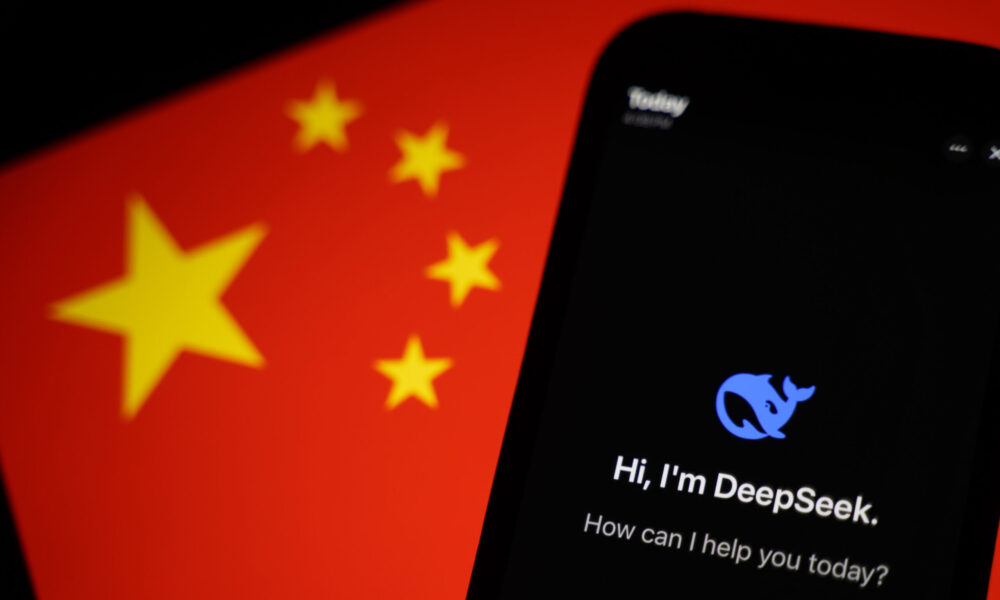

US tech titans and their supporters in government tell a compelling story about artificial intelligence (AI). They say we’re in a desperate race with China to create a “super” intelligence that, at an undetermined moment in the future, will change everything. The winner, so the story goes, will dominate the world. Whatever the economic, environmental, social, or political cost, they say it is a race the United States cannot afford to lose.
Earlier this month, at the third annual East Asia Quadrilateral Dialogue co-hosted by the Union of Concerned Scientists in Tokyo, an AI expert from a top-tier Chinese university told a very different story. He described how hundreds of small and medium-sized Chinese AI companies are competing against each other to develop and deploy new AI models that generate tangible and immediate economic, social, and environmental benefits. While the big Chinese players are also pursuing artificial “general” intelligence (AGI), Chinese companies in general have been much more focused on “embodied” AI, such as robotics, that has immediate applications in areas like manufacturing—a field where the United States lags behind.
In the United States, AI development is dominated by a small group of very large companies that command the lion’s share of the invested resources. In addition to the economic risk this kind of extreme market concentration can create, the US AI infrastructure is being designed and built by a handful of tech entrepreneurs who believe they are on the verge of realizing a hypothetical future moment when machine-led technological growth becomes uncontrollable and irreversible. And yet, most of them view this so-called singularity with a trepidation that’s inspired them to build lavish personal bunkers where they’re preparing, if necessary, to ride out a coming apocalypse. One, Elon Musk, has dedicated considerable resources to establishing a settlement on Mars so humanity has another planet to inhabit if Earth is destroyed.
Fantasy Versus Reality
China’s AI development is also controlled by an astonishingly small group of individuals—but they sit atop the Chinese Communist Party, which sees AI as one tech tool among the many they use to govern every aspect of the individual and collective lives of the 1.4 billion people who live within the People’s Republic. According to the Chinese expert attending our Quadrilateral Dialogue in Tokyo, there is some Chinese interest in the possibility of AGI, but the idea is not driving Party policy, or the investment decisions of the many private entrepreneurs and local and regional governments whose activities are developing Chinese AI from the bottom up. Chinese tech businesses need to develop AI products and services that generate the revenue they need to keep growing in an AI ecosystem closely associated with the demands of the broader Chinese economy.
Cooperation Versus Competition
Our Chinese colleague also mentioned that his government, not surprisingly, is very concerned about the disruptive social, cultural, and political impacts of artificial intelligence. That’s led China’s top officials to invest considerable effort in establishing effective AI governance. They appear more concerned about that problem than US politicians. The current US government prefers minimal regulation; President Trump’s AI Action Plan chastises international AI governance attempts as “anti-American” obstructions to the singular pursuit of AGI. More importantly, Chinese leaders are open to the idea that sharing what they’ve learned may be in China’s best interest.
Unfortunately, because the AI competition narrative plays an outsized role in US thinking about the future of the technology, cooperation with China is anathema to many working in the US AI industry and government. The tech titans at the top of the US AI pyramid don’t want to be governed, and the Trump administration obtained their considerable financial and political support by promising to give them free rein. So the president is aggressively preventing any regulation of AI in the United States, even at the state and local level, and is also pressuring US allies to weaken their own government controls on the technology.
Running in Circles
Since the imposition of the so-called Tiananmen Sanctions in 1989, the US government has tried to inhibit the development of Chinese science and technology. It has implemented an unending series of policies designed to restrict Chinese access to US technology. It has erected trade barriers to the import of Chinese solar panels, batteries, and electric vehicles. And it has used its considerable economic and political influence to cajole allies to follow its lead.
While it is impossible to know how the Chinese high-tech sector would have developed without these restrictions, it’s fair to conclude that they have failed to slow China’s scientific and technological progress. Some analysts argue that by forcing China to be more self-reliant, the restrictions unintentionally accelerated that progress. Based on our conversations with Chinese experts in Tokyo, this same cycle of US restrictions followed by Chinese progress seems to be repeating itself in the development of AI.
The Way Out
Experience suggests US policymakers who think this kind of aggressive national economic competition can be contained and that it will not lead to armed conflict are mistaken. The remarkable growth and prosperity of the post–World War II era was made possible by mutual respect for international principles and institutions, like the General Agreement on Tariffs and Trade, that put limits on national economic competition in order to preserve the peace. The policymakers who designed this rules-based international order would not be surprised that the current disregard for those international principles and institutions is accelerating defense spending and increasing the risk of war, especially between the world’s two largest economies.
The East Asia Quadrilateral Dialogue brings scientists, analysts, activists, and lawmakers from Japan, South Korea, and the United States together with scientists and analysts from China. As we enter our third year, we are working to persuade decisionmakers in all four countries that as East Asia and the world are entering a period of complex and interconnected crises, the way forward is not through intensified rivalry but a diplomatic architecture that manages risk, shares responsibility, and builds practical channels of communication. This year’s dialogue produced dozens of concrete steps our governments can take to rebuild trust and strengthen cooperation, including on AI, which given its importance is an excellent place to start.