
EDITORIAL UPDATE, 12-9-25: A previous version of the blog stated a Kentucky recycling plant lost its $164 million grant, but this portion of the grant was for pre-cathode active material production and not mineral recovery
Recently, the Trump administration signed a deal to take partial ownership in the mining company Lithium Americas Corporation—making the US government (and all of us taxpayers) shareholders.
Government interest in lithium mining could put support for battery recycling in the back seat. Because the more profitable Lithium Americas Corporation is, the more value it is to the U.S. government. Battery recycling is an important source of lower-impact lithium. We have estimated that nearly half of US lithium needs for EV batteries could supplied by recycled content. Investing in recycling infrastructure can reduce overall mining of minerals for our transition to clean energy, but it will also compete with newly mined lithium.
Mining expansion in the US
Expedited mining expansion has been a priority of the Trump administration. Funds have been allocated to boost domestic mining while simultaneously reducing regulations that are crucial to safeguarding communities near extraction sites. The claim for this approach is that it is the only economic route forward, which my colleague has eloquently rebutted.
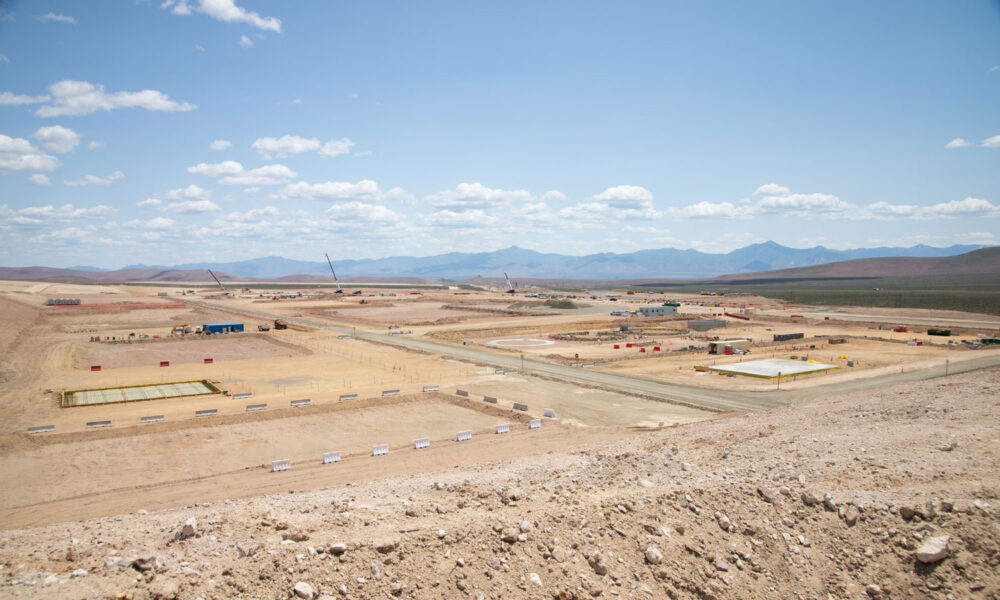
The Trump Administration’s deal to take partial ownership of US mines, including Lithium Americas Corporation, a Canadian-based company, represented another drastic move toward expedited mining expansion. The US now owns 5% equity in the company as well as 5% of Thacker Pass Lithium Mine, a joint venture between General Motors and Lithium Americas Corporation, which has progressed despite the strong resistance from impacted Native American Tribes (Reno-Sparks Indian Colony, Burns Paiute Tribe, Summit Lake Paiute Tribe, Winnemucca Indian Colony, the association People of Red Mountain, and the Duck Valley Shoshone-Paiute Tribe). This investment is intended to ensure the development of domestic lithium production, a confusing move since the Trump administration also cut electric vehicle incentives and vehicle emission requirements and the sector with the highest lithium demand.
This partial nationalization has raised concerns among experts regarding the economic and environmental impact of such a decision, including its potential effects on monitoring and regulatory enforcement of the mine. While US funds have been doled out, permit fast-tracking, which disregards essential environmental review, is already in effect.
Potential impact on the recycling industry
There is the potential for nationalized lithium mining to also negatively impact the lithium-ion battery recycling industry. This disrupts our aim to dismantle the continuation of an extraction-only economy.
Mineral prices determine how profitable battery recycling is, and a decline in lithium prices impacts the bottom line of battery recycling companies. The recycling industry relies on market forces and lacks a policy mandating battery recycling at the end of their life, so this move could add an additional obstacle to the nascent industry. Lithium prices have fallen, prompting uncertainty about whether lithium is even being recovered from the batteries alongside other higher-value minerals, such as cobalt and nickel.
At the same time, if lithium is recovered at high rates, the recycled lithium will provide a large secondary supply and could depress or hold lithium prices steady in the long term. The recovery of lithium and its addition to the national supply over time is an essential contribution to domestic production that will create a lower-impact national source of minerals and reduce mine expansion.
Given the US stake in Lithium Americas Corporation, the government has an incentive not to support the essential battery recycling industry, thereby creating a competing supply.
Policy is needed to require the recycling of these batteries and the high recovery of minerals, regardless of market forces The European Union, China, India, and other countries have already enacted an Extended Producer Responsibility policy that requires battery producers to ensure the batteries are recycled at the end of their life. This type of policy, and continued investment in lower-impact sourcing, is essential to the transition to a cleaner economy. The Administration’s continued prioritization of extraction at all costs is not the approach to supporting US communities and the battery supply chain.