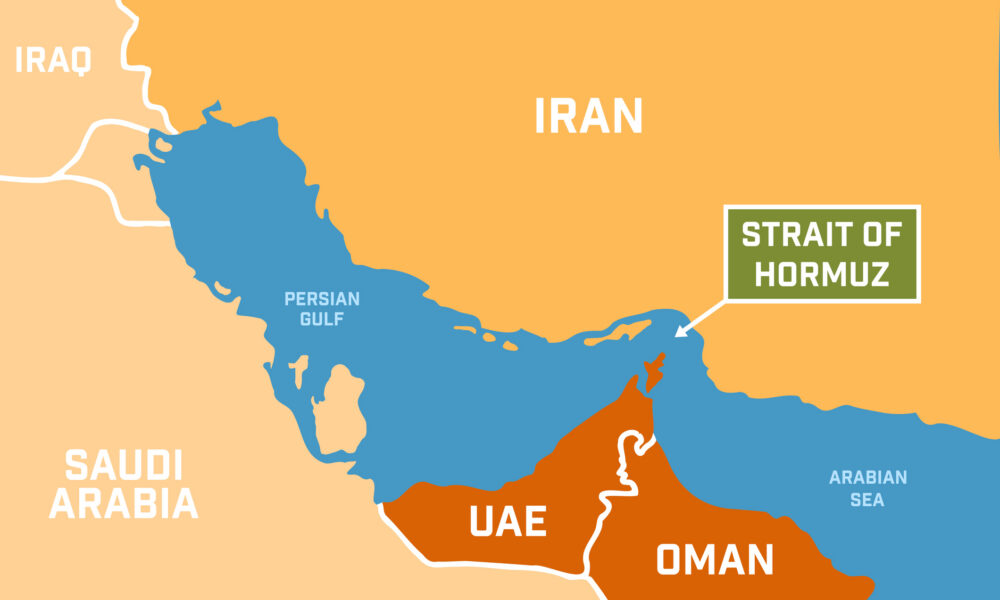

As the US-Israeli war against Iran disrupts shipping through the Strait of Hormuz, farmers are getting another reminder of how exposed they are to global fertilizer supply chains. Fertilizer is deeply tied to fossil fuels, and the strait is a major choke point for oil, gas, fertilizer, and fertilizer ingredients—about 33 percent of fertilizer traded by sea passes through it. US wholesale prices of nitrogen fertilizer rose more than 20 percent during the first week of the conflict. This vulnerability was already exposed in 2022, when Russia’s war in Ukraine sent fertilizer prices soaring.
This is not just a story about one more price spike. It is a story about fertilizer dependence.
A costly high-input model
We are at a crossroads. Many of the solutions now being advanced by the agrichemical industry and its allies to stabilize fertilizer costs would double down on the current model by using public policy to keep fertilizer flowing—from military protection for shipments to new domestic fertilizer manufacturing capacity that would lock in our fossil fuel dependence for years to come. The smarter path is not to build a bigger version of the same vulnerable system; it is to help farmers reduce unnecessary fertilizer dependence over time. That would be better for farmers, better for taxpayers, better for public health, and better for our soil, water, and climate.
For decades, US farm policy and agribusiness have pushed farmers toward a model built on purchased inputs such as fertilizer, a few commodity crops like corn and soybean, and high exposure to volatile global markets. That model is often defended as efficient. But it is not truly efficient if farmers are left vulnerable to every geopolitical shock, and if taxpayers have to pour huge sums into subsidies every year to keep the system afloat. That vulnerability is not insignificant: fertilizer accounted for 33 to 44 percent of corn operating costs and 34 to 45 percent of wheat operating costs in recent years, making price shocks a direct threat to farm finances. The real problem is that too many of the incentives in US agriculture still push in the wrong direction.
Solutions already exist
This dependence is not inevitable. Farmers do not need to stay on a treadmill that keeps them buying vast quantities of agricultural chemicals—and that subjects all of us to the devastating pollution problems those chemicals cause.
The off switch to this treadmill already exists. The available solutions are practical, proven, and within reach. Some are efficiency improvements, using less fertilizer and wasting less of it: applying it at the right times and matching rates more closely to what the crop and soil need. Other practices can make the whole system less dependent on purchased fertilizer in the first place. Currently, more than 95 percent of US corn acres receive nitrogen fertilizer, and corn accounts for 78 percent of the nitrogen fertilizer applied to major US field crops. Legumes such as peas, beans, clover, and alfalfa can help supply nitrogen naturally. More diverse crop rotations can break pest cycles, improve soil fertility, and reduce the need for heavy chemical use. Cover crops can hold nutrients in place, reduce erosion, and build soil health. And bigger changes like adding perennial crops or reconnecting crops and livestock can help shift farms toward a fundamentally lower-input model with lower costs and stronger profitability. These approaches—often described as agroecology—are not futuristic ideas; they are practical strategies already being used on real farms.
That matters because the public conversation too often treats fertilizer dependence as if it were unavoidable. It is not. What is unavoidable is that farmers need support to make good transitions at scale. The real question is whether federal policy will help farmers use the off-ramps that already exist.
Congress is making this choice right now
That question is not abstract. Lawmakers are answering it in real time through the farm bill and annual appropriations.
First, Congress is writing a new food and farm bill. The Congressional Budget Office estimates that the current House draft would cut about $1 billion in budget authority over the next four fiscal years from the Environmental Quality Incentives Program (EQIP). That would mean pulling back support from one of the main federal programs that helps farmers conserve soil and water, reduce pollution, and manage input use more effectively. And this is not a niche program: In 2024, EQIP and the Conservation Stewardship Program (CSP), which helps farmers sustain and expand conservation practices, together enrolled about 30 million acres, serving about 160,000 participants through $3.7 billion in contracts.
These programs should be strengthened substantially, not cut back. Even with added Inflation Reduction Act (IRA) funding, they are grossly oversubscribed: In 2024, only about 44 percent of EQIP applicants and 54 percent of CSP applicants received contracts. That was up by roughly 18 percentage points for EQIP and 23 for CSP from pre-IRA levels, underscoring both how much the added funding helped and how much unmet demand remains.
At the same time, the House draft would channel scarce public dollars toward expensive, proprietary “precision ag” systems that are sold as solutions that target fertilizer where it is needed most in a field. But the evidence is mixed, the savings are far from guaranteed, and the technologies are inaccessible to all but the largest operations. At best, they fine-tune—but reinforce—high-input industrial agriculture, and certainly don’t help farmers move beyond it. That is the wrong direction. Farmers need support for a real transition.
Second, Congress is setting annual appropriations. House appropriators opened the FY27 request process on February 25, and those decisions will affect whether the US Department of Agriculture (USDA) has the technical assistance and research funding needed to help farmers move toward lower-input systems successfully.
The network of Natural Resource Conservation Service (NRCS) offices—staffed with highly trained scientists and technical experts with deep regional and on-the-ground knowledge—is supposed to help make that transition workable. But that infrastructure has recently been weakened by deep staffing cuts and field-office losses, with staff numbers falling from 11,715 in 2025 to an estimated 8,000 in 2026. So even before Congress talks about cutting or reshuffling funding, the baseline problem is that transition support is nowhere near the scale of the need.
Then there is the research side. If farmers are going to have off ramps from fertilizer overdependence, scientists say they need publicly funded research, extension, and technical support focused on lower-input systems that can maintain profitability and resilience. Yet a Union of Concerned Scientists analysis of USDA external research grants found that just 15 percent of funding went to projects with any agroecological component, only 5 to 10 percent went to projects with an overall agroecological emphasis, and only 4 percent supported the more transformative combination of agroecological practices plus socioeconomic supports.
That is a striking mismatch. Farmers are living through repeated fertilizer and energy shocks, but USDA research funding does far too little to build and scale systems designed to reduce fertilizer dependence in the first place. Instead, too much public research remains geared toward helping farmers function inside the same high-input model: maximizing yields in fertilizer-dependent systems instead of food security and farm profitability, optimizing synthetic fertilizer use rather than replacing it, and advancing technologies that deepen dependence on agribusiness-controlled products and services.
Resilience is the fiscally smarter path
The choice is not between spending and not spending. The public is already paying for the current system by subsidizing the wrong kinds of farm risk and propping up a model that remains highly dependent on expensive and polluting inputs. The choice is between paying a little now to reduce risk or paying much more for volatility and pollution later. That makes investing now to reduce fertilizer dependence the fiscally smarter choice.
For example, in Iowa State’s long-term Marsden rotation study, three- and four-year rotations that added small grains and forage legumes to corn-soybean rotations used 86 percent and 91 percent less mineral nitrogen fertilizer and 96 percent and 97 percent less herbicide than a standard two-year corn-soy system. Corn yields averaged 4 percent higher, soybean yields 16 percent higher, and spring nitrate concentrations in drainage water were 57 percent lower in the more diverse systems. Those kinds of systems can also help reduce water pollution cleanup costs. In other words, more diverse systems did not just cut pollution and purchased inputs; they also held up agronomically and economically.
So, another energy-driven fertilizer shock should not become a pretext for deepening dependence—it should be a catalyst for funding the transition away from it.