
In 2023, Michigan enacted clean energy legislation including a renewable energy requirement of 60% by 2035 and a clean energy requirement of 100% by 2040. These clean energy standards were an important step forward which have already supported the development of renewable energy in the state, while also delivering significant public health benefits by reducing harmful pollution from fossil fuel combustion. Recently, however, this clean energy progress has come under attack through proposals to repeal these standards.
Repealing the clean energy standards would be a step backward, failing to solve reliability or cost concerns while ignoring the real emerging challenge: load growth from AI data centers. In fact, UCS analysis of this load growth demonstrates that to ensure a clean, affordable, and reliable energy future, Michigan must strengthen the clean energy standards—not abandon them. It also reveals loopholes that would increase fossil fuel use, even without the repeal.
In this blog, I’m going to break down the structure of the current clean energy standards in Michigan, demonstrate how load growth from data centers puts them to the test, and explain how they must be strengthened to keep moving toward a clean, healthy, and affordable energy future.
The basics of Michigan’s clean energy standards
There are three key points to keep in mind about the clean energy standards:
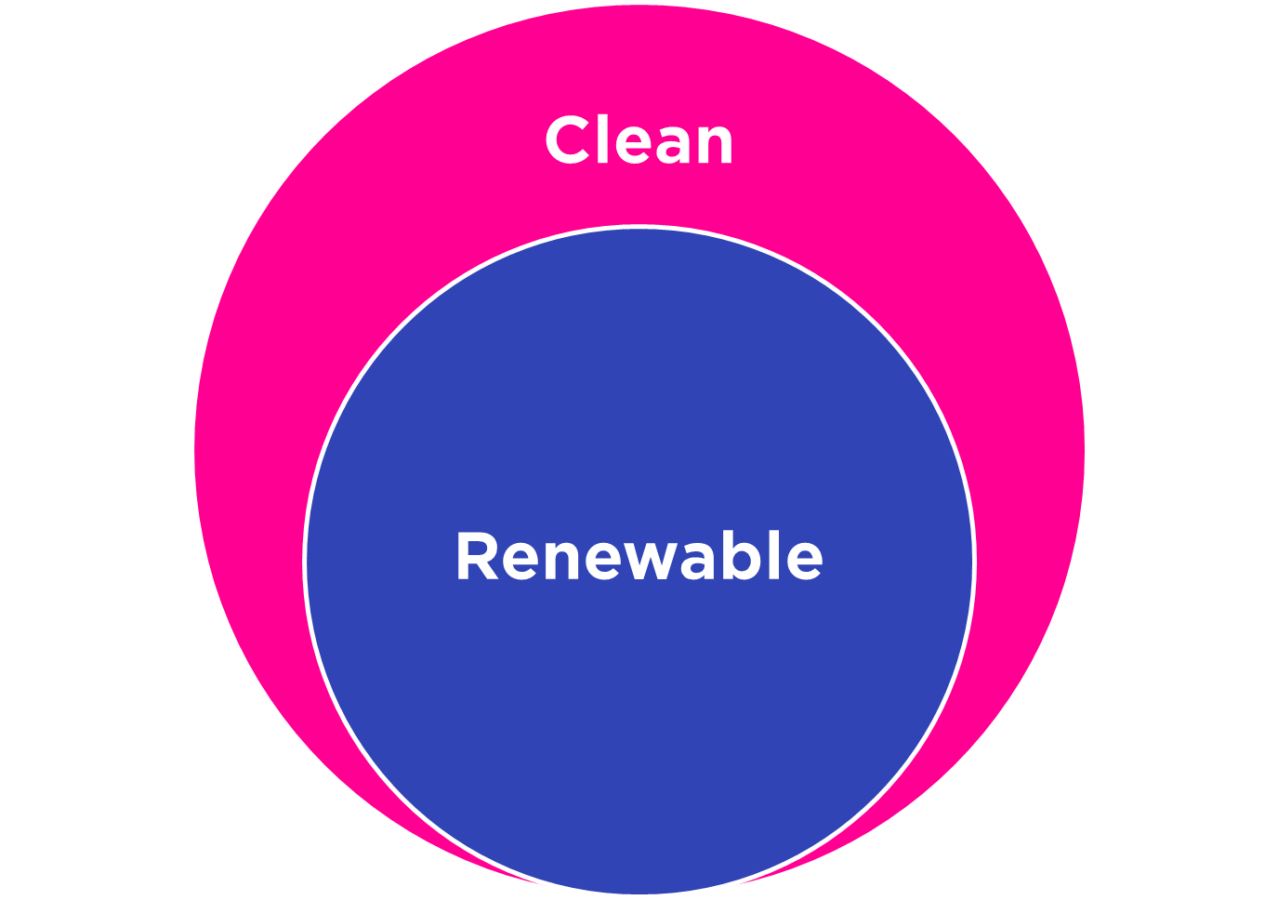
The categories of energy sources overlap. Wind, solar, and hydro-power are included in the definition of “renewable energy,” while “clean energy” includes renewables in addition to other low carbon energy sources, such as nuclear and fossil gas with carbon capture and storage (CCS) (see Figure 1). While labeling some of these sources as “clean” is a bit of a misnomer, I’ll refer to them as clean here to be consistent with the Michigan standards.
Michigan’s energy standards phase in over time. The renewable energy requirement started at 15% in 2024, increases to 50% in 2030, before reaching 60% in 2035. The clean energy requirement starts at 80% in 2035 then jumps to 100% in 2040.
The standards only apply to retail electric sales to “end users” in the state, while also allowing for renewable and clean energy to be purchased outside of Michigan.
Despite the clean energy standards, Michigan’s emissions increase
The Union of Concerned Scientists recently published an analysis of potential load growth from data centers in the United States, demonstrating how that growth affects the grid under different policy pathways. We included a deep dive in Michigan, which produced a surprising result: despite the clean energy standards, heat-trapping emissions from power plants increase steadily over time (see Figure 2).
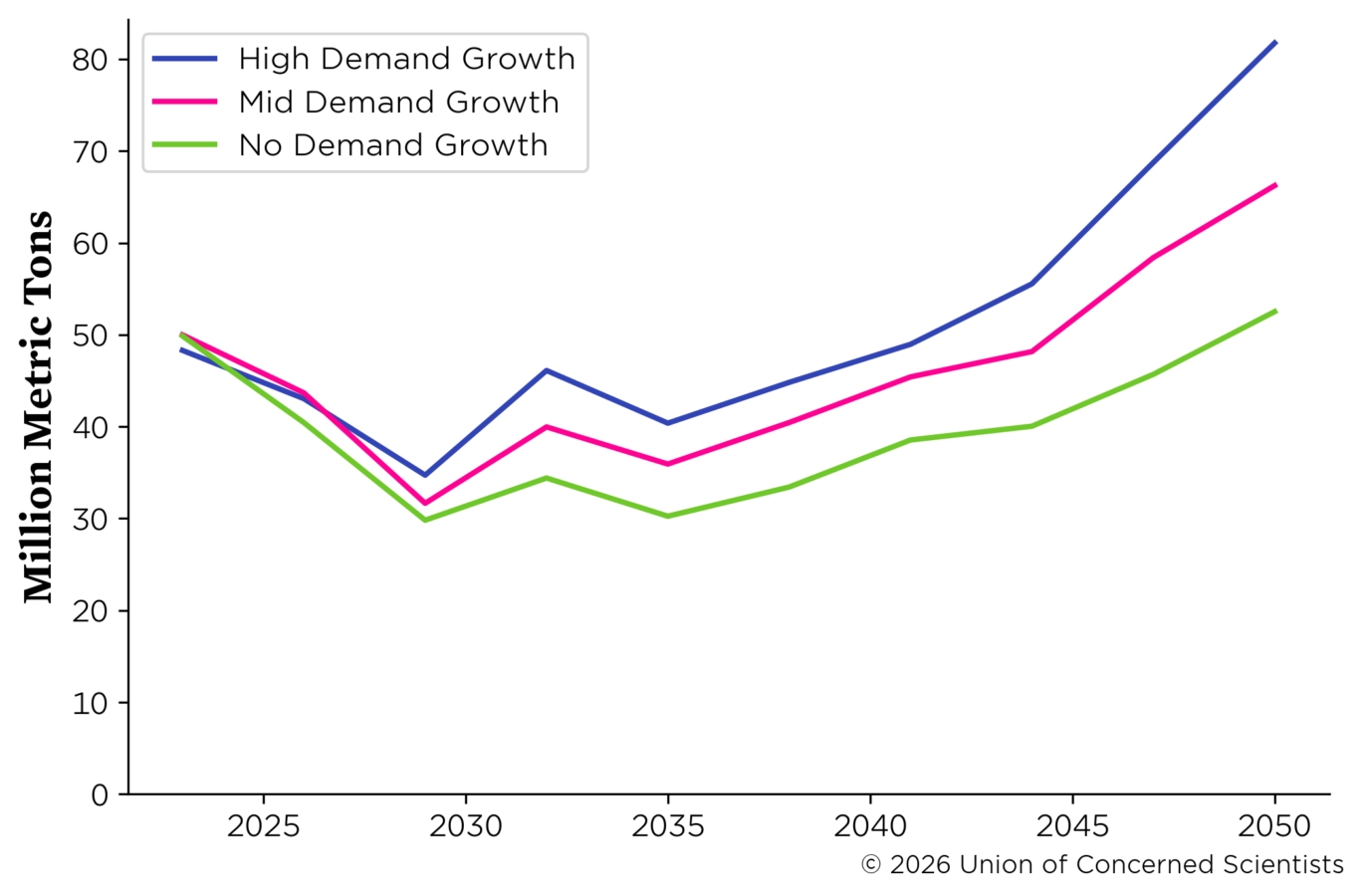
This effect appears across all load scenarios, but because data centers drive massive new demand, they act as a “stress test” for Michigan’s clean energy standards. Our analysis shows that while the standards reduce emissions early on, emissions begin rising steadily after about 2035.
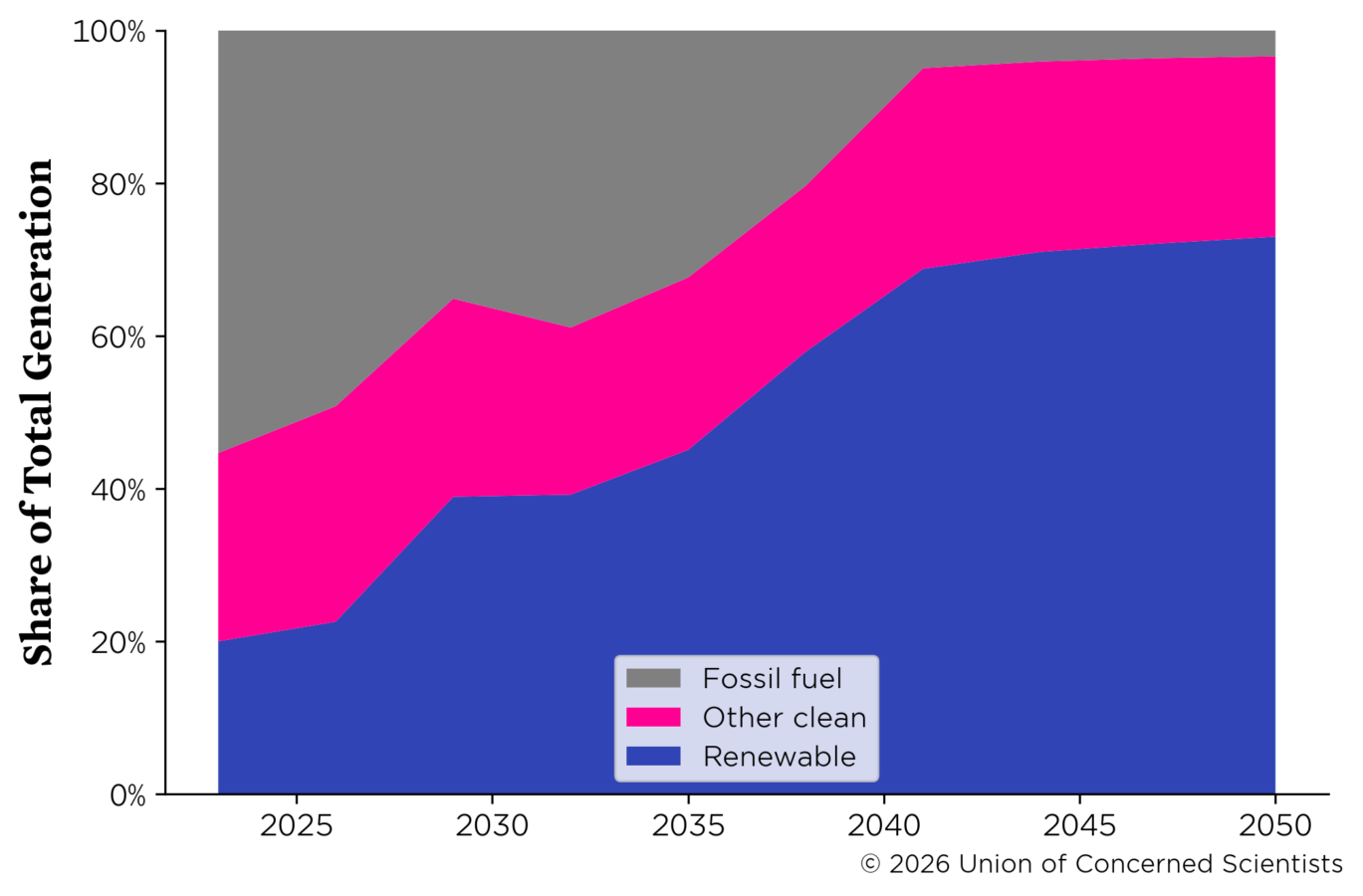
A look at the underlying generation mix helps explain how this is possible. Figure 3 shows the shares of energy generation across renewables, other clean energy, and fossil fuel (coal and fossil gas without CCS) under the “current policies” scenario in our analysis.
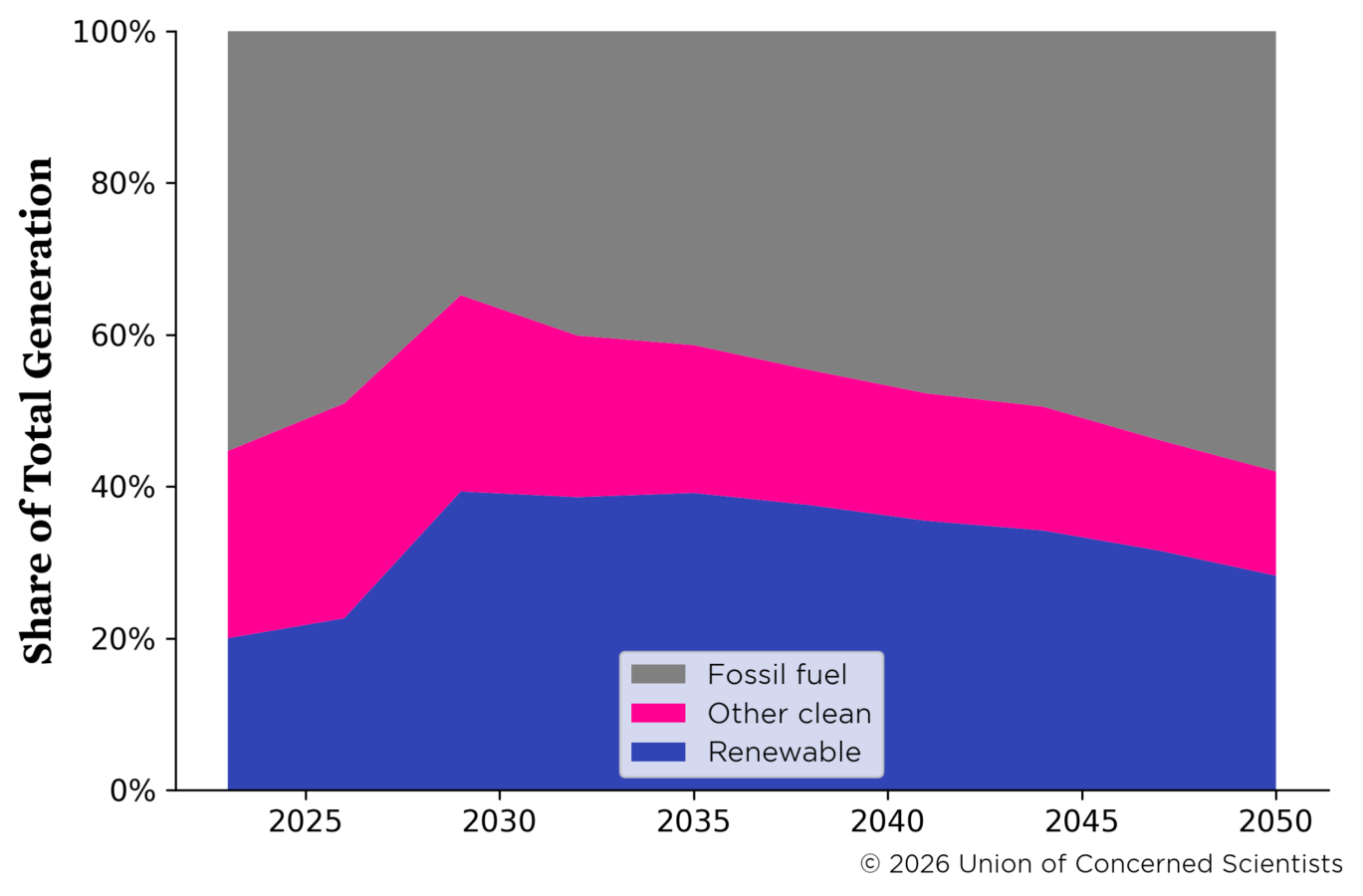
This highlights the problem: shouldn’t renewables plus other clean sources hit 100% by 2040? Let’s explore why that isn’t the case in our modeling results.
Clean energy standards don’t apply to exports
The first big caveat to Michigan’s clean energy standards is that they only apply to energy sales within the state: any electricity that is exported elsewhere is exempt. According to our analysis, exports increase dramatically over time (see Figure 4).
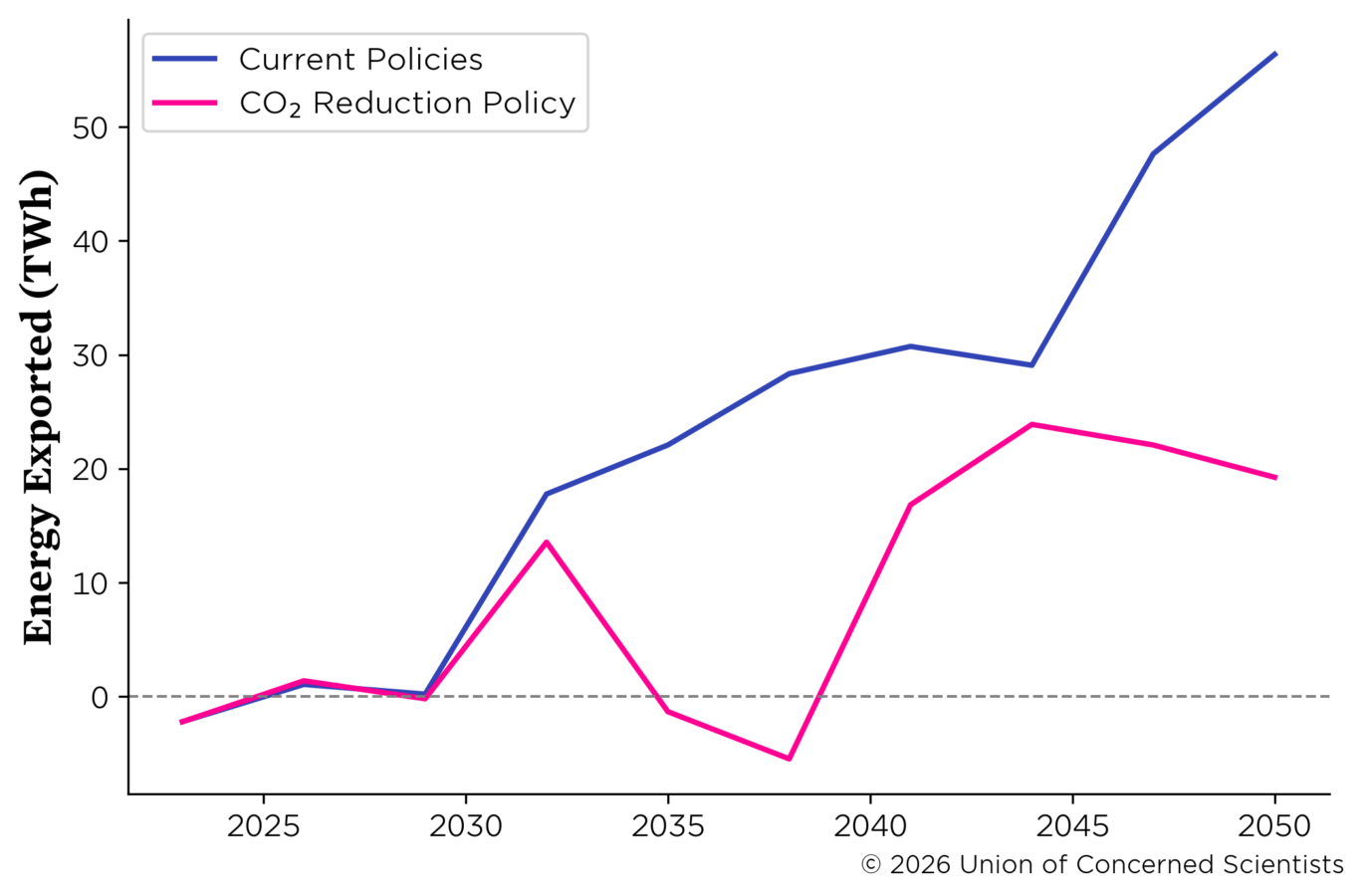
These exports are not subject to the clean and renewable energy standards. This “export loophole” allows utilities to cover their retail sales with clean and renewable energy, while fossil plants can continue running and exporting the energy they produce without limits.
As demand grows due to data centers, our modeling shows that this loophole becomes more consequential, with exports increasing steadily under current policies. But under a different clean energy pathway (which I’ll detail below), exports are subject to clean energy requirements, meaning they don’t cause emissions to increase.
While that growth in exports is significant, it’s still not enough to explain why carbon emissions are increasing over time.
Utilities can buy clean and renewable energy if they don’t make enough themselves
The next caveat is that Michigan utilities can buy credit for renewable and clean energy that they don’t generate themselves. This is where things start to get complicated. Utilities have three basic pathways to meet the state’s clean and renewable standards:
- Generate clean/renewable energy themselves
- Purchase clean/renewable energy directly
- Purchase clean/renewable energy attributes
For renewable energy, the second pathway is often referred to as “bundled renewable energy credits” (or “bundled RECs”), where a utility both buys the energy from a renewable generator and takes credit for its renewable attributes. Typically, this means the utility is paying for the energy from a specific renewable energy project.
The third pathway is “unbundled RECs,” where a utility only pays for the renewable attributes, without the associated energy.
To oversimplify, a utility buying bundled RECs is replacing some of the energy it would sell to its customers with renewable energy generated somewhere else. But a utility buying unbundled RECs is continuing to sell dirty energy to its customers, and paying what amounts to a fine. Unbundled RECs are the indulgences of the energy world.
Fortunately, Michigan has limits on how many unbundled RECs can be used to meet the clean energy standards; they have to come from within the same regional markets that Michigan is a part of (MISO or PJM, depending on the utility), cannot exceed 5% of the utility’s total, and can’t be used for compliance after 2035.
While these limits are a good thing, and bundled RECs are certainly preferable, there’s still a big caveat: Since utilities can just purchase bundled RECs to cover their obligations for retail sales within their territory, there’s nothing stopping power plants from continuing to generate dirty electricity to sell somewhere else.
How does Michigan meet the standards while fossil generation increases?
Now that we understand some of the loopholes in the clean energy standards, let’s take a look at how Michigan is actually meeting these requirements in our modeling, despite the rising emissions. Figure 5 shows the mix of in-state and imported energy credits that are used to meet each of the requirements in 2035 and 2050.
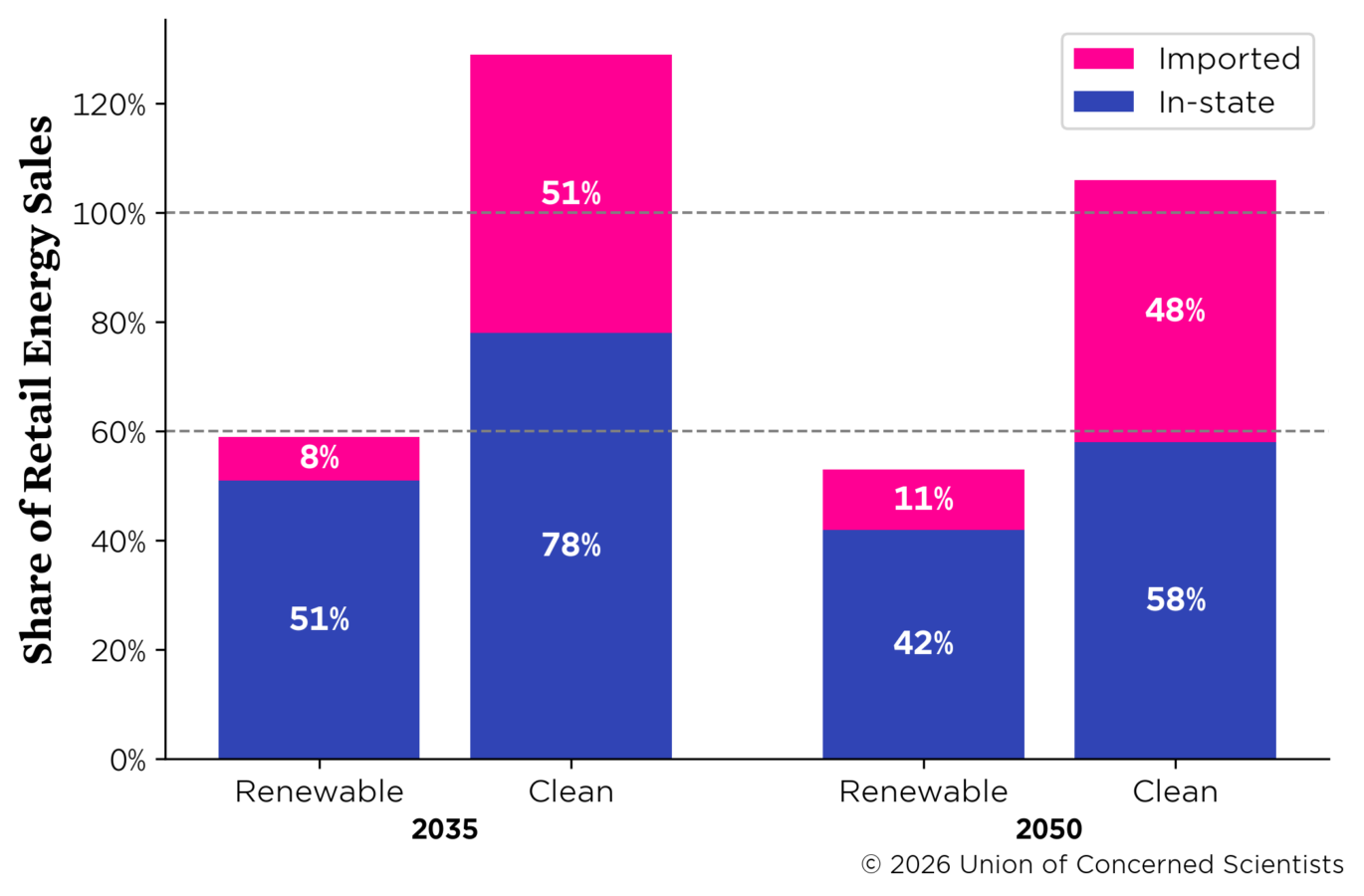
In 2050, Michigan relies on significant imports of clean energy from other states to meet the 100% clean energy requirement which takes effect in 2040, even meeting the requirement ahead of schedule in 2035. The shares for clean energy exceed 100% for a few reasons, but mostly due to the fact that Michigan generates more energy than it needs, leading to exports to other states.
Due to some nuance in how the model calculates and reports renewables requirements, the figure doesn’t quite show Michigan hitting the 60% requirement that takes effect in 2035, but we can see that imports here are also required to comply.
In contrast to the mix of energy credits used to comply with the standard, Figure 6 shows what the shares of actual generation (including exports) look like.
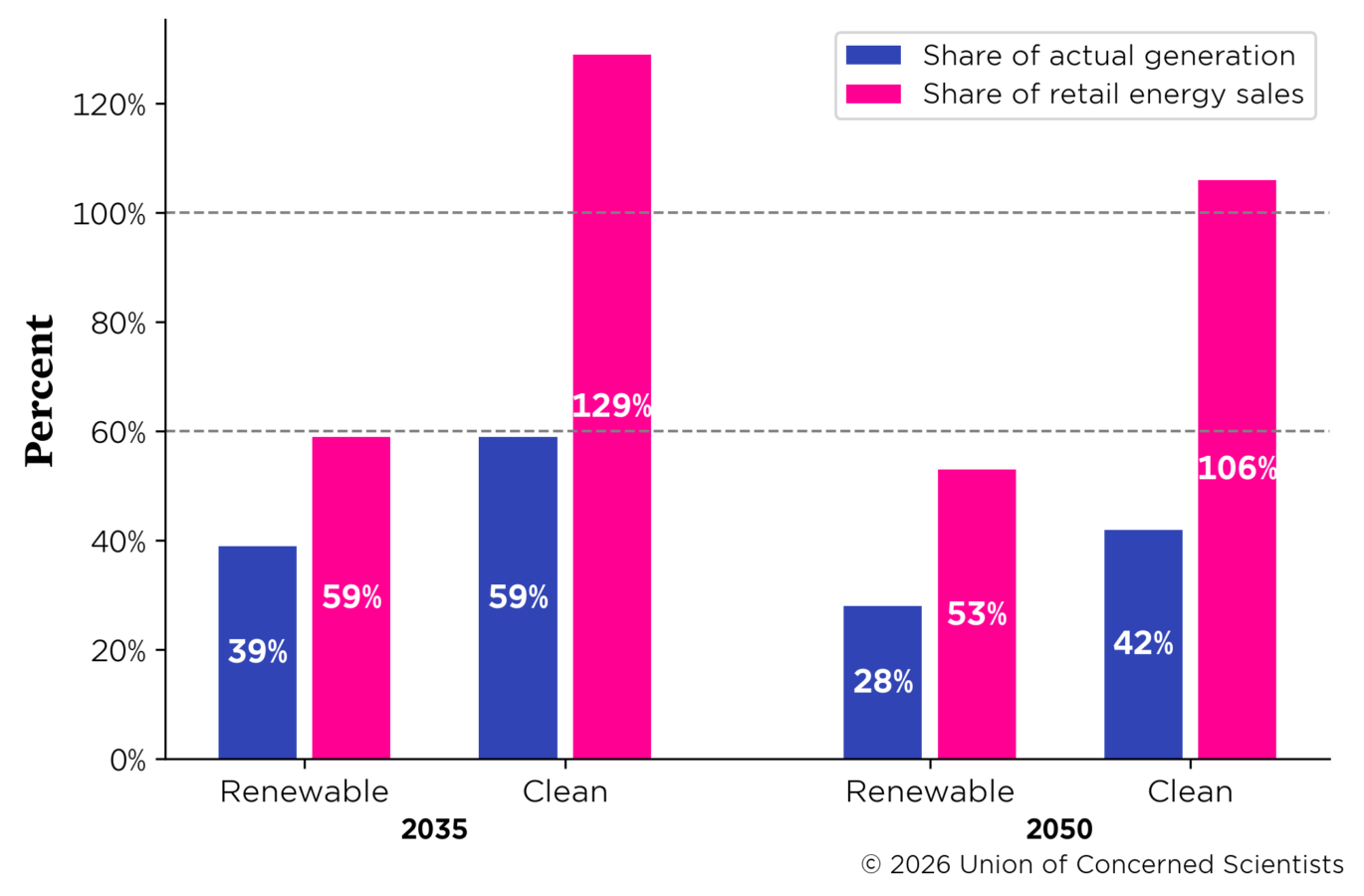
The results show a system where legal compliance and physical reality diverge. Michigan is not actually decarbonizing its energy supply, and it’s getting worse over time—even as it complies with the clean energy standards. Most glaring from our results is that in 2050, Michigan would be “meeting” its clean energy standards while nearly 60% of energy generated in the state comes from fossil fuels.
A better path: regulating emissions directly
To explore more robust clean energy policies, we proposed an alternative scenario based around a CO2 Reduction Policy in our data center load growth analysis.
The key feature of this policy is that it regulates actual power plant emissions, including both imported and exported energy. This approach closes the loopholes in the existing laws: utilities can continue to sell to (or buy from) other states, but all of that energy is subject to emissions limits, not just the portion that’s sold to end users in the state.
Table 1 shows how we modeled phasing the policy in over time, compared to the existing renewable and clean energy requirements. Though the fossil fuel industry is likely to object sharply, this phased approach gives utilities a reasonable planning timeline for compliance.
| Standard | 2030 | 2035 | 2040 | 2045 |
|---|---|---|---|---|
| Renewable Energy Credit Portfolio | 50% | 60% | 60% | 60% |
| Clean Energy Portfolio | 80% | 100% | 100% | |
| CO2 Reduction (from 2023 levels) | 80% | 100% |
You can see the impact in Figures 7 and 8. First, the generation plot shows that renewable and other clean energy sources increase their share over time, approaching 97% of the total by 2050.
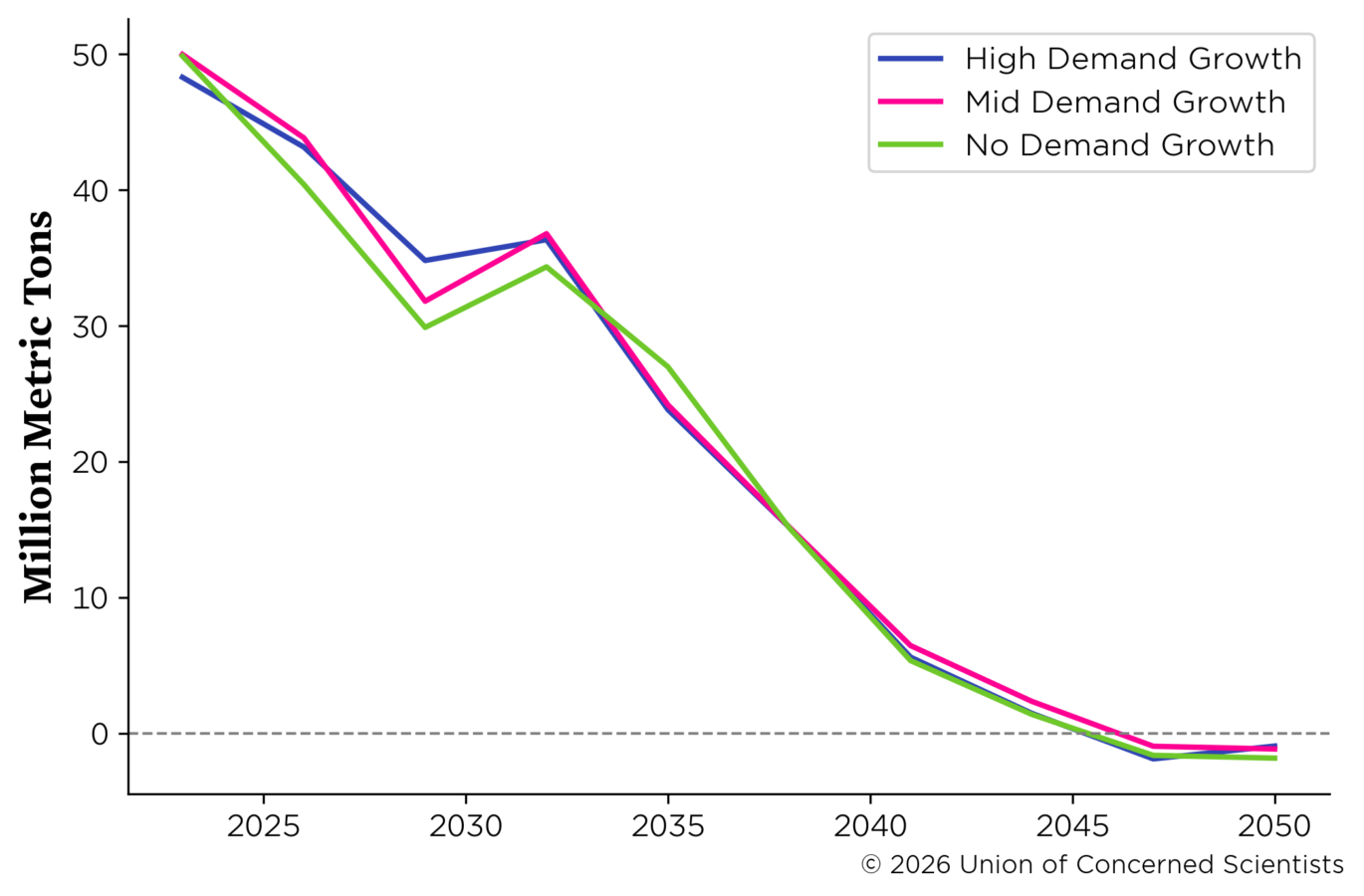
Finally, Figure 8 shows that across all load scenarios, CO2 emissions decrease over time, eventually going below zero due to technologies like biopower with CCS (which explains the last 3% from Figure 7).
Looking ahead
As data centers add enormous new load to the grid, significant new generation will be needed. The existing clean energy standards place guardrails on what types of generation are allowed, guiding the state towards a clean and renewable future. But as we’ve seen, the loopholes in these standards allow utilities and power producers to rely on accounting mechanisms to meet the letter of the law while still expanding fossil fuel generation.
This has measurable negative impacts: under the existing laws, our analysis shows that the expected growth in data centers would lead to $118 billion in climate damages and $1.6 billion in health damages by 2050 due to air pollution and emissions from fossil fuel power plants in Michigan.
Michigan’s clean energy legislation in 2023 was a strong start, but as load growth from data centers reshapes the system, stronger policies are needed. Rather than moving backward with misguided attempts to repeal the clean energy standards, they must be strengthened with actual limits, regulating emissions of heat-trapping gases directly. Policies that focus on actual emissions ensure that every megawatt-hour of electricity moves the system closer to the clean, healthy energy future Michiganders deserve.