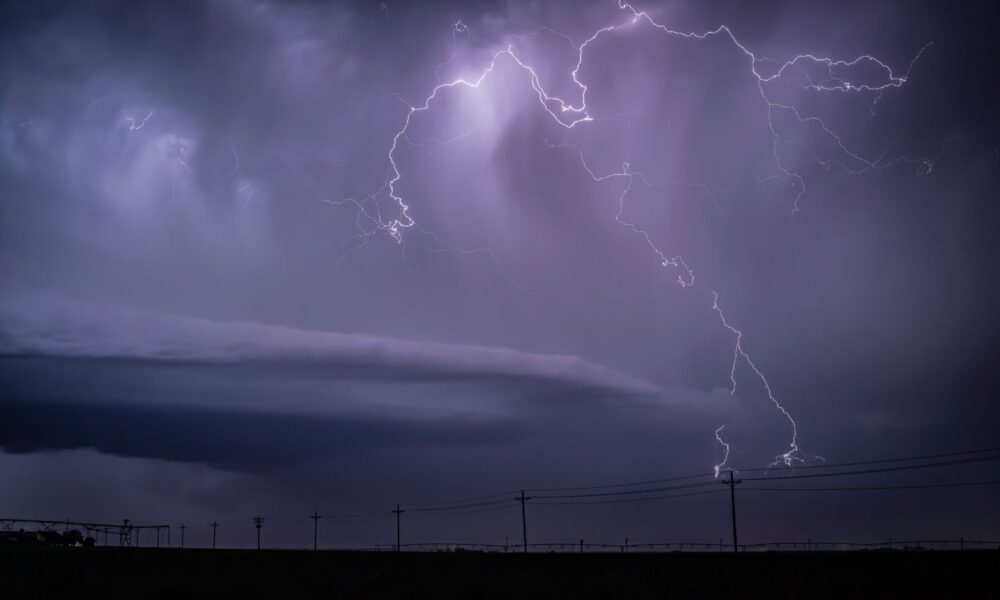

On January 8th, UCS released its second recent report on the intersection of extreme weather, climate change, and the electric grid. Power After the Storm builds off the previously released Keeping Everyone’s Lights On, taking a closer look at the extreme weather events that have caused the most serious power outages over the past decade across the central United States and how climate change is expected to exacerbate extreme weather risks to the power system. Unfortunately, with heat-trapping emissions continuing to increase both globally and domestically, we must accept that responsibly planning and investing in electric infrastructure cannot just focus on reducing emissions to avoid the worst impacts of climate change. It must also prioritize investments that prepare the electric system for the impacts of climate change that are now unavoidable, including more frequent and severe extreme weather events that risk widespread, long-duration power outages.
Ensuring the electric system is resilient to extreme weather requires similar thinking to how we might ensure our own resilience at home. As someone who grew up on the Gulf Coast of Florida, I think about electric grid resilience similar to how I think about being ready for hurricanes: it requires both near-term preparation when a storm approaches (such as stocking up on fresh water and fueling/charging the car) and long-term planning and investment (such as installing storm windows and maintaining a sound roof).
Preparing the grid for climate change starts with assessing the risks
When it comes to MISO – the federally-authorized regional transmission organization (RTO) that plans and operates the bulk electric system spanning much of the central United States – it seems focused on the near-term prep for extreme weather, but less so on the long-term planning and grid investments that will reduce the risks of future extreme weather. That’s a significant oversight because right now we are investing tens of billions of dollars into electric grid upgrades meant to serve communities for the next 50 years or more. This leaves a perilous gap in preparing the future grid for the extreme weather and climate changes that scientists are warning us about. This failure leaves communities vulnerable to widespread, long-duration power outages that can have devastating impacts.
Cost-effectively building a grid that is resilient to climate change and extreme weather begins with two core strategies. First, we need the responsible parties – MISO, states, and utilities – collaborating with communities to establish common goals, priorities, metrics, and strategies for mitigating extreme weather risks. Second, an electricity-sector focused, collaborative, transparent, and science-based risk assessment of climate change and extreme weather must be done. These two strategies can ensure everyone understands the challenges, opportunities, and various responsibilities in achieving a more resilient grid and that investments made at all levels are complementary to each other and protect those most vulnerable. This isn’t currently happening, and it means we’re ill-prepared and potentially mis-investing in our response to climate change even as the sector commits significant investments in building the grid of the future.
MISO focuses on near-term preparations for extreme weather but leaves the system exposed to long-term risks
Over the course of a year, MISO conducts several exercises with its member utilities and states to prepare for extreme weather events, including:
- Emergency preparedness exercises where MISO and utilities practice how they will collectively respond to various emergency events including extreme weather. When extreme weather hits, being able to effectively react to power plant or grid failures is critical to minimizing outages and avoiding further damage to the system. Re-routing energy flows, ramping up or turning down power plants, and calling on emergency resources such as demand response must be done with an understanding of how the system and other entities such as neighboring utilities will respond. Successfully navigating extreme weather events takes significant coordination, and these emergency preparedness exercises are central to that effort.
- Annual system performance assessments: Per federal reliability requirements, MISO also tests the system annually under several “contingencies,” such as the loss of one or more power plants or transmission lines. Which contingencies to study are typically provided by MISO’s member utilities, some of which are in response to historical or perceived threats from extreme weather. During this exercise MISO also tests the system’s ability to move power across the region, a critical capability when extreme weather disables parts of the system.
- Seasonal risk and preparedness assessments: MISO and its utility members also conduct seasonal assessments of the MISO system with a particular focus on the summer and winter seasons, when extreme weather is most likely and the system tends to experience its most stressful periods. These exercises focus both on the system–for example, to understand projected energy demand, what resources should be available, and/or which infrastructure assets might be offline–as well as expected weather conditions over the course of the season that will impact energy demand and power plant performance.
- Week-, day-ahead, and real-time forecasting and positioning: About two weeks out, when weather forecast accuracy improves, the MISO operations team starts paying close attention to any potential extreme weather on the horizon. Within the one-week ahead window, when load, wind, and solar forecasts become available, MISO develops system operations plans that guide how resources are dispatched to meet demand across the system. These plans feed into the real-time operations where the MISO control room has authority to make severe weather or emergency declarations when extreme weather threatens the immediate reliability of the system.
All of this is both necessary and prudent, but not sufficient: current practices focus on making sure the current grid survives the current weather-year, but do not look much further than a year into the future and drive little, if any, new investments to mitigate power outage risks during future extreme weather. On the other hand, MISO’s longer-term system planning and investment strategies have that long-term perspective but doesn’t take climate change into account. It’s the latter where MISO, states, and utilities must do better because it will enable the shorter-term exercises and operations to actually succeed as extreme events become more frequent and severe.
MISO must plan and invest for the world that will exist as changed by climate and extreme weather
There are two primary avenues for new transmission system investments in the MISO system. First are the “bottom-up” transmission projects that are brought to MISO by its member utilities for a variety of purposes including to replace aging equipment, meet day-to-day local reliability needs, or connect new load. These are brought for approval by MISO annually in MISO’s Transmission Expansion Plan (MTEP).
Then, there are “top-down” projects that come out of MISO’s own planning processes, the most consequential one being its Long-Range Transmission Planning (LRTP) process that has driven much-needed investments in the MISO system. Together, they make up MISO’s multi-year grid investment strategy, and neither give little more than a cursory acknowledgement to the risks posed by climate change and extreme weather:
MTEP’s contingency analysis:
This is the same annual performance assessment mentioned above describing MISO’s near-term processes with utilities to test the system under various contingencies such as the loss of a power plant or transmission line. While this process, in theory, could help identify grid investments to mitigate the risks of extreme weather, the process suffers from multiple key shortcomings:
- It is not forward looking: While it is important for MISO to understand how the existing system responds when power plants or transmission facilities unexpectedly go offline, nothing about this process looks ahead to what extreme weather risks might manifest over the coming years or decades.
- It is disconnected from the realities of extreme weather impacts: This process also fails to recognize when extreme weather causes multiple facility outages at a single time and fails to capture the different probabilities of various facility outages during a range of potential events. For example, certain extreme weather events may have a higher likelihood of causing transmission outages, whereas others may have more direct impacts on power plants. This process fails to consider such dynamics.
- It isn’t designed to seek out cost-optimal solutions: Finally, this analysis fails to look at various contingencies holistically in ways that would help identify cost-optimal solutions that might mitigate multiple risks or reduce risks in a least-cost manner.
LRTP’s “reduced risks from extreme weather” transmission benefit metric
Perhaps the most obvious place where one might expect MISO to do a forward-looking extreme weather risk assessment is during its Long-Range Transmission Planning process. Unfortunately, when MISO evaluates investments needed to meet transmission system needs over the next twenty to forty years, its consideration of extreme weather risks falls woefully short.
During the LRTP process, MISO evaluates the power resource transition – which power plants might be taken offline or added to the system – as well as expected load growth, policy requirements, and other factors to evaluate how the system will operate and what transmission system investments are necessary to maintain a reliably electricity supply. Potential transmission system investments are evaluated for the benefits they will provide to consumers to demonstrate that the benefits outweigh the costs. One of the benefits included in MISO’s assessment is the benefit of that project to reduce the risk of power outages during extreme weather events. That sounds good. But when you dig into the methodology, you realize that MISO is coming up short:
- It is not forward-looking: MISO’s evaluation looks solely at historical events. At no point in the process does MISO ask what extreme weather risks the system might face or how these risks might evolve over the twenty- to forty-year planning period.
- It focuses on only one type of extreme weather event: MISO’s process focuses primarily on system conditions during extreme winter weather such as Winter Storm Uri. While Uri was a defining event in the discussion about system resilience, it does not represent the full range of risks the system faces from the various extreme weather events that can impact the system in very different ways. Further, MISO’s approach is focused on conditions where multiple power plants are forced offline but does not consider conditions where transmission facilities may be forced offline either separately or in conjunction with power plant outages.
- It assumes everyone experiences a power outage the same: When quantifying a benefit of a project, eventually that benefit is turned into a dollar estimate. In this case, a value is assigned to the cost of a power outage, what is called a “value of lost load” (VOLL). MISO uses one value to represent every residential consumer on the system. (Separate values are assumed for business and industrial ratepayers.) This simplistic approach fails to recognize how communities experience outages differently and how vulnerabilities to outages differ among and within communities. This means the most vulnerable remain so, and it likely perpetuates current inequities in how communities are served by the electric system.
In sum, MISO’s transmissions planning and investment decisions do not adequately consider the long-range risks associated with climate change and extreme weather. A more informed approach would be to incorporate science-driven projections of future extreme weather risks – what events the MISO system is likely to experience, how frequently it should expect such events, and how different communities might experience power outages – over the coming decades to inform its investment strategies. Doing so would better protect communities from long-duration, widespread outages and ensure system investments are providing important resilience benefits to justify the costs being passed on to ratepayers.
Things to watch in 2026
There are some things to keep an eye on as efforts to address extreme weather risks evolve. In both cases, integrating climate science and community input in a transparent and data-driven manner could begin to unlock the investments needed to keep the lights on in a climate-changed world.
- New requirements to plan for extreme temperatures: In June, 2023, the Federal Energy Regulatory Commission (FERC), which regulates regional transmission organizations (RTOs) like MISO, issued new requirements to bolster system planning for extreme heat and extreme cold events. The new rules require transmission system planners such as MISO to develop extreme heat and extreme cold scenarios that can be used to test the transmission system and develop “corrective action plans” to maintain reliability during these events. The details of implementing this new requirement is left largely to the system planners like MISO to determine how robust new planning scenarios are and whether the corrective action plans actually lead to new, resilience-focused investments.
- Updating planning methods to better reflect the value of investing for grid resilience: MISO’s MTEP and LRTP transmission planning processes are ever-evolving and, to MISO’s credit, are capable of being responsive to system needs and shaped by stakeholder discussions. In 2026, MISO’s processes to incorporate extreme weather risks into its system planning processes will again be up for discussion. This presents an opportunity to improve transparency, incorporate climate science, and be more responsive to community needs in the face of extreme weather risks.
Next steps towards a more resilient electric grid
Achieving a resilient grid that equitably serves communities starts with understanding the risks facing the grid and ensuring transparency, collaboration, and accountability along the way. To that end, our recently released Power After the Storm report includes these recommendations:
- Conduct climate change and extreme weather risks assessments: MISO, states, and utilities need to come together to complete an electricity sector-specific, comprehensive climate risk assessment that looks at the full range of risks facing the grid from climate change and extreme weather.
- Engage with communities: Ultimately, the electric grid should serve communities that have differing vulnerabilities to climate change and extreme weather and different priorities in how to build resilience. Engaging with communities and building an inclusive decision-making process ensures grid investments complement other community-centered resilience efforts and will lead to more effective and beneficial investments.
- Be accountable to partners: Because achieving a resilient grid involves several actors across the federal, regional, state, and local levels, it will require accountability and each partner doing their part. With respect to MISO, it should be using its deep understanding of the regional electric system, its extensive technical capabilities, and its broad convening powers to bring the various actors together, provide technical support, and ultimately create processes that embed collaboration and accountability throughout.
Unfortunately, climate change has become a reality, and its impacts will be felt over the coming decades in the form of, among other things, more frequent and intense extreme weather events. We must prepare for this future, including by making smart, science-informed investments in our electric grid that are responsive to the risks and ensure the benefits of a more resilient grid resilience flow to communities in an equitable and transparent manner. As detailed above, there are building blocks in place and clear opportunities to do better, but more is needed if we’re to truly ensure power after the storm.