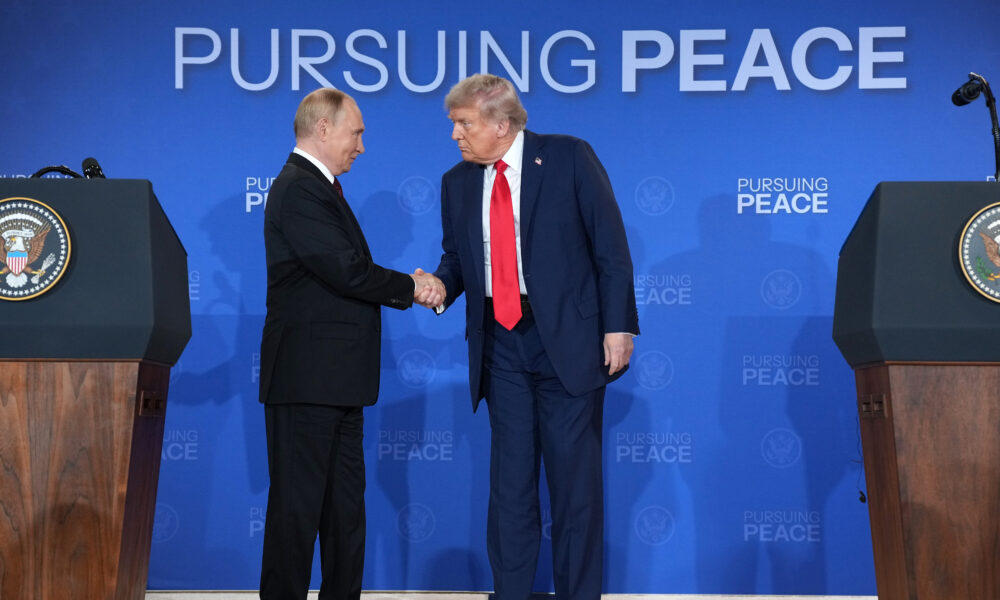

On February 5, the last remaining arms control treaty between the United States and Russia expired. The New Strategic Arms Reduction Treaty (New START), which limited deployed US and Russian long-range nuclear arsenals to 1,550 weapons, had been on rocky ground ever since Russia invaded Ukraine in 2022. Three years ago, Russia attempted to use the treaty as leverage to discourage US aid to Ukraine by suspending its participation in the treaty and rejecting US initiatives to discuss a follow-on treaty. However, Russia continued to honor the treaty’s limits on its nuclear forces and eventually offered to voluntarily abide by the terms of the treaty for a year after its expiration. The United States never formally responded to Russia’s offer, and President Trump explicitly rejected it on the day the treaty expired.
Negotiation of a follow-on treaty to New START is critically important because a world without legal constraints on nuclear weapons is a more dangerous place. As my colleague Jennifer Knox recently described, both the United States and Russia can now move to expand their arsenals, with some steps that could happen in weeks or months, and others that might take years. Such an arms race would increase the risk of a nuclear conflict.
Indeed, a primary function of nuclear arms control is to reduce the risk of nuclear war—especially when tensions between the United States and Russia are high. For the last 50 years, the United States and Russia used arms control agreements to stabilize the international security environment and control nuclear competition.
How arms control reduces risk
New START was the last of the US-Russian bilateral nuclear arms control treaties, but it is part of a lineage of agreements that have reduced risk and moved the world away from nuclear war. There are several mechanisms by which arms control does this.
- Transparency and confidence building: Verification regimes provide transparency into opposing arsenals, increasing confidence in treaty compliance and reducing the risk that routine military activities might be misinterpreted as preparations for a nuclear strike. New START also required the United States and Russia to not interfere with national technical means of verification, such as intelligence satellites—a rule that will expire with the treaty.
- Norm setting: Through iterations of strategic arms control, the international community has collectively defined how nuclear-armed countries should behave. Over time, these standards can be upheld by the international community even without legal obligations. For example, the Comprehensive Test Ban Treaty established a norm of no nuclear testing (even though it has not yet been ratified).
- Crisis management: Negotiations open up lines of communication between nations. Sometimes these channels of communication are formalized through agreements like the nuclear risk reduction center (NRRC) and the “hotline” between the United States and Russia, which reduce the risk of escalation by allowing the two adversaries to talk to one another about an unfolding crisis. Neither the NRRC nor the hotline arose as part of a formal treaty, but they are still part of an arms control regime. In other cases, formal treaties establish ongoing channels for communication about the treaty. These channels can provide early warning signals of an erosion in the relationship and alert parties that the relationship needs some management.
- Limiting deployed weapons: Arms control has been remarkably effective at reducing the size of the US and Russian nuclear arsenals. The United States currently has an active stockpile of 3,700 nuclear warheads, down from a high of more than 30,000 in the 1980s. Russia currently has a stockpile of 4,300 warheads, down from a high of more than 40,000. By agreeing to mutual constraints on their number of deployed warheads, the United States and Russia reduce the risk of a destabilizing arms race that would waste enormous resources on military spending.
- Limiting or even eliminating capabilities: During the Cold War, arms control was used to place restrictions on destabilizing nuclear technologies. The Intermediate-range Nuclear Forces (INF) Treaty (1987) eliminated an entire class of mid-range missiles—those that would be in the air for less than 10 minutes between launch and detonation—reducing fears in Europe of a decapitating first strike. The Anti-Ballistic Missile (ABM) Treaty (1972) set strict limits on missile defense systems that would counter offensive strategic nuclear missiles, reducing the incentive for an offense-defense arms race. And, the Outer Space Treaty (1967) prohibits the placement of nuclear weapons in outer space.
Choosing to reduce risk
Arms control is far from a perfect solution to the nuclear threat. We would all be better off in a world where the threat from nuclear weapons is dramatically reduced or eliminated. But arms control can, as a starting point, reduce the likelihood of nuclear war and provide some measure of stability and predictability. New START was especially important because it demonstrated deeper cuts to arsenals were indeed possible, as it reduced stockpiles from a ceiling of 2,200 deployed warheads to 1,550, a modest but real reduction.
New START’s expiration is just one more crack in the weakening security environment that has guided US and Russian nuclear policy for decades. A world without nuclear arms control is a much more dangerous place, and the risk of nuclear war is higher. Let us hope that the United States and Russia will voluntarily abide by New START’s limits and seek to negotiate a follow-on treaty.