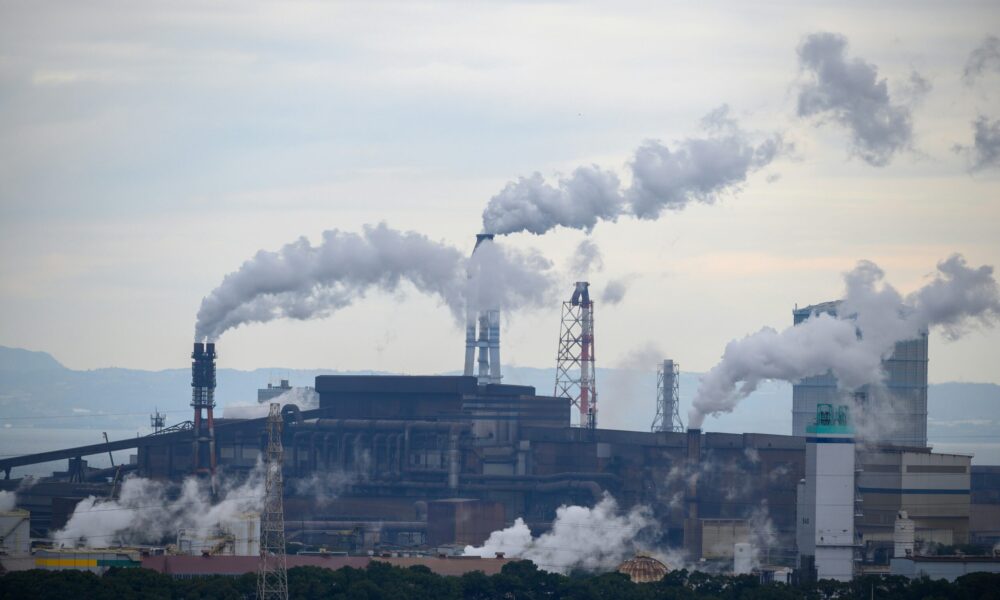

The Trump administration has made it a mission to eliminate life-saving and health-protecting rules we all rely on, in order to increase profits for a few well-connected corporations. In yet another step towards this harmful goal, the Environmental Protection Agency (EPA), quietly and without public comment, stopped putting a dollar amount on the value of human lives saved from reducing pollution.
Make no mistake: this is rigging the game. By quantifying the costs to industry but not the benefits to people’s health and safety, the Trump administration is vividly illustrating their priorities. Without a calculation of the impact on human lives, the Trump administration will design rules for a fictional world where only polluters matter. Those weaker rules put our health and our lives in danger.
Calculating benefits and costs
Under certain sections of environmental laws, including parts of the Clean Air Act and the Clean Water Act, EPA is required to consider costs of implementation alongside benefits to health and the environment. For the past four decades, EPA has increasingly employed benefit-cost analyses to weigh these outcomes in rulemakings. The Biden administration developed guidance requiring more evidence-based criteria to make these assessments less easy to tamper with on behalf of political interests. The second Trump administration quickly rescinded this guidance. This set the stage to completely eliminate the valuation of improving health and human lives, enabling—for starters—a new air pollution rule that drastically reduces health protections.
Scientists and analysts at EPA inform environmental regulations using a variety of assessments to determine the need for, and potential outcomes, of new rules. Benefit-cost analyses provide vital context for these rules. Benefit-cost analysis informs rules, but doesn’t necessarily determine all of the specifics. These analyses include both the unquantifiable and the monetized financial costs and benefits of a rule. Cleaning up pollution comes with some cost to the polluter, but the failure to clean up pollution can impose costs on public health and the environment. Effective analysis considers both sides of the equation. The costs of a rule could include, for instance, the price of installing pollution control equipment, or switching from one chemical in an industrial process to a less-harmful one. Benefits, on the other hand, could include (but are not limited to) fewer asthma-related emergency room visits, fewer missed school or work days from illness, fewer cases of cancer, and less environmental degradation. These analyses do not just include things you can easily put a dollar value on—after all, this is about saving human lives, undeniably a vital benefit even if difficult to fully quantify.
By assigning a dollar value to a variety of costs and benefits—using thoughtful and well-established methods—decision makers can see both sides of the scale, so that the rules they develop actually protect human health in a feasible, cost-effective way. That’s the idea, at least. The reality is that the assessment is only as good as the data and estimates on each side.
Benefit-cost analyses, in fact, were originally advanced by industry interests. Decades ago, the studies connecting air pollution levels with health effects were in their infancy, and quantifying the cost savings of reducing air pollution was much more speculative and difficult. But in the years since, scientific studies connecting air pollution to asthma hospitalizations, premature deaths, neurodevelopmental harms, and cardiovascular disease have increasingly provided clear evidence of the significant health benefits and cost effectiveness of decreasing air pollution. These findings have only gotten stronger over time, giving us a fuller picture of the dangers of environmental pollution and the big improvements that people can experience from pollution reductions. The evidence is clear.
A major challenge in all of this, however, is that the costs are felt by business owners over the short term, while the health benefits and cost effectiveness of protective environmental regulations are distributed broadly over a long time. It’s easy for industry interests to advance a false narrative about how public health rules burden them, while the worst impacts of pollution often fall on the most disempowered and marginalized communities.
When is benefit cost analysis legally required?
Federal laws and presidential executive orders guide agencies as they develop rules and, in some cases, direct what agencies should consider in weighing costs and benefits. For example, some parts of the federal Clean Air Act, such as power plant regulations, specifically call for costs to be considered, whereas others (like the National Ambient Air Quality Standards) are based on protecting health and welfare. In 1993, the Clinton administration issued Executive Order 12866, which required federal agencies to conduct benefit cost analyses that “include both quantifiable measures (to the fullest extent that these can be usefully estimated) and qualitative measures of costs and benefits that are difficult to quantify.”
A decision to ignore the facts
Benefit cost analyses are not perfect. They require estimates about complex ecological and health outcomes. A strong benefit-cost analysis requires that both sides of the equation get the same attention and include high quality data. Industry actors initially pushed the federal government to use benefit cost analysis, but as these analyses became more common, they began actively pressuring decisionmakers to weaken the calculation of benefits. In 2020, the first Trump administration attempted to halt the inclusion of co-benefits in the analysis of regulations that limit mercury and other toxics from coal- and oil-fired power plants. (“Co-benefits” refers to the upsides of reducing other pollutants alongside the target pollution.) Additionally, the first Trump administration reduced the scope, or the number, of the types of health problems that were included in the analysis, thereby shrinking the potential benefits of the rule.
Now, however, the Trump administration has decided they’re simply no longer quantifying benefits from avoided premature deaths. The excuse offered by EPA administrator Lee Zeldin is the purported scientific uncertainty in linking fine particulate exposures to human health effects. But when an agency decides not to quantify a benefit, there’s a high risk that this functionally means the benefit will be treated as zero.
This is intentional. When we pull back the veil of EPA’s stated concern, we see a weaponization of uncertainty in scientific assessments, a tactic that the administration has readily used to justify other public health-damaging decisions. If Zeldin’s EPA was actually concerned about scientific uncertainty, they would not have just waved away the monetized benefit estimate. They would have devoted an equal level of rigor they applied to the uncertainty around calculating economic costs to industry. In scientific assessments, the goal is not to eliminate uncertainty; it is to acknowledge it exists, follow the scientific process over time, and improve procedures to make the best estimate possible. Willful ignorance doesn’t cut it.
Ignoring benefits means more pollution—and more harms
For a striking example of what can happen when health benefits go unmonetized, look at EPA’s final rule setting limits on air pollution from stationary gas combustion engines. These are very common machines, and getting even more common as they power AI data centers that are themselves estimated to increase three-fold by 2027. The New Source Performance Standard (NSPS) for stationary combustion engines sets limits on nitrogen oxides and sulfur dioxide, two air pollutants that harm the respiratory system and are precursors to acid rain. Moreover, these two compounds can combine with other air pollutants to form ozone and fine particulates, which are highly harmful to the respiratory system as well as the heart and brain. Thanks to this one-sided accounting, the Trump administration’s final rule is 90% less stringent than the Biden administration’s 2024 proposal.
The draft rule proposal estimated that the reduction in over 2500 tons of nitrogen oxides would cost $166 million to polluters and provide net benefits of up to $340 million to the people impacted by this pollution. The final rule, where the monetized benefits were excluded, stated that weakening these protections will save power plant owners $87 million over eight years. Who pays the cost? The rest of us, in hospital bills, lost work and school days, and even lives.
The final rule spends about 3 pages attempting to justify eliminating monetized health benefits, claiming concerns with uncertainty. In doing so, EPA leadership set a goal for scientific certainty that no one could meet, all to avoid setting strong rules that could require their political allies in industry to take responsibility for the pollution they create. Although Zeldin assured the American public that they considered human health in the rule, their highly insubstantial “assessment” amounted to describing the adverse health effects related to air pollutants from stationary combustion engines and then stating that reducing these exposures can help to improve some of the mentioned effects.
Health is the mission
Public health regulations are more popular than conventional wisdom suggests, and there is significant evidence these rules prevent deaths and support a strong economy. There is broad and bipartisan popular support for maintaining clean air, water, land, and food. Administrator Zeldin and EPA leadership have made it clear that they only think the costs to their favored industries are worth focusing on.
To prevent further backsliding in our health and environmental protections, we need to put people back in the picture—and restore independent science to regulatory assessments, following the principles of scientific integrity and setting guardrails against these types of harmful political interference.
The EPA’s mission, by law, is to protect human health and the environment. By cutting people’s health out of their equation, the Trump administration is ignoring the facts, abandoning their responsibility to the people they serve, and putting all of us at risk.