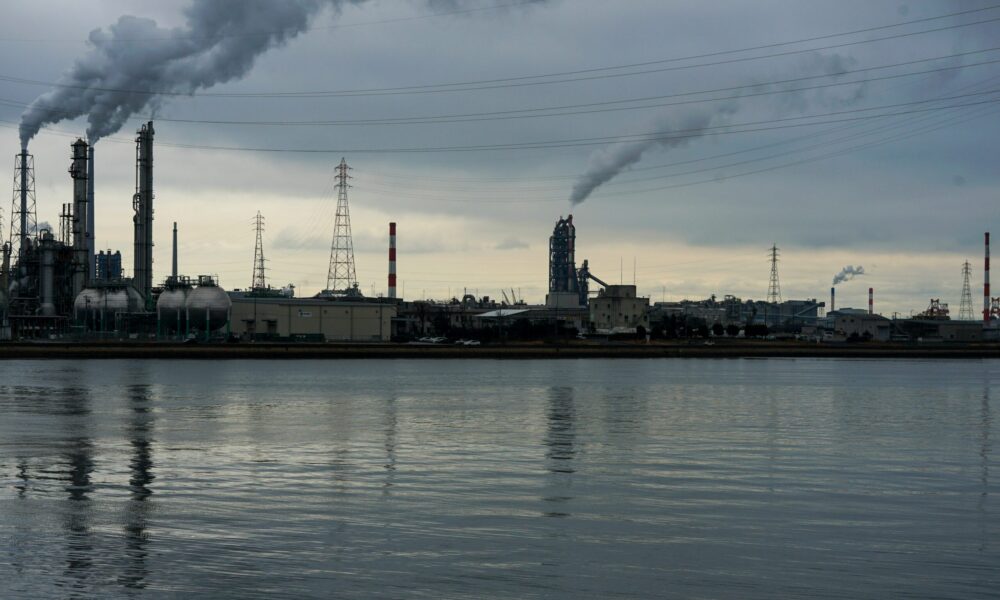

People advocate for environmental policies to improve their own and their community’s health and the health and quality of their surroundings. These policies really matter. The effectiveness of an environmental policy or decision depends on the information that is considered—so that information matters, too.
Only considering a small, finite set of information may work for a small, finite issue, but human health and the health of the environment depend on many interconnected factors. If we don’t look closely at these factors and how they connect, we’re making these policies in the dark.
Without good information and a big-picture view, it’s easy to pretend that isolated rollbacks of public health protections don’t matter as much, or that allowing one industrial facility to emit a little bit more pollution won’t make much of a difference in the lives of its neighbors. The Trump administration’s attacks on science are aimed—sometimes quite explicitly—on reducing the information that gets considered and hiding the damage that weak or non-existent rules can cause.
That’s why we need cumulative impacts policies, which require the evaluation of multiple stressors and burdens so the decisions that get made are more comprehensive, effective, and equitable.
A cumulative impacts policy holds up in court
New Jersey was one of the first states to require a cumulative impacts policy for environmental permitting. Their law requires the New Jersey Department of Environmental Protection (NJ DEP) to condition, limit or even deny an environmental permit to build or expand a facility—for example, a factory or power plant—if that facility will contribute to some adverse factor, or “stressor,” that is already higher than in another geographical area. These stressors include existing air pollution, contamination in water and soil, and access to environmental resources like tree cover and recreational open space.
People who advocate for serious environmental health protections pay attention to two things: 1) does a policy bring pollution down? and 2) does that policy reduce or erase the unfair disparities of pollution burden between communities? This last part remains crucial, because communities of color and those with low income have demonstrably experienced higher burdens from pollution.
The scrap metal industry and a labor union recently contested New Jersey’s EJ law in appellate court. But the court, by a unanimous decision, ruled that the agency did not overstep its regulatory authority or the words or intent of the law in developing the regulations. This decision, along with the analysis and consideration used to develop this policy, will support progress on cumulative impacts policies in other jurisdictions.
An ever-growing body of science
Legal requirements (and court decisions) like the New Jersey policy drive progress on cumulative impacts. So does the continuing advancement of science in this field. I have been studying and presenting on cumulative impacts for a long time, ever since I worked on the first cumulative impacts law in the state of Minnesota in 2009. At that time, the opposition attacked cumulative impacts policies, insisting they were unscientific or too complicated. In fact, until a few years ago, my presentations on this topic focused on rebutting these false narratives by highlighting clear methods, enacted policies, and the underlying science.
Since then, thanks to researchers and environmental advocates across the country, there’s even more scientific grounding informing cumulative impacts methods, definitions, and our understanding of relationships between populations and health. In fact, there’s so much science on this topic that the National Academies of Science, Engineering, and Medicine (NASEM) published “State of the Science and the Future of Cumulative Impact Assessment” (referred to below as “CI State of the Science”). Under President Biden, the US Environmental Protection Agency (EPA) asked NASEM to produce this report, and they were able to produce a draft—before the incoming Trump administration cancelled the project prior to the final editing process, one of many crushing attacks on federal science.
What is the state of the science of cumulative impacts?
NASEM publishes state-of-the-science reports when a federal agency asks them to do so. They’ve published these types of reports on U.S. biomedical and health research, education statistics, sickle cell disease, and U.S. airport infrastructure. These reports respond to “charge questions” from federal agencies. They are co-authored by a group of experts, reviewed by different and independent groups of experts, and then released online, on paper and through webinars for the public about the report. The foundational charge questions that informed the CI State of the Science were related to how the past three decades of EPA work on cumulative impacts can inform current and future practices and programs; what type and combinations of data should be used in cumulative impact assessments (CIAs); how communities may respond to negative stressors differently; approaches and methods of cumulative impacts; and how to incorporate local and Tribal data and knowledge into CIA. There were also questions about how to characterize uncertainty in CIAs and how to expand from a local to a national level.
Interestingly, the NASEM committee modeled one of their biggest pieces of advice on how to conduct CIAs in how they developed the report itself. Prior to writing, the committee conducted information-gathering sessions to hear directly from people impacted by multiple pollution sources and other stressors, as well as to hear from people who study cumulative impacts or design cumulative impacts policies. Modeling transparent engagement practices, the NASEM report co-authors published the proceedings of these workshops alongside the report. Unfortunately, the current Trump administration cancelled this project before they could conduct a planned Tribal engagement session.
Part of cumulative impacts is integrating or combining qualitative data, like people’s personal experiences or their responses to questions, and quantitative data, like the level of pollutants in drinking water or the number of people within a mile from a contaminated site. This is called a mixed methods approach. It’s an area of science designed to give broader, more complete answers to research questions. The co-authors modeled that type of approach as well, including quotes from people who participated in the workshops or provided comments during the report’s development to more fully illustrate the concepts in the report. In a model for the kind of thoughtful transparency that should be used for cumulative impacts policies, the report included:
- Laying out the history of cumulative impacts practice and how it has evolved, including the multiple types of information used to create CIA: impact (environmental, regulatory, and health) assessment, risk assessment, and community assessments.
- Delving into the qualitative and quantitative data from urban, rural, and Tribal communities needed to assess cumulative impacts.
- Synthesizing methodological approaches and frameworks for combining and considering these types of data and knowledge to reflect the interaction of stressors and burdens in a community.
- Discussing the negative and positive factors impacting health, and the need to incorporate both stressors and resources.
A real-world understanding of complex problems
The overarching goal of cumulative impacts policies is to connect the reality of people’s experiences to the decisions that affect their health and the environment they live in. In its final chapter, the NASEM report concludes with examples of CIA:
- They examine the region of Louisiana sometimes called “Cancer Alley,” where there are many, many sources of environmental pollution affecting a community that’s also burdened with multiple economic, health, and social challenges.
- They provide an approach to CIA that uses different types of data and information to assess if members of a population living in different places—like tribal communities that are spread across urban and rural areas—have adequate resources such as housing.
- They describe the potential application of a CIA to chemical disasters like the train derailment in East Palestine, Ohio, and they also propose a cumulative impacts approach to improving community resilience in the face of recurring wildfires.
- These case studies illustrate the benefits of CIAs in reducing environmental hazards and injustice.
Throughout the document, the co-authors recommend that EPA make progress on cumulative impacts research, the EPA’s cumulative impacts framework document, and using existing CIAs to push for reducing pollution. But under the Trump administration, promoting healthier communities and a healthier planet seems to be the last thing on the EPA’s priority list. Nevertheless, a cumulative impacts approach can and should be implemented by state and local governments, and you can take action by sending the NASEM report to your local city or state environmental agency. The National Caucus of Environmental Legislators and the Tishman Center at the New School are actively tracking the cumulative impacts policies that states and local governments enact. Check out your local area’s progress and let them know about the NASEM report!