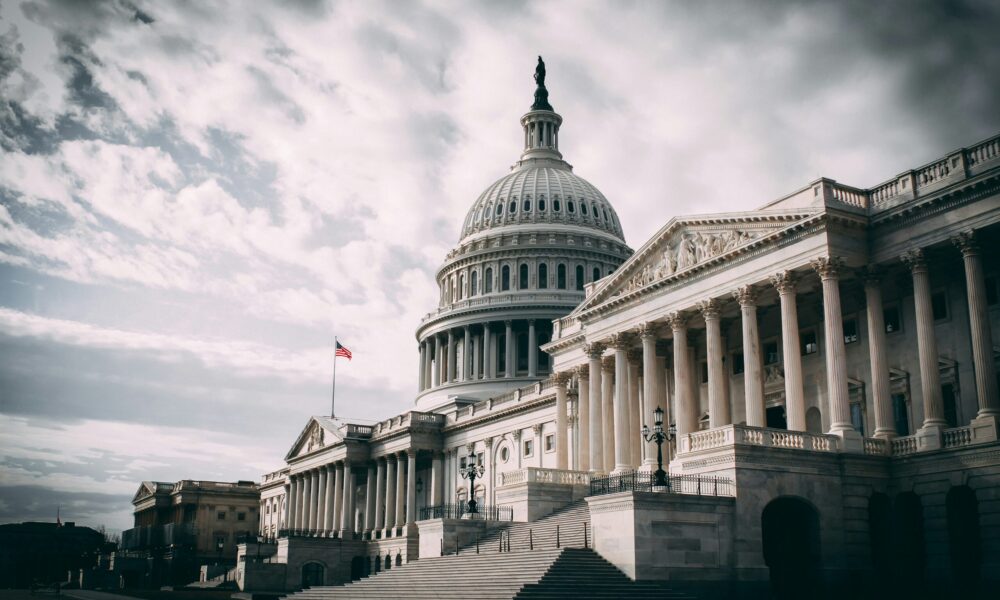

For the first time in seven years, the Scientific Integrity Act has been reintroduced in the Senate! Sponsored by Senator Brian Schatz, it’s a companion bill to the House version of the Scientific Integrity Act. The House bill has real momentum, gaining co-sponsors regularly since its introduction early last year by Representative Paul Tonko. With the bill now in both chambers this important piece of legislation has a real path to move forward and provide better protection for federal scientists and the work they do—work that has real importance for all of us.
Here is what that path looks like and how you can help pass this bill.
What the Scientific Integrity Act does
If enacted, the Scientific Integrity Act would protect federal science and scientists from political interference by requiring agencies to create and uphold strong scientific integrity standards. It would help ensure that policy decisions can be guided by independent, evidence-based science, while protecting scientists’ rights and strengthening accountability for abuses of power. It would help to strengthen public trust in federal scientific research by keeping it free from political, ideological, or financial influence. And critically, it would codify these protections so they couldn’t be dismantled or ignored by an administration hostile to science.
And the Trump administration presents exactly that kind of serious danger to federal science and its ability to promote the public good. UCS researchers have identified 562 attacks on science since January 2025, and around 33% of those attacks are what we’d consider potential violations of scientific integrity . That includes instances when political officials delayed the release of scientific reports, ordered federal scientists to withdraw peer-reviewed studies from scientific journals, or redid analyses that produced results at odds with the administration’s policy preferences. The Scientific Integrity Act would put critical safeguards in place to ensure this never becomes the new normal.
Federal scientists monitor severe weather, study diseases and how to prevent them, and analyze the impacts of pollution to make sure laws like the Clean Air Act are effective. This work must be independent and free from political interference, censorship, retaliation, or intimidation. Those attacks can disrupt critical research and undermine public trust in government. Without a strong foundation of science and evidence, federal policy can be shaped by ideology or the financial interests of powerful corporate actors, at the expense of our health and safety. Scientific integrity policies don’t just protect scientists—they protect all of us.
The legislative process
Now that Senator Schatz has introduced the bill, it will be referred to a committee–likely to the Senate Commerce, Science, and Transportation Committee, as it was the last time it was introduced into the Senate back in 2019. In order for the bill to advance to the Senate floor, the committee will need to:
- Schedule a hearing, where witnesses will testify in support of or against the bill.
- Schedule a markup, where Members will amend the bill.
- Hold a vote on whether to send the amended bill to the Senate floor.
Each of those steps presents a challenge, starting with the fact that the decision on whether to hold the committee hearing rests largely with the majority of the Senate Commerce, Science, and Transportation Committee, which is chaired by Senator Ted Cruz. A hearing would give the law’s proponents the opportunity to make their case, and allow lawmakers to hear from experts and better understand the need for stronger scientific integrity protections.
This is why supporters need to speak up now.
The Scientific Integrity Act is an important step toward ensuring that federal scientists can share their expertise honestly and that the public can rely on government science—but lawmakers need to hear from voters that it’s a priority. Our policymakers need to understand that having scientific integrity is not optional; it is non-negotiable. We need Scientific Integrity Act supporters to urge Congress to protect science from political interference and give this bill the hearing it deserves.
The House connection
With the Senate version now introduced, the Scientific Integrity Act has a renewed opportunity to gain momentum in both chambers. The House version, introduced by Representative Paul Tonko, has been referred to the House Committee on Science, Space, and Technology. As of publishing of this blog, 132 Members of the House, including one Republican, Representative Brian Fitzpatrick, had signed on as co-sponsors. However, despite that strong support, the House bill has not advanced since its introduction.
The Senate introduction changes the equation. For the first time in years, the Scientific Integrity Act has a real chance to advance through committee in both chambers. But that progress will not happen on its own. It will take the work of advocates across the country urging their members of Congress to give the bill the attention and action it deserves.
While the road ahead is challenging, we should recognize the importance of this moment. UCS has been working towards the introduction of this bill in the Senate for a long time, and it wouldn’t have happened without the engagement of scientists and science supporters across the country. We at UCS know the value of independent federal science and the risks we all face when it comes under attack. The Scientific Integrity Act would go a long way toward protecting the scientific research and science-based policies we all depend on. We can win—but we need your help.