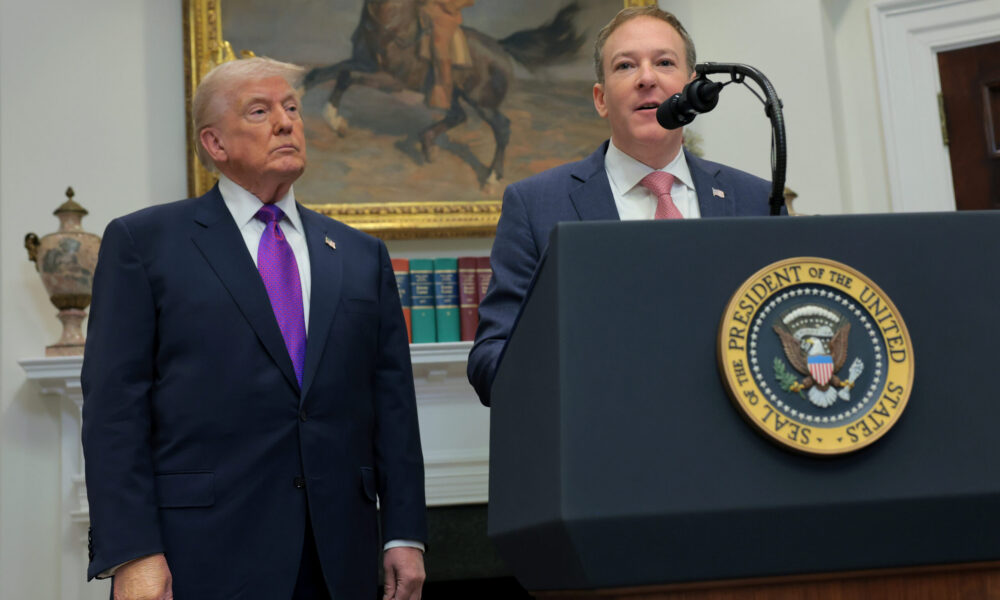

In April, EPA Administrator Lee Zeldin appeared before Congress in three hearings to defend the Trump Administration’s proposal to slash the EPA budget by more than half. His evasive doublespeak at the hearing was striking—and unfortunately, par for the course for an administrator who has overseen an unrelenting dismantling of the systems intended to protect our country’s air, water, and land and keep our families safe from toxic chemicals. Zeldin is one of the key figures in the administration’s relentless attack on science. That’s why, ahead of these hearings, UCS joined an open letter from 163 environmental, public health and science organizations calling for Zeldin to go.
Trump administration cuts to EPA budget show utter disregard for public health
Budgets reveal an administration’s priorities, and the Trump administration’s proposed cuts to the EPA signal they are abandoning protections for American communities and public health. Administrator Zeldin’s testimony before Congress defending these deep cuts—and the response from some policymakers—raises alarm bells. Despite how the Trump administration behaves, Congress holds the power of the purse in our democracy, and they write the laws that the executive branch is supposed to administer. And we all need Congress to speak up on our behalf and defend the EPA’s mission and the robust funding it needs to do it right.
Zeldin participated in three Congressional hearings, including the House Committee on Appropriations’ Interior, Environment and Related Agencies subcommittee; the House Committee on Energy and Commerce; and the Senate Environment and Public Works Committee. While the administration’s allies praised Zeldin’s deregulatory agenda, some members of Congress took the opportunity to take Zeldin to task for the administration’s violations of the EPA’s mission, including:
- Rollbacks and inaction on chemical disaster prevention rules and the independent board that investigates these incidents
- EPA’s plan to unravel the Endangerment Finding that underpins climate-protecting and pollution-fighting policies
- EPA’s abrupt changes to how they value environmental protection benefits while rigging the math to favor industry
- Clean Air Act exemptions granted to facilities that simply emailed this administration
- Cancelling renewable energy projects
- Steep cuts to state and Tribal grant programs—which, fortunately, are facing fairly strong bipartisan opposition
Zeldin did some side-stepping, but when he was specifically asked if he supported this budget proposal, he not only affirmed support but also took partial credit for crafting it.
When Administrator Zeldin took on the job of overseeing EPA’s budget and programs, he was already planning huge cuts to its capacity, in line with the Project 2025 proposals to largely dismantle the agency. Last year he defended the White House’s proposed EPA budget, which recommended funding cuts of 46%, including slashing enforcement and compliance monitoring, wrapped in empty promises that EPA was going to get “back to basics” and uphold their statutory authority. The evidence shows the reality: under Zeldin’s watch, the EPA is simply doing less enforcement. (Read more here and here.) When an administration budget contradicts its rhetoric, it’s the budget—not the cynical words—that reveal its priorities.
Last year, Congress passed an EPA budget with a 4% cut. This fiscal year, the second Trump administration is proposing a 52% budget decrease for EPA, or a decrease of $4.6 billion. There are proposed cuts across the board for programs intended to defend clean air, water, and land and protect us from toxic chemicals. One exception is the Superfund program, where the administration is proposing a three percent increase. This is a “kick the can down the road” approach to environmental policy, allowing releases of pollution with a promise to clean it up later instead of preventing those releases in the first place. It is the exact opposite of making decisions that are sustainable for seven generations.
A budget is not just numbers—it’s values
A “budget justification document” lays out the summary and specifics of a budget and provides text to explain proposed costs and expenditures. Saying one thing while doing another is a major theme in Zeldin’s 2027 document. The proposal would cut state and Tribal assistance grants by 83%, with a nonsensical justification “that EPA has invested hundreds of billions of dollars over several decades building state and local capacity and many programs are mature or have accomplished their purpose.” The U.S. EPA finalizes rules and delegates their implementation to state, local, and sometimes Tribal governments through the concept of cooperative federalism—an idea of shared responsibility between the federal and state governments. They obscure their intent to weaken state and Tribal environmental programs by justifying proposed cuts as reflecting “…the Administration’s commitment to … cooperative federalism …” and even “…remove unnecessary barriers for business and industry, empower states…” But, taking away 83% of a budget is not cooperative nor empowering in any stretch of the imagination. It is demolition.
After touting the importance of water quality in their 2026-2030 EPA Strategic Plan goal to “Provide Clean Air, Land, and Water for Every American,” the proposed budget would cut the Water Infrastructure Finance and Innovation Fund by 89%. These funds finance, via loans, the replacement of aging water infrastructure, such as eliminating lead pipes, or constructing new water, wastewater, or stormwater systems where there are none. This massive cut is curious, given EPA’s touted interest in reducing childhood lead exposures. They’re making big promises to the public while throwing out the tools to actually fulfill those promises.
The science and technology budget would experience a big hit—a 32% reduction. Several specific research programs would see cuts of over half of their funding, including Sustainable and Healthy Communities; Air and Energy; and Federal Support for Air Quality Management. Other research programs, such as Safe and Sustainable Water Resources and Chemical Safety for Sustainability, would be reduced by about one-third.
The words administrations use to justify their budget recommendations imply intent and communicate priorities, and in this case harmful priorities. In 2023, the previous administration used the word “safe” more often with respect to safety from toxic chemicals, where in this 2027 budget, when the word “safe” is used, it’s quickly qualified with reference to economic efficiency. The 2027 proposed budget justification document has about 30% fewer words compared to the same document from four years ago; if words were equally distributed in text you’d see any given word used about 30% less in 2027 compared to 2023. This administration used the words “communities” and “safe” over 80% less, and only referenced the EPA mission half as many times, as the budget justification from four years ago. This is a simple analysis, using word search functions, but it provides further evidence of this administration’s abandonment of the agency’s statutory obligations and highlights how they prioritize profits for a few powerful allies over environmental solutions for overburdened communities across the country.
Another way to look at a budget justification document is to pay attention to new initiatives and programs. Four years ago, the budget included language and proposed budget appropriations to reduce environmental pollution in areas that are overburdened and to address the pollution leading to climate change. These fit comfortably within the mission of EPA: to protect human health and the environment. In the 2027 budget, there are three new goals for this administration’s EPA: Restore American Energy Dominance; Make America the Artificial Intelligence Capital of the World; and Bring Back and Protect American Auto Jobs. These initiatives stretch the EPA well beyond its mission. To put it lightly, that’s not an EPA adopting a “back-to-basics approach.”
Congress is in charge. They need to act
Congress now has the chance to ensure that EPA’s funding reflects its mission—not just the administration’s deceptive messaging. It’s up to Congress to correct this misalignment between rhetoric and resources and to reaffirm environmental protection as a national priority. Congress should consider how the Trump administration’s proposed cuts affect states, Tribes, and local communities, and ensure that EPA has the resources needed to carry out the work they are mandated to do. EPA accounts for a tiny 0.3% of the federal budget, but the work the agency is designed to do has enormous benefits for public health and the safety of communities. Now is the time to call your Members of Congress and tell them to support adequate funding for EPA. We can’t afford to let President Trump and Administrator Zeldin abandon the mission.