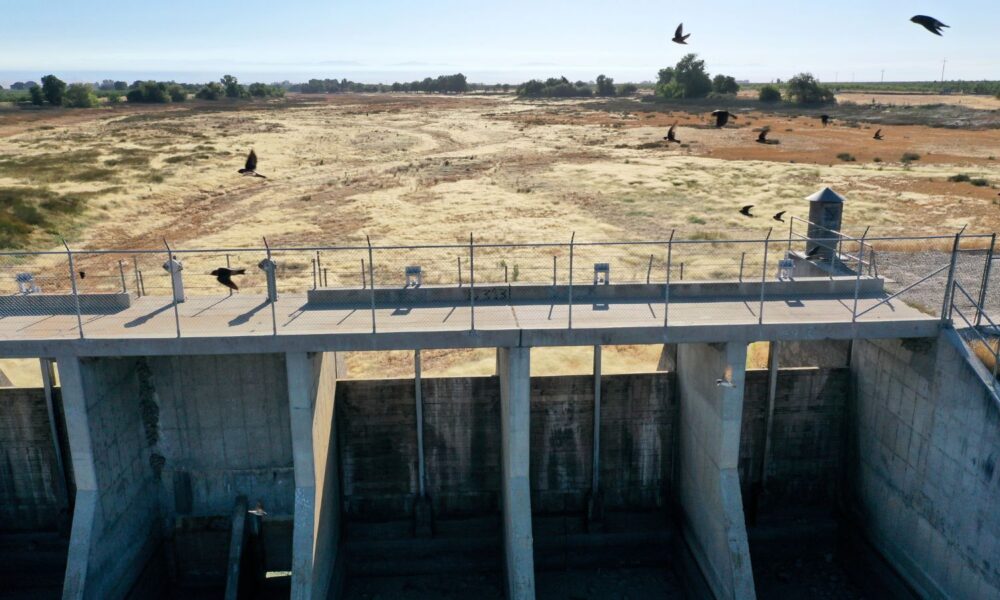

The impacts of climate change have been on full display this Danger Season, from record-breaking heatwaves to devastating wildfires, making evident the urgent need for accountability for the harms caused by supercharged extreme events and long-term changes. These harms have been inescapable across the western US, particularly when it comes to water. As fossil-fueled climate change continues to harm communities, scientists—now more than ever—can play a critical role in informing accountability.
New study links emissions from fossil fuel producers to western water crisis
Water in the western US is defined by widespread scarcity, in part due to a timing mismatch. Most water falls as snow in the winter, is stored as snowpack, and then melts during the warm season, when it can be used, primarily for agriculture. Major feats of engineering like canals, aqueducts, and reservoirs have buffered against this mismatch, enabling industrial agriculture and rapid population growth despite dwindling and overallocated rivers.
Climate change is adding pressure to an already precarious situation, threatening the livelihoods, ecosystems, and economy of the region. The events of 2026 show the harms that climate change is already inflicting and the threat that unchecked emissions pose to our future.
First, an extreme March heatwave decimated snowpack, meaning that a huge amount of water melted earlier than usual, and now is not available for the growing season. Of the five major basins in the region, three saw the lowest April 1st snowpack ever recorded , the time of year when snow accumulation historically peaks.
A recently published paper dubbed these heat events ‘snow-eaters’ because of how they decimate snowpack The study also showed that these heatwaves have increased in frequency and intensity since the mid-1880s. The Intergovernmental Panel on Climate Change, the global authority on consensus climate science, concluded with virtual certainty that extreme heat events are increasing in frequency and intensity due to climate change, suggesting that heat events which pose major threats to water availability will continue to occur into the future.
Next, the region’s largest reservoir, Lake Mead—which supplies water to more than 25 million people throughout the western United States—has also hit a new low, falling several inches below the previous record set in 2022.
While water has always been limited in the western US, these examples highlight the ways fossil-fueled climate change is pushing the system to the brink.
Our new peer-reviewed research, Wringing the West Dry, highlights how for snowpack, streamflow, and irrigation demand in the Western US, nearly half of the impacts due to climate change between 2014 and 2024 can be traced to emissions from the 122 largest fossil fuel producers and cement manufacturers. This research adds to a growing body of evidence linking major fossil fuel companies—including ExxonMobil, Chevron, BP, and Shell—to the harms of climate change being experienced by communities around the world, and highlights the important role that scientists can play in informing accountability.
1. Advance Legally-Relevant Research
Scientific engagement is a key component of both litigation and legislation that seeks to hold major polluters accountable.
Attribution science identifies and quantifies the contribution of climate change to global trends, extreme events, and their impacts, allowing scientists to quantify how climate change is directly shaping the lived experience of communities across the world. Source attribution, a subdiscipline and growing field that includes our newly published study, quantifies how specific sources of emissions, sectors, actors, or nations have contributed to climate change and its impacts. Research in this field has traced emissions from the Carbon Majors, the largest fossil fuel producers and cement manufacturers, to their consequences, including global temperature increase, ocean acidification, sea level rise, area burned in forests of the western US, and extreme heatwaves and their impacts.
In pursuing accountability, attribution evidence goes hand-in-hand with social science and archival research that outlines how major fossil fuel companies deceived the public about climate change, even when their own internal research clearly showed the risks that continued use of their products posed.
Our recent report, Research Priorities for Climate Litigation, identifies ten other types of research that lawyers need to advance litigation, extending far beyond climate science. From public health experts to economists to stewards of Traditional Ecological Knowledge, well-communicated scientific information and insights are a critical component of ongoing and future accountability efforts.
To learn more about how to use your expertise, sign up for the Science Hub for Climate Litigation newsletter and explore our Research on the Record toolkit.
2. Stand up for science and democracy
Scientists can be important advocates for evidence-based decision making, especially when it comes to accountability. Scientific research and scientists themselves have come under attack during the second Trump administration, threatening not only the advancement of critical research in the US, but also our ability to hold big polluters accountable. UCS has tracked the explosion of attacks on science, illustrating how sidelining scientists, rolling back regulations on forever chemicals, and degrading infrastructure to monitor and predict extreme weather can harm communities across the country.
When it comes to climate accountability, the fossil fuel industry and its politically appointed allies are pulling out all the stops to intimidate scientists, manufacture controversy about widely accepted research, and block judges from accessing factual, reliable scientific information about climate change. These attacks follow the same playbook used by powerful industries for decades to distract, discredit, and deny research that threatens their bottom lines.
In the face of this assault, scientists have stood up to these attacks and made a meaningful difference in resisting and reversing many of the anti-science actions of this administration. UCS has used the legal system to hold this administration accountable, including by securing the dissolution of the sham Climate Working Group led by well-known climate contrarians, and fighting against the administration’s goal of removing factual information from our National Parks.
Join the movement of scientists pushing back on this administration’s anti-science agenda.
3. Tell your Congressperson: No immunity for Big Oil
Amidst these attacks on scientific evidence that can inform climate lawsuits, Big Oil is pursuing an even more brazen strategy to evade accountability: lobbying our elected representatives in Congress to pass immunity legislation, much like the liability waiver Congress passed to protect the gun industry in 2005. This would prevent science from being heard in court and impose barriers to justice for those harmed by the industry’s products and practices.
Several state legislatures, including Utah, Tennessee, and Oklahoma, have already passed their own versions of liability waivers, and Representative Harriet Hageman and Senator Ted Cruz have introduced legislation on the federal level that, if passed, would eliminate pathways to accountability for the communities most harmed by the consequences of climate change.
Scientists can reach out to their members of Congress to ensure that communities across the country have access to justice through the courts to hold the fossil fuel industry accountable for their deception and the harms caused by their products.