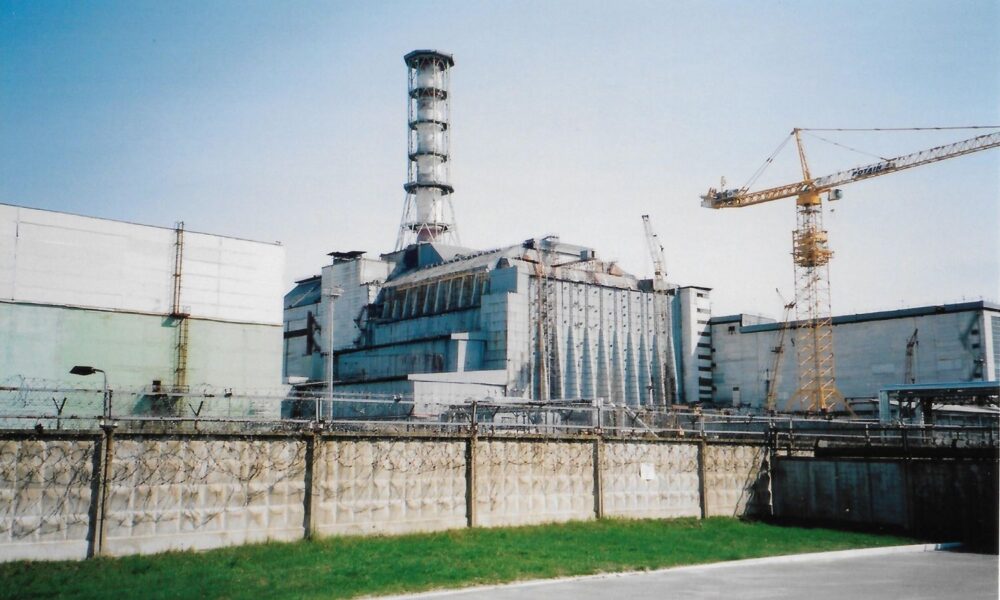

April 26, 2026 marks the 40th anniversary of the Chernobyl Unit 4 nuclear power plant disaster in the former Soviet Union. A toxic combination of defective reactor design, deficient safety analysis, disregard for operating procedures and administrative controls, prioritization of power production over safety, lack of independent regulatory oversight —and, above all, excessive secrecy—led to the worst nuclear reactor accident in history.
Operators botched a safety test and took the reactor into an unstable state, causing a rapid rise in power that triggered violent steam explosions that blew apart the reactor core and surrounding structures. Fires burned for days. A massive amount of radioactivity dispersed across the former Soviet Union and much of Europe. Hundreds of thousands of individuals were evacuated or relocated from contaminated areas, and a 30-kilometer radius “exclusion zone” was established that is still in place today. Dozens of emergency personnel died within weeks from acute radiation syndrome, and thousands of children developed thyroid cancer from radioactive iodine exposure. Ultimately, tens of thousands of cancer cases throughout Europe are projected to occur from the radioactive pollution caused by the disaster.
The United States and many other countries have sought to distance themselves from the potential for a Chernobyl-like accident by asserting that their nuclear regulators would never have licensed a reactor with the safety flaws of the RBMK (a Russian acronym for “high-power channel-type reactor,” the Chernobyl-4 design), and that light-water reactors (LWRs), by far the most common type of power reactor in operation, are far safer. While this argument has some validity, soon after the accident it became clear the safety benefits of LWRs compared to the Chernobyl-4 RBMK were not as great as advertised—a point later illustrated by the 2011 Fukushima Daiichi triple LWR meltdown in Japan. And today, many of the regulatory requirements and standards that underlie this confidence in the safety of the US nuclear fleet are being thrown by the wayside as the Trump administration recklessly pushes to “unleash” nuclear energy as quickly as possible.
It can’t happen here… or can it?
After the April 1986 Chernobyl accident, the US Nuclear Regulatory Commission (NRC), the independent nuclear safety and security agency created a little over a decade earlier to oversee commercial nuclear facilities, conducted a review of its potential implications for the safety of US nuclear power plants. In the process, the NRC convinced itself that such a catastrophe could simply not happen here. The agency highlighted numerous factors that distinguished the Soviet approach to nuclear power plant design and operation from that of the United States and other Western countries. Chief among these were requirements for nearly leak-tight, robust “containment” structures, strict limits on operation in unstable states that could experience rapid, uncontrollable power increases, and offsite emergency plans to protect the public in the event of a serious accident. Consequently, the NRC concluded that “no immediate changes are needed in the NRC’s regulations regarding the design or operation of U.S. commercial nuclear reactors.”
While the NRC did not believe its regulations were inadequate after Chernobyl, it certainly didn’t suggest they were too tough at the time. But in subsequent decades, the agency has been under constant pressure from the nuclear industry and many lawmakers to weaken its standards. This resulted in the lax oversight that allowed the Davis-Besse reactor in Ohio to come close to experiencing a serious loss-of-coolant accident and potential meltdown in 2002, and forced the NRC to temporarily slow down the pace of deregulation. But ultimately, the industry influence campaign culminated in the executive orders signed by President Donald Trump in May 2025, which have undermined the foundation of independent nuclear facility licensing and oversight that Congress put in place over 50 years ago when it split the Atomic Energy Commission into separate regulatory and promotional agencies—the present-day NRC and DOE.
And the worst is yet to come. The NRC is in the process of rewriting all its regulations and guidance in response to EO 14300, “Reform of the Nuclear Regulatory Commission,” with the explicit purpose of watering down safety and security standards to accelerate licensing of new facilities and reduce oversight of operating ones. And EO 14301, “Reforming Nuclear Reactor Testing at the Department of Energy,” directed the DOE to create a pilot program that would expedite the approval of three new nuclear reactors with the goal of achieving “criticality” (initiating a neutron chain reaction) by July 4, 2026—requiring an unprecedented and reckless rate of speed for construction and commissioning.
As a result of this vast lessons-unlearned exercise, companies may soon be building reactors across the United States that have more in common with Chernobyl than most people may realize. For example, in March, the NRC issued a permit in record time to TerraPower, a company co-founded by Bill Gates, to construct a 345-megawatt power reactor called the “Natrium” in the town of Kemmerer, Wyoming. The NRC approved the Natrium, a fast-neutron reactor, even though the design lacks a containment structure, is vulnerable to rapid, autocatalytic power increases, and uses a coolant, liquid sodium, that can catch fire—all adding up to what can be reasonably called a “Cowboy Chernobyl.”
Chernobyl lessons: learned and unlearned
In 1989, following its review of the causes of the Chernobyl accident, the NRC issued a report entitled “Implications of the Accident at Chernobyl for Safety Regulation of Commercial Nuclear Power Plants in the United States.” The report listed a number of specific areas in response to the accident that warranted attention by the NRC. These included reactivity accidents, accidents at low and zero power, multiple-unit protection, fires, containment, emergency planning, severe-accident phenomena, and graphite-moderated reactors. Today, the NRC, the DOE, and the nuclear industry are all busy unlearning the lessons of Chernobyl in each of these areas. Below, we focus on one of the most critical: the need for containment.
To contain (with a structure) or not to contain (with a structure)? That is the question
Ten years ago, on the 30th anniversary of Chernobyl, the NRC once again invoked the critical role of reactor containments in differentiating the safety of the US fleet from the Chernobyl design: “U.S. reactors have containment buildings equipped with walls that are several feet thick and have a steel liner on the interior to help prevent the release of radioactivity during a severe accident,” NRC spokesman Neil Sheehan said in a statement. “During the Three Mile Island Unit 2 accident, the containment structure served that function effectively.”
Yet only two years later, the NRC decided to abandon its longstanding design principle that “reactor containment and associated systems shall be provided to establish an essentially leak-tight barrier against the uncontrolled release of radioactivity to the environment …”. For new, non-light-water reactors—designs like the Natrium that use coolants other than ordinary water—the agency gave the green light for approving designs without conventional containment structures. Instead, the NRC would also accept so-called “functional” containments, wonk-speak for a regulatory rollback that would allow reactor applicants to take credit for other design features to provide a containment-like function and forgo a physical containment.
In addition to the Natrium, another proposed non-light-water power reactor design without a containment is the Xe-100, an 80-megawatt, “pebble-bed” high-temperature gas-cooled reactor (HTGR). Its developer, X-energy, is applying to the NRC to build four Xe-100s adjacent to a Dow chemical plant in Seadrift, Texas. Unlike LWRs, these types of reactors use “tri-structural isotropic” (TRISO) fuel, which the DOE likes to say is “the most robust fuel on Earth.” X-energy and other HTGR developers claim that the fuel is so safe that a physical containment is not needed.
However, as detailed in this legal filing that UCS helped prepare for a hearing petition filed by the group San Antonio Bay Estuarine Waterkeeper against the Xe-100 construction permit application, TRISO fuel is not nearly as robust as its promoters claim, and there is significant uncertainty about how it will perform in certain types of accidents. Indeed, X-energy’s own accident analysis shows that the fuel could exceed the maximum safe temperature by several hundred degrees Celsius. The company has simply not made the case at this preliminary stage that the reactor can be safely operated without a containment.
X-Energy has only recently begun a multi-year testing program to attempt to address uncertainties in fuel performance. Nevertheless, the NRC appears poised to allow construction of the containment-less design to proceed before the data from such testing is obtained. But even if the fuel performs far worse than the application assumes, it is highly unlikely that the NRC would require X-energy to undertake an extremely costly retrofit to add containments to the four reactors before allowing them to operate.
Given the emphasis that the NRC formerly placed on the safety benefits of physical containments, why would it take this step? The answer is simple: cost. Physical containment structures, which typically require large quantities of high-quality reinforced concrete, are expensive. A 2020 MIT study found that the containment was one of the largest contributors to the cost of light-water reactors. Thus a quick way to cut nuclear power project costs would be to leave out the containment. And for some new reactor types and deployment models—think small modular reactors being hauled by truck to your local data center—having a physical containment would be completely impractical as well as unaffordable.
The problem here is that eliminating physical containments is a truly pound-foolish approach to reducing the high cost of nuclear power, as the Chernobyl experience has shown. What the NRC is allowing them to be replaced with, functional containment, is not an adequate substitute. One of the primary roles of containment is to provide “defense-in-depth”—an extra level of assurance in place to compensate for gaps in understanding of how the reactors themselves will work during accidents. And for new reactor designs with limited or no operating experience, there is an awful lot that the developers and the NRC simply do not understand and cannot accurately predict. Thus, the role of containment in helping to offset the unknown risks posed by new, experimental designs is more important than ever.
But the NRC is approving functional containments for new reactors, such as the Natrium and the Xe-100, based on paper safety studies that have had little to no actual real-world validation. The agency is allowing applicants to exclude accident scenarios from their safety analyses that could demonstrate the need for a physical containment, based on speculation that they are so improbable they do not need to be considered. This is little different than the approach Soviet reviewers took when they approved the Chernobyl design with only a partial containment.
According to the NRC’s 1986 Chernobyl review, “credible accidents with potentially serious consequences” were not discussed in the Soviet safety analysis, “presumably because they [were] considered to be of sufficiently low probability to justify disregarding them in the design basis.” These included “rapid reactivity excursions” and other accident sequences that occurred during the Chernobyl accident. The report also stated that “an important result of the decision to consider only pipe breaks below the reactor as credible is that there is no containment surrounding the outlet piping above the reactor.”
This reasoning will sound familiar to anyone acquainted with the “risk-informed” regulatory approach that the NRC recently approved for new reactor licensing, which includes processes for addressing questions such as the adequacy of functional containment. In the new 10 CFR Part 53 rule issued in March, applicants are allowed to use either “probabilistic risk assessments” or “systematic risk evaluations” to develop the spectrum of accident sequences that are considered in the licensing basis. The lack of any guidance for carrying out such a “systematic risk evaluation,” including a standard for determining the worst-case accident that needs to be considered in designing a reactor, provides ample opportunity for the kind of subjective cherry-picking that the Soviets used in developing the Chernobyl design and justifying the lack of a full-blown containment.
The NRC’s approval of the Natrium construction permit and its likely approval of the Xe-100 are setting dangerous precedents for all future reactor proposals, most of which are containment-free designs. But fortunately, there has been very little actual new nuclear plant construction yet, and the NRC has ample opportunity to change course before it allows irreversible mistakes to be made. On the occasion of the 40th Chernobyl anniversary, the NRC should take a hard look in the mirror and reconnect with its 1989 finding that “the most important lesson [of Chernobyl] is that it reminds us of the continuing importance of safe design in both concept and implementation … and of backup features of defense in depth against potential accidents.”
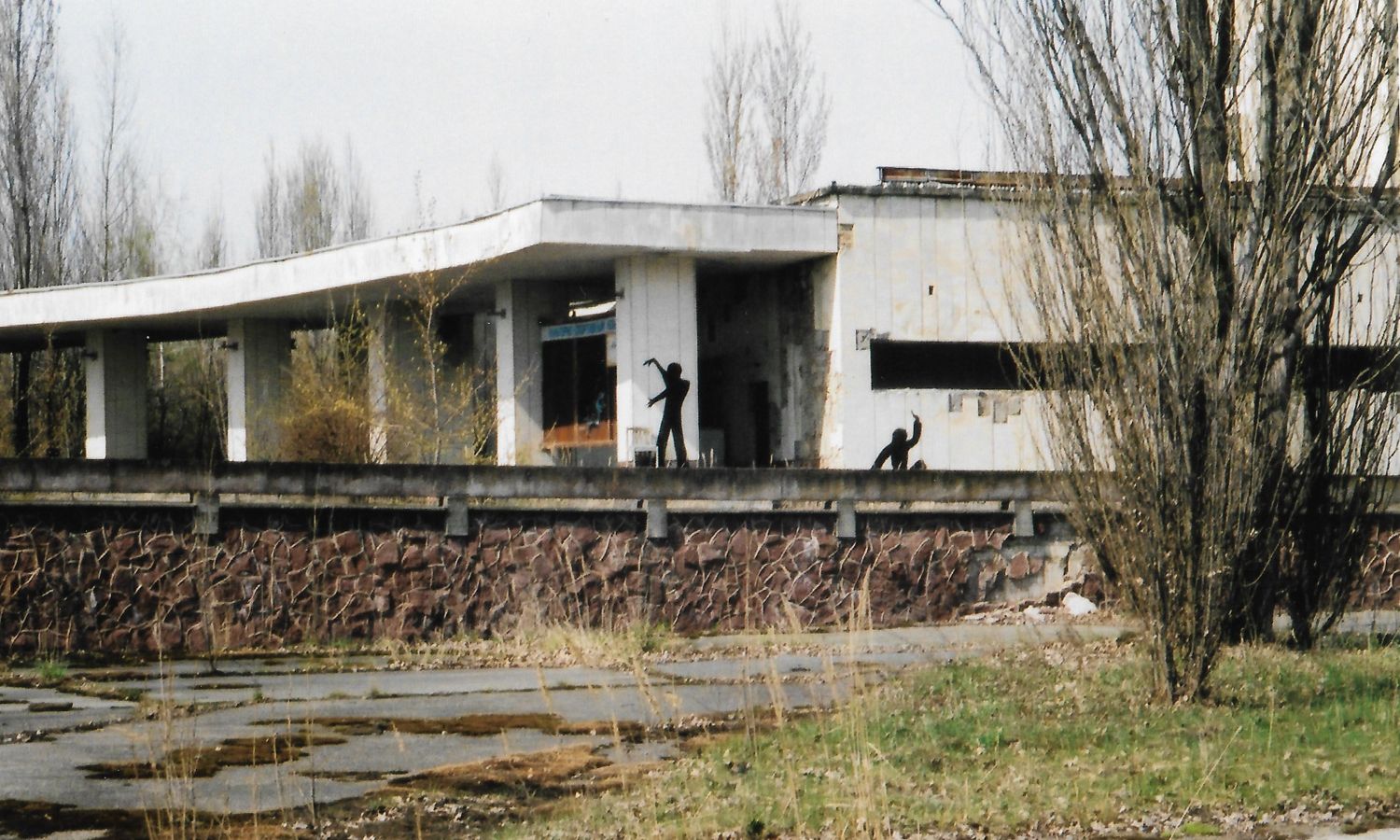
This week also marks the 20th anniversary of my own visit to see the devastation within the Chernobyl exclusion zone, which is seared into my memory. If anyone still needs convincing that it’s a terrible idea to allow reactors without real containment structures to be built across the United States, I highly recommend the Chernobyl tour (once the war is over of course).