
On a clear, blue-sky day in 2018, I lucked out and had a magnificent view of the many glaciers that comprise Glacier National Park from atop Apgar Lookout. The next day, these glaciers were reflected in deep-blue Lake McDonald. Through clear and helpful educational displays, I learned that climate change is impacting the so-called “Crown of the Continent,” and shrinking its eponymous glaciers.
Unfortunately, if I were to return today, I wouldn’t be able to see any such signage describing climate science and impacts. The Trump administration has removed critical scientific and historical information from US national parks—and the Union of Concerned Scientists (UCS) is suing to stop this censorship.
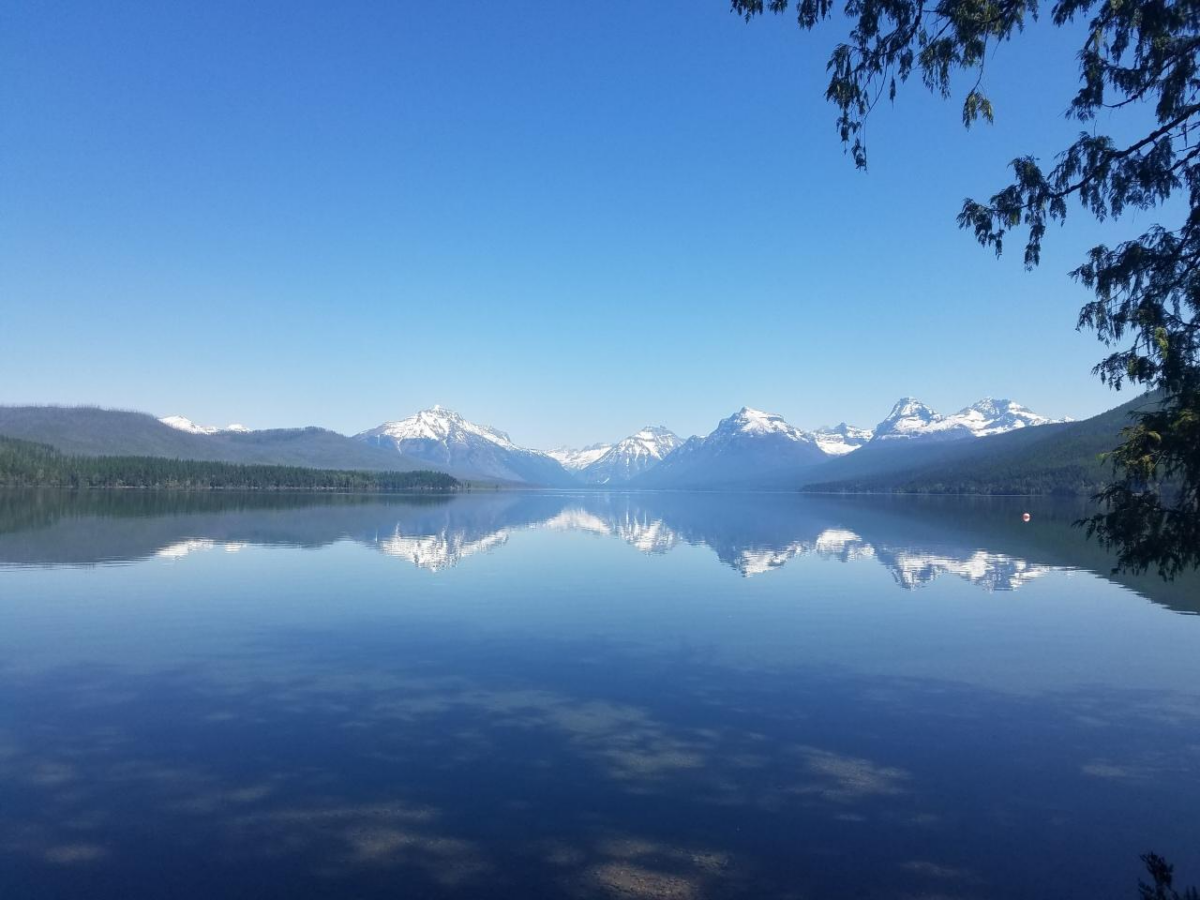
Like Glacier National Park, numerous iconic US landscapes are at risk due to climate change. These are places worth saving and fighting for, ensuring our grandchildren can also experience such awe and wonder, and that’s what I’m doing at UCS.
Shared beauty and shared history
National parks are America’s largest classroom. Those quintessential landscapes – like the Grand Canyon, Yellowstone, and Great Smoky Mountains – provide us space to recreate, learn about our nation’s natural and cultural history, and connect with nature. In addition, national parks (and other cultural heritage sites) play a critical role in science communication, such as depictions of the climate change impacts on ecosystems and parks themselves. It’s a lot easier to understand scientific concepts like the water cycle when you’re walking through the humid swampy marshes of the Everglades, for example.
National parks and other public lands, monuments, and cultural heritage sites managed or administered by the Department of the Interior and other federal agencies also provide opportunities for the public to access scientific information, hunt and fish, and enjoy pristine landmarks that showcase American values and ethos.
I confess I have a biased viewpoint of our nation’s geologic wonders and unique natural resources, having worked for several years at the US Department of Agriculture (USDA) and the Bureau of Land Management within the Department of the Interior. But you don’t have to be a federal employee to love and appreciate our nation’s protected spaces.
Climate change affects our national parks and public lands
Many landmarks and landscapes are at risk, experiencing worsening climate change impacts. For example, rising sea levels are an existential threat for the Harriet Tubman Underground Railroad National Monument, located on Maryland’s Eastern Shore. Thousands of artifacts and ancient ruins of the Pueblo people’s ancestors at Mesa Verde National Park in Colorado are at risk, given more frequent and intense wildfires and more intense drought.
As the nation’s largest landlord managing almost one-third of all US land, the federal government is charged to preserve and conserve unique landscapes, as well as sustain the land for use and enjoyment for current and future generations.
Connecting communities and natural resource managers with climate information
At the USDA, I helped connect farmers, ranchers, and forest managers with relevant climate data and science. During a drought workshop for ranchers in Clovis, New Mexico, I grew to deeply appreciate the role of our nation’s lands and waters, which drive agricultural production to feed and clothe us, and also sustain communities dependent on these natural resources. I learned to better connect climate change and its impacts with people’s livelihoods and values.
Later, at the Bureau of Land Management (BLM), I helped integrate climate science into decision-making processes and programs at an agency that manages nearly 10%, or 245 million acres, of surface land in the US. I also partnered with the US Geological Survey Climate Adaptation Science Centers and the NPS Climate Change Response Program to share resources on future climate scenarios and adaptation strategies. My role at BLM gave me a deep appreciation for the role of the federal government in stewardship of public lands, and how climate change is already affecting these fragile yet beautiful landscapes.
Censorship of climate science and US history at national parks
Accurate scientific and historical information is paramount at national parks. Millions who visit US national parks learn about the people and places that made this country what it is today. This includes critical moments in US history, and climate change impacts on the environment. For example, educational signs at Glacier National Park show viewers what glaciers used to look like prior to their accelerated pace of melting. At coastal national parks, visitor centers display how physical infrastructure has been moved due to sea level rise.
Yet, the Trump administration has removed information about our history and our changing climate from our national parks. As a former federal climate scientist having directly worked with natural resource managers, this is both sad and enraging.
Removing this context robs visitors of the trustworthy information they have come to expect from experts at federal agencies, and deprives all of us of a key opportunity to expand a shared understanding of our natural and cultural heritage in the US.
It can be difficult to connect climate change to our daily lives. But national parks have documented such changes as part of their mission to educate us about our shared history, and how climate change is impacting the places we love and care about.
UCS files suit to protect national parks and advance climate literacy
UCS is fighting back to demand that our national parks continue to provide accurate climate and historical information to the public. UCS has filed a lawsuit as part of a coalition of conservation organizations represented by the Democracy Forward Foundation to protect our national parks, preserve and share history, promote scientific literacy and access, and ensure high-quality, science-based interpretive materials. The effects of climate change on our nation’s beloved landscapes and sensitive natural resources are real; simply deleting references to climate science ignores the profound changes we are already seeing.
Our national parks, cultural heritage sites, and public lands belong to all Americans—current and future generations. Frankly, it is deeply un-American to undermine the shared history, truth, and science that we collectively experience at national parks. UCS and our co-plaintiffs are fighting back, and I won’t stay on the sidelines as this administration tramples upon our most cherished cultural treasures and iconic landscapes.
You can join us: by calling on US Secretary of the Interior Doug Burgum to stop erasing science and history from our national parks.