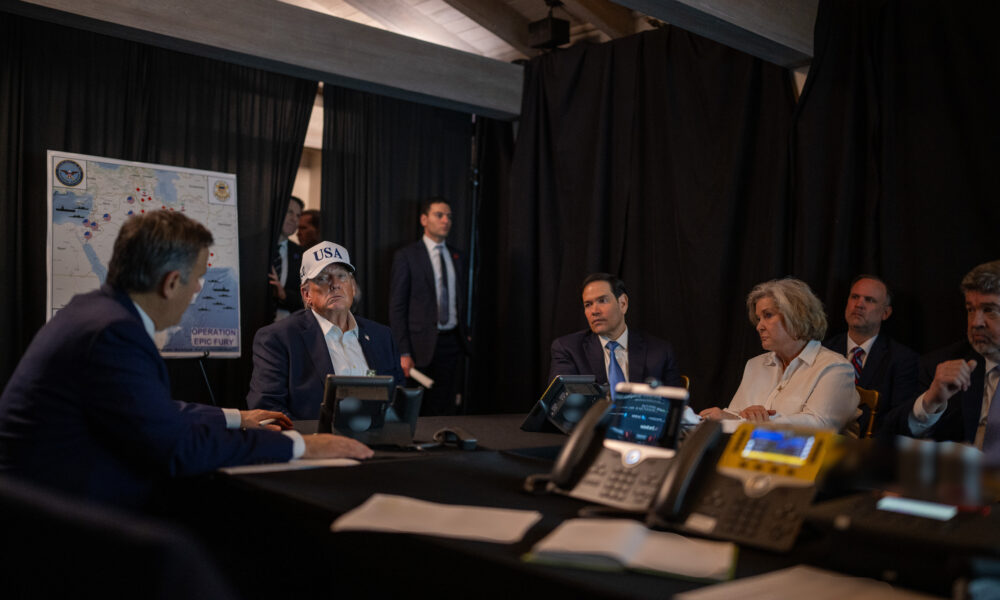

The US-Israeli war against Iran has led to the closure of the Strait of Hormuz, which has disrupted global shipping and created a new energy and fertilizer crisis in 2026. The strait is an important global thoroughfare for fossil fuel products like methane gas, which is used in the production of urea, one of the most widely used synthetic nitrogen fertilizers in the United States. Nitrogen (N) fertilizer manufacturing is deeply intertwined with fossil fuels, and any impact on energy availability and cost usually shows up in the cost of fertilizer.
Finished nitrogen and phosphorus (P) fertilizer products like urea, ammonia, and phosphates produced by several nations in the Middle East also pass through the Strait of Hormuz. Cumulatively, the closure of the strait has led to major disruptions in the global fertilizer market and created a bottleneck for these fertilizer products as demand exceeds supply.
The United States is not insulated from this double fertilizer and energy crisis
The United States produces a majority of its nitrogen and phosphorus fertilizer products domestically, but imports a quantity of several important fertilizer products like potash (K) and some of the fossil fuel that powers domestic production. According to data from the US Department of Agriculture (USDA), the United States imported more than 3.5 million metric tons of fertilizer (including some raw materials) in the first quarter of 2026 alone. The annual fertilizer export for 2025 was around 25 million metric tons.
As of the morning of March 13, the market price of urea was reported at $594 per metric ton, sharply rising about 26 percent from about $469 per metric ton on February 27. The retail prices of major fertilizer products have also increased. With no end to the war in sight, and the quantity of imports severely restricted, the price of fertilizer products is likely to keep increasing.
Global crises show how brittle agricultural supply chains are
The cost of fertilizers spiking because of a global crisis is nothing new. The COVID-19 pandemic caused major disruptions to the agriculture supply chain. In 2022 fertilizer prices reached historic highs, reaching a record-breaking $1,600 per metric ton for anhydrous ammonia and exceeding $1,000 per metric ton for urea. That year, I wrote about how Russia’s invasion of Ukraine led to a dual global energy and fertilizer crisis that hurt farmers.
Layered on top of these acute crises that farmers have faced since 2020 is the added problem of a severely consolidated fertilizer industry. Four companies dominate more than 75 percent of the nitrogen fertilizer market, and play a big role in the prices farmers pay. The Department of Justice has recently launched an antitrust investigation to evaluate whether leading fertilizer manufacturers colluded to limit supply and raise prices. While agribusiness consolidation is a common attribute of the US food and farming system, lack of competition means farmers face the added pressure of higher input costs, reduced bargaining power, and tighter profit margins.
So how will the war affect farmers?
Farmers are dealt the short end of the stick every time a new geopolitical crisis affects food and farming supply chains. In 2024, according to data from the USDA, farmers spent $33.8 billion on fertilizer costs, accounting for about 7 percent of total farm expenditures. In 2022 when fertilizer prices were higher, farmers spent $36.6 billion, accounting for about 8 percent of overall farm expenditures.
For 2026, pre-war USDA forecasting predicted fertilizer costs for farmers of about $35.8 billion, which will likely increase if prices of major fertilizer products remain high or even increase in the coming weeks and months. In 2023 (the latest data available), the United States consumed 2.9 million metric tons of urea and 3.2 million metric tons of urea ammonium nitrate (UAN), most of which were applied to corn. As per International Fertilizer Association consumption data, ammonia, urea, and UAN approximately constitute 25 to 27 percent of applied nitrogen fertilizer. Any price increase of these products is likely to hit farmers hard.
Nitrogen Fertilizer Consumption in the United States
| Product | Consumption (in thousand metric tons) | Percentage of total nitrogen fertilizer use |
| Ammonia | 2750.2 | 23.7 |
| Ammonium Nitrate | 215.2 | 1.9 |
| Ammonium Phosphate | 639 | 5.5 |
| Ammonium Sulphate | 345.7 | 3.0 |
| Urea | 2943.8 | 25.3 |
| Urea Ammonium Nitrate (UAN) | 3220 | 27.7 |
| NK | 188.2 | 1.6 |
| NP | 393.8 | 3.4 |
| NPK | 504.2 | 4.3 |
| Other | 420 | 3.6 |
| Grand Total Nitrogen as Nutrient | 11620.1 | 100 |
Source: IFA 2025
Let’s use the example of urea as a simplistic case study to evaluate how farmers can be affected by the increased cost of fertilizers.
Of the $35.8 billion farmers were expected to spend this year on fertilizer, about 60 percent is nitrogen, which amounts to about $21.5 billion. As per the breakdown of US fertilizer consumption, about 25 percent is urea, so farmers will spend an estimated $5.4 billion on urea alone.
If urea prices were to stay at the recent increased peak of about $594 per metric ton, farmers would end up spending $6.7 billion on urea alone, pushing total fertilizer expenditures close to $37 billion. This is a simplistic estimate demonstrating how the increase in price of a single line item affects farmers’ input expenses. In reality, fertilizer price and consumption scenarios are nowhere near as simplistic as that. Several farming inputs are seeing higher costs—including other fertilizer products like phosphates, and energy inputs like diesel, gasoline, and methane gas—and farmers are gearing up for spring fertilizer application, with crops like corn and spring wheat demanding the most nitrogen fertilizer now.
Corn farmers will take a hard hit if fertilizer prices keep increasing
Corn requires large amounts of nitrogen fertilizer, so this is one of the biggest expenses in corn production, accounting for more than one-third of operating costs. With increasing costs for nitrogen fertilizer and fuel, the cost of growing corn will likely increase, reducing farm profitability.
In a recent conversation I had with corn and soybean farmers from Illinois, they expressed concern regarding the high price and availability of nitrogen fertilizer for field applications starting next month when spring planting days approach. Because they made plans and purchased fertilizer before the war started, there isn’t enough supply to fulfill orders that farmers have already paid for. They worry that if the war and the Strait of Hormuz closure continue, their fertilizer may not be available for delivery in time for spring application.
Usually when fertilizer prices increase, some farmers switch to other nitrogen sources or lower their application rates. There are also reports that farmers might switch some acreage from nitrogen-hungry corn to soybeans, which don’t need nitrogen fertilizer. Soybean is a phosphate-hungry crop, and the price of diammonium phosphate fertilizer is on a slow rise. And soybean farmers are facing their own set of market loss and financial crises because of the Trump administration’s tariff wars, so making this switch won’t fully immunize farmers against market volatility and risks.
Industrial agriculture has other impacts felt far and wide
It is important to remember here how global our food supply chains are. The Strait of Hormuz offers passage to almost one-third of the global fertilizer trade. Any crisis affecting US farmers is also felt globally, and is often compounded, especially in nations where fertilizer and fuel are mostly imported from other nations. The United States also imports food from other countries that are also in the midst of an identical crisis and witnessing fertilizer and energy price increases. But one takeaway is crystal clear: Increased fertilizer and other input costs will mean higher food prices for consumers.
US agriculture’s overdependence on fertilizers also results in emissions of heat-trapping gases that have a direct impact on global climate change; 120 million metric tons of carbon dioxide emissions can be attributed to fertilizer use in the United States alone, according to a recent Union of Concerned Scientists report.
While projecting fertilizer price and consumption scenarios is complicated, it is clear that President Trump’s war on Iran and the closure of the Strait of Hormuz will cost US farmers billions of dollars this year. This is why farmers need an off-ramp to transition away from the current system that emphasizes commodity crops (grown largely for animal feed) to a system that grows food and is not reliant on inputs of excessive synthetic fertilizer and agrichemicals.
My colleague Dr. Kate Anderson recently offered some insights into how farmers can jump off the fertilizer treadmill. We need commonsense solutions that help farmers thrive and turn a profit while building resilient farming systems—not the current situation that hurls farmers towards a new crisis every time global supply chains are disrupted.