
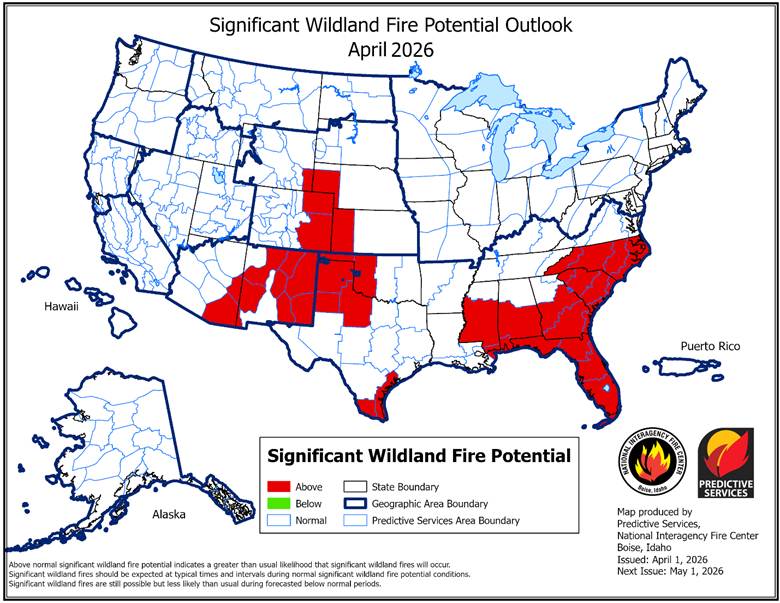
The latest monthly wildland fire outlook, released last week, shows the US wildfire season is already off to an above-normal start. According to the outlook, as of the end of March, over 1.6 million acres have burned across the country, which is 231% of the previous 10-year average. What’s striking too is that, just like last year, the Southeast is showing high fire risk this spring—in addition to parts of Texas, Colorado, New Mexico, Arizona, Nebraska and Wyoming.
Looking ahead, April shows continued above normal risks in the Southeast and the Southwestern United States.
Climate-change driven heat, drought drive risk
Across much of the country, March brought above-normal temperatures—including an alarming, record-breaking early heatwave in the western US (and other parts of the country)—virtually impossible without climate change. Drought has also spread, with a third of the country now in severe or extreme drought. As of the end of March, 60 percent of the country was in some stage of drought. And precipitation was also below normal in many parts of the country, including “snow drought” conditions in the West. In addition, the March heatwave triggered a much earlier melt-off of snowpack—in some cases as much as 4 to 6 weeks earlier than the previously recorded earliest melt-off dates, according to the latest wildland fire outlook. Reductions in snowpack have been linked to more severe wildfire, while earlier snowmelt increases the timeframe for large wildfire activity by allowing vegetation to dry out for longer periods.
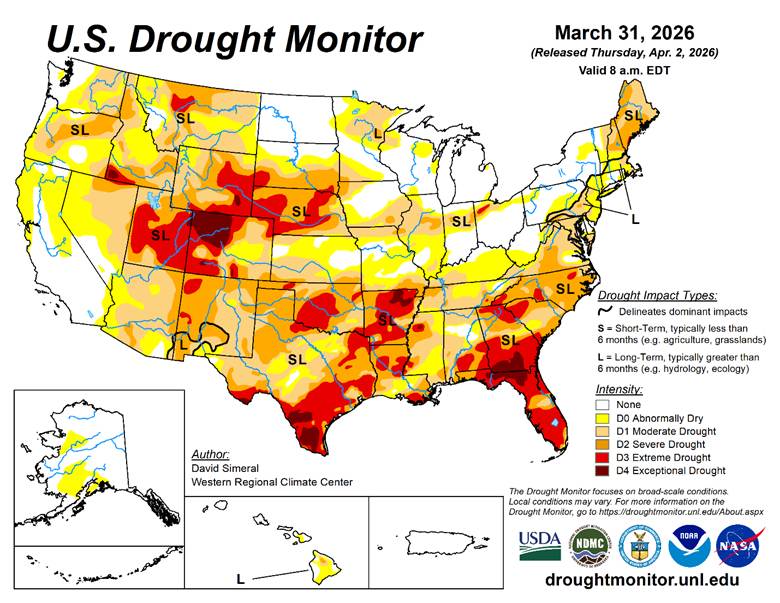
Together, these hotter, drier conditions bear the classic fingerprints of climate change, and they’re setting up dangerous risks for wildfires later this year, moving westward as the season progresses. These background conditions mean that, should a fire break out due to lightning or human ignition sources, the chances of it growing in intensity and size are much greater.
Multi-year risk factors are also critical to monitor. For example, the latest Fuels and Fire Behavior Advisory for the Central and Southern Great Plains shows that above-normal rainfall in 2025 led to vegetation growth that has now turned exceptionally dry with the rainfall deficit and drought in the first part of 2026. These exceptional grass loads are volatile tinder for this year’s wildfire season. According to the report, “Oklahoma Forestry Services reported extreme fire behavior and high resistance to control as a grassland fire spread to junipers on the Cedar Canyon Fire in late March, and similar conditions have been reported elsewhere in the region.” Similarly, the report for the Northern and Central Great Plains notes that: “Historically dry fuels are leading to extreme rates of fire spread and fire behavior not typically seen in March.“
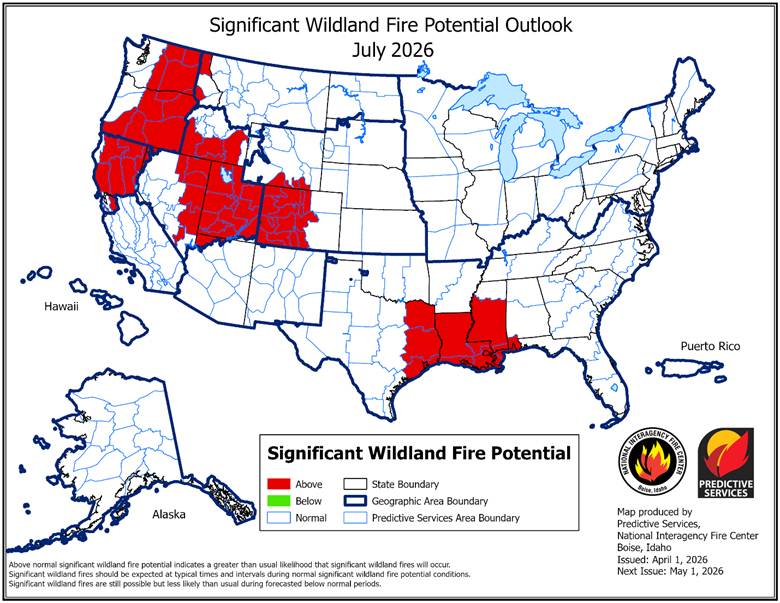
By July, much of the western US—including northern California, Washington, Oregon, Colorado Idaho, and Utah—will experience high fire risk, along with the south-central US, barring major rainfall events that can help blunt risks.
Climate change is one major part of the picture. Other factors—such as the proximity of wildfires to communities, homes and critical infrastructure—can raise the risks and harms to people’s safety, health, livelihoods, local economies and critical ecosystems.
A wildfire-driven insurance crisis
Worsening wildfire seasons are also contributing to a growing challenge in the property insurance market, especially in California. Many residents in wildfire-prone areas—and even in areas with lower risk—can no longer find affordable insurance on the open market. Insurance companies have been raising rates, dropping policies, and even retreating from risk-prone areas.
An increasing number of homeowners have been forced to purchase “last resort” policies from California’s state FAIR plan, one indicator of the problem. These bare-bones policies provide limited, expensive coverage—and the premiums vary widely by zip code. Data show that the number of policies in force under the California FAIR plan has risen 146% between 2022 and the end of 2025. The FAIR plan, which is under financial strain, is now seeking to raise its rates and is asking for a 35.8% average rate hike this spring.
The insurance market is in a precarious state and, were California to experience another costly fire season, things could get even more dire for homeowners. Despite all of this, insurance companies are continuing to insure fossil fuel projects and infrastructure—which are the underlying cause of the climate crisis! As UCS research shows, major fossil fuel producers bear a huge responsibility for the emissions that are fueling worsening western wildfire seasons—and it’s only fair that they should pay for their share of the impacts and costs.
Policy responses (or lack thereof)
Even as the nation faces another potentially dangerous fire season, the US Forest Service (USFS)—which plays a major role in managing wildland fires—is undergoing a chaotic and disruptive reorganization by the Trump administration. Separately, last year, President Trump issued an executive order directing a consolidation of federal firefighting resources across the Department of the Interior and the US Department of Agriculture (USDA, within which USFS sits) and other changes to limit and respond to wildfires. The DOI has published a plan to establish a joint US Wildland Fire Service.
While consolidation could have benefits, there are good reasons to be skeptical about the Trump administration’s approach and actual intentions. For example, a recent report from the USDA Office of the Inspector General shows that the USFS lost 16% of its staff (5,860 employees) since the end of 2024—which is largely due to Trump administration actions. And among the moves announced last week is a closure of research stations that study wildfire risk. Without robust science, staffing, expertise, and resources, as well as fair pay for wildland firefighters, the job of tackling worsening wildfire seasons will be much harder—and that could put people in greater danger.
All these changes are happening against a backdrop of a broadside assault by the Trump administration against federal agencies. Staff and budget cuts, dismantling of programs that serve the public, and politicization of disaster aid have been an ongoing challenge with this administration. All while spreading disinformation about climate science. Moreover, the administration is gutting climate and clean energy policies that could help curtail the heat-trapping emissions driving climate change and help communities build resilience to climate-fueled disasters.
Congress must ensure that crucial public priorities—including support for the science, staffing and resources needed to understand and address the growing threats and impacts of wildfires—are robustly funded in the next appropriations cycle. Investments in community resilience and risk mitigation measures to protect against wildfires, as well as for the management and protection of healthy forest ecosystems, are also vital.
At the same time, policymakers and regulators at the state and federal level must seriously grapple with the spiraling insurance crisis which is also contributing to the housing affordability crisis affecting millions of people. Data transparency and better oversight and regulation of the insurance market are urgently needed to better understand where, why and by how much insurers are raising rates (and if they are using discriminatory metrics like people’s credit scores to do so). Consumers need regulators and policymakers to help ensure they are treated fairly, especially in their worst moments after disaster strikes.
Catastrophic wildfires are now a reality for all too many communities. As a nation, we have to do much more to help people prepare, withstand and recover from these fires, while also sharply cutting the heat-trapping emissions that are burning up our world.