
Throughout 2025, the Federal Emergency Management Agency (FEMA) has been in the news almost constantly, and not for good reasons. Initially, the Trump administration threatened to eliminate the agency—something it lacks the legal authority to do. Then the administration settled on “dismantling” it.
On January 24, President Trump established the FEMA Review Council, purportedly to get its advice on what changes to FEMA “best serve the national interest.” However, the proceedings to date—including actions and rhetoric from Homeland Security Secretary Noem—indicate that this is just another rigged process to further undermine and dismantle FEMA.
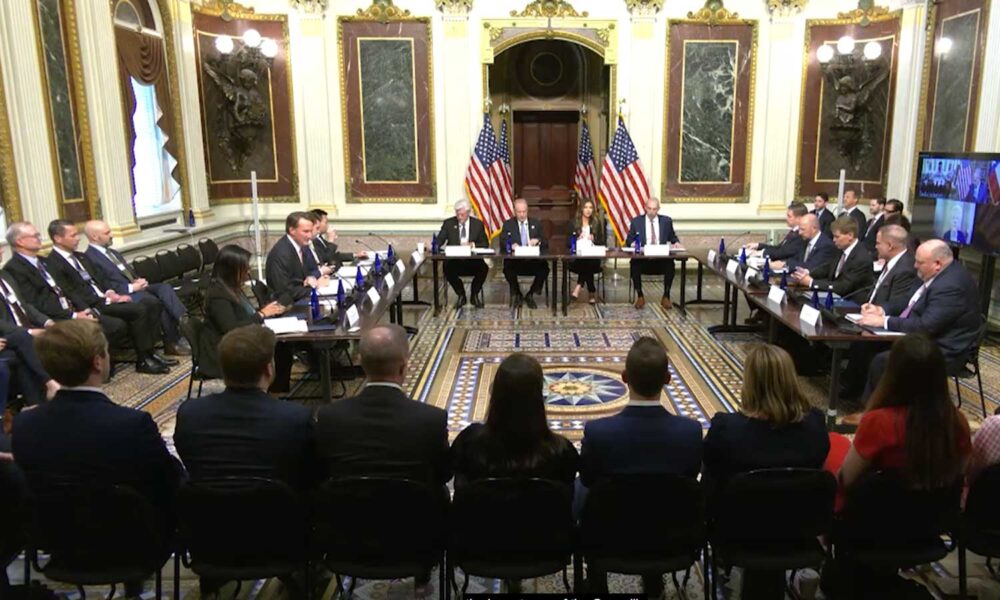
After much anticipation, the Trump administration’s FEMA review council will convene on December 11 to discuss and vote on their final draft report. All indications are that the council will ignore the dangerous realities of climate change and questions remain about whether the report will have any impact on changing the heartless course this administration has chosen to suspend, delay and politicize disaster aid and make it even more gut-wrenching for disaster-struck communities to recover.
What to expect from the Council report
Thanks to reporting by Politico, The Washington Post, The New York Times and AP, we’ve learned that DHS Secretary Noem has reportedly altered the Council’s draft recommendations and edited the report down to 20 pages from 160 pages.
“It’s like Edward Scissorhands. She wants to chop it up, and decentralize and really drastically limit FEMA,” -a person familiar with the situation on Noem’s edited version of the document in a report by the Washington Post.
It’s not surprising that Secretary Noem reportedly altered the council report given her tight controls on FEMA and other questionable actions (here, here and here) to date, as well as her apparent need to prop up President Trump’s call to dismantle FEMA.
As reported in the news, the council and Secretary Noem’s leaked versions of the report fail to meet the climate moment we’re in and the country’s enormous and growing disaster response and preparedness needs. According to those familiar with the Council’s complete report, its recommendations make incremental improvements to FEMA and Secretary Noem’s changes would be a whiplash reversal of policy, rocketing FEMA into a problematic past at warp speed.
I’ll be listening carefully to the proceedings of the Council meeting on the 11th to learn more about the final report and to what extent Secretary Noem exerts her destructive views in determining the future of FEMA.
What the nation needs from FEMA
This year marked 20 years since the devastation wrought on people in the Gulf South from Hurricane Katrina. Many of the lessons learned from that disaster were enacted as part of the Post-Katrina Emergency Management Reform Act (PKEMRA) of 2006, the last major reform of FEMA. Now, with climate change worsening many kinds of disasters, and with so many communities around the nation reeling from wildfires, extreme heat, floods, storms and more, we need reforms to FEMA that integrate science, equity and true resilience (beyond disaster response).
For example, under the PKEMRA congress established the FEMA National Advisory Council (disbanded by this administration) to help strengthen FEMA. FEMA’s NAC Annual 2004 Report included 15 major recommendations such as the need to address the disparity in its data and tools to ensure they are fully inclusive of tribes, territories, rural, insular, and disadvantaged communities; better align resources for disaster survivors; and establish a resilience rating system to help guide funding allocations. We’re also awaiting the implementation of the Technical Mapping Advisory Council’s (also disbanded by the Trump administration) (TMAC) 2023 Annual Report which made pivotal recommendations on how FEMA can better define the flood hazard and flood prone areas (see a summary here).
Instead, as the experienced FEMA staffers who signed the Katrina Declaration and Petition to Congress argue, FEMA has been “enacting processes and leadership structures that echo the conditions PKEMRA was designed to prevent.” These include basic policies such as maintaining FEMA as a distinct agency within DHS, ensuring that the DHS Secretary does not significantly reduce “the authorities, responsibilities, or functions of the Agency or the capability of the Agency to perform those missions, authorities, responsibilities,” making it illegal to transfer assets, and ensuring that the FEMA Administrator has “not less than 5 years” emergency management experience.
To address our country’s current needs, a FEMA review council report ought to include recommendations for Congress for legislative reforms and changes FEMA can do on its own, including:
Dramatically bolster FEMA and its internal systems. Even before President Trump’s terribly destructive second term, FEMA was low on staff, needing modernization and an increase in efficiency. But President Trump gutted FEMA reducing full-time staff by 30 percent, causing confusion and a brain drain due to a huge loss of top officials. Congress should:
- Return FEMA to its Cabinet-level authority;
- Restore staff levels and strategically hire additional staff;
- Fund and call for the modernization of IT systems; and
- DHS must immediately restore FEMA’s advisory councils, including the National Advisory Council, the Technical Mapping Advisory Committee, and the National Dam Safety Review Board, which provide rigorous independent guidance to the agency. In a brief sweeping DHS memo, all current memberships in advisory committees were terminated on January 20, and it’s unclear whether the missions of these committees meet “DHS’s strategic priorities” and will be revived.
Fundamentally improve disaster response and recovery for survivors. To do this, Congress should pass the Individual Assistance provisions in the “Fixing Emergency Management for Americans of 2025” (FEMA Act of 2025) that would:
- Create a unified disaster assistance application for all federal disaster assistance programs; help individuals experiencing homelessness access post-disaster housing assistance; and increase communication of assistance, among other things.
- FEMA must restore FEMA’s door-to-door canvassing during its on-the-ground disaster response. This canvassing is critical to helping elderly survivors and those with disabilities get the information they need to stay safe and receive help with the paperwork needed to access federal disaster aid.
Restore and plus-up policy and resource investments in preparedness and pre-disaster mitigation. FEMA must restore the Building Resilient Infrastructure and Communities (BRIC) Program and recommend that Congress increase the 6 percent set aside given the cost effectiveness of these investments. BRIC, which was actually established by Congress during the first Trump administration, was FEMA’s most popular, oversubscribed pre-disaster competitive grant program to help state, local, Tribal, and territorial governments become more resilient before disasters. FEMA awarded BRIC funding for a range of projects to help reduce risk to flooding, wildfires and other types of disasters, for example large infrastructure projects such as a microgrid to help communities become more resilient to hurricanes, a levee setback to adapt to inland flooding, or smaller projects such as implementing building codes or resilient land use planning.
FEMA must also restore the handful of other preparedness grant programs and disaster assistance that have been removed, paused (e.g. the Hazard Mitigation Grant Program), delayed or proposed for cuts by President Trump and Secretary Noem, many of which are now caught up in litigation (e.g. BRIC, Emergency Management Performance Grants, and the Homeland Security Grant Program).
Modernize and reform the National Flood Insurance Program (NFIP). Congress is overdue to modernize the NFIP which must include: 1) a means-tested flood insurance affordability policy; 2) encouragement and prioritization of risk reduction mitigation practices including natural and nature-based features that substantially reduce maladaptive practices to lessen flooding; 3) update and modernize flood risk data and mapping to ensure up-to-date mapping is available across the U.S. and incorporates the latest science on future conditions including climate change; and 4) incentives for establishing and implementing protective local building codes and zoning laws informed by the latest science.
FEMA must modernize the NFIP’s minimum floodplain management standards as well. Rulemaking is sorely needed to update the NFIP’s minimum building and land use criteria to require higher elevation standards in the special flood hazard area; incorporate climate change risks of extreme storms and sea level rise into flood risk maps to help keep people safe; disclose past and ongoing flood risk to future homebuyers and renters; and increase and expand flood mitigation support such as flood mitigation assistance grants, buyouts and increased cost of compliance, especially for those who have flooded repeatedly.
Instill Climate Science and Equity into all FEMA policies guides and standards. FEMA must immediately restore the Federal Flood Risk Management Standard (FFRMS) to ensure federally funded projects are built to avoid future flooding and ensuring that taxpayer dollars are spent wisely. FEMA must reinstate policies and restore references to climate change and equity. For example, FEMA should reinstate the 2023 Local Mitigation Planning Policy Guide that includes “Planning for Climate Change and Equitable Outcomes.”
Council’s incremental FEMA recommendations:
Based on news reports, there are eight main recommendations that have been reported to be in the council’s draft report that may never see the light of day if Secretary Noem gets her way. Generally, as reported by AP and the New York Times, the council’s recommendations look good. Of course I look forward to seeing the details, and we hope the council will insist on releasing the unedited version of its consensus recommendations. The ten council members include Governor Greg Abbott (Texas), 2) Governor Phil Bryant (Former, Mississippi), 3) Governor Glenn Youngkin (Virginia), 4) Chairman Michael Whatley (Republican National Committee), 5) Chief of Staff Mark Cooper (Former Governor John Bel Edwards, Louisiana), 6) Mayor Jane Castor (City of Tampa, FL), 7) Sheriff Rosie Cordero-Stutz (Miami-Dade County, FL), 8) FEMA Region 9 Administrator Robert Fenton, Jr (FEMA), 9) Executive Director Kevin Guthrie (Florida Division of Emergency Management), 10) Chief Nim Kidd (Texas Division of Emergency Management) and their recommendations (as reported first by the AP who obtained a table of contents) include:
- Key principles regarding reforming public assistance, flood insurance, direct assistance to survivors, and improving rural resilience;
- Ensure a phased-in approach for reforms to the Stafford Act;
- Provide aid to states more quickly and close out state federal funding ten years after a disaster;
- Restore FEMA to a cabinet-level agency;
- Give states upfront direct grants for disaster recovery instead of reimbursements after the fact;
- Implement a cost-share reduction for disaster assistance below the current minimum 75% federal cost-share;
- Better facilitate FEMA’s Individual and Public Assistance funds for disaster survivors; and
- Better manage the National Flood Insurance Program (NFIP).
Secretary Noem recommendations that take us a giant step backwards
However, Secretary Noem is reported to have thrown out the Council’s detailed recommendations and replaced them with her version in an altered council report:
- Move FEMA headquarters to Texas in order to accommodate Nim Kidd, the current Chief of the Texas Division of Emergency Management who is President Trump’s first choice to lead the agency as the new FEMA administrator. During President Trump’s first term, his administration relocated the US Department of Agriculture’s Economic Research Service and the National Institute of Food and Agriculture to Kansas City, and it was an undeniable disaster. Moving FEMA headquarters away from Washington DC would repeat that mistake and create new financial and logistical burdens. There are many reasons why moving FEMA headquarters outside of Washington, DC doesn’t meet basic financial and logical criteria. The Governmental Accountability Office found that the Trump administration hadn’t adequately accounted for the costs related to “attrition of staff or the disruption of agencies” due to the relocation, while the Federal News Network reported that a year later, the agencies lost between 40% and 60% of their staff. Given FEMA’s lead role in coordinating the federal agencies in disaster response and recovery and other emergency management response needs, it’s common sense and in the best interest of public safety for FEMA headquarters to remain in Washington, DC
- Keep FEMA within DHS. As mentioned above, keeping FEMA within DHS is the opposite of what the Council members recommended. Instead, the Council members agree that FEMA should be renewed to a cabinet-level agency as do many members of Congress who support the FEMA Act of 2025 and the FEMA Independence Act of 2025.
- Cut FEMA staff by about half. Tragically, the reality is Secretary Noem and President Trump are very close to already meeting this goal with a loss of one-third of staff due to firings, early retirements and resignations. Noem’s proposed further cuts fly in the face of the government reports (Congressional Research Service and Governmental Accountability Office) that have been warning us of overstretched FEMA staff and the need to bolster FEMA’s decreasing staff numbers, especially in light of climate change and the increasing severity of disasters and damages. It’s worth noting that while leaving agency staff and post-disaster communities without the resources they need to respond to disasters, under Noem’s leadership the DHS spent $200 million on private jets during the government shutdown.
- Rename the agency and/or eliminate the agency in its current form, remove FEMA’s direct role in disaster relief to a more grant focused agency, and considerably narrow FEMA’s disaster response responsibilities to debris removal and emergency protective measures. This recommendation coincides with President Trump’s March 19 Executive Order Achieving Efficiency Through State and Local Preparedness which, among other things, countered the notion of federalism and set a policy to shift the burden of disaster resilience, preparedness and response onto the shoulders of state, local, Tribal and territorial governments while providing no concrete framework for how those governments could adjust to this abrupt change nor how to pay for the increased work, the capacity and technical expertise to adapt—especially for less well-resourced states and emergency management offices.
- Reduce the federal cost-share for disaster assistance to 50 percent. This policy change would continue to drive the Trump administration’s efforts to shift the burden of disaster response and recovery on to state, local, tribal and territorial governments and away from the current 75-90 percent federal cost share, representing a major change from current policy. Given the enormous differences in financial capacity between state, local, tribal and territorial governments this may only serve to make disaster recovery more inequitable. However, any major changes to the federal disaster assistance cost share fall under the Stafford Act and would have to be done by legislation so it is unclear how soon this recommendation could take effect.
- Remove mention of federal funding for mitigation and preparedness programs for local emergency management agencies. The Trump administration has already taken mitigation and preparedness to the chopping block with the cancellation of the Building Resilient Infrastructure and Communities (BRIC) program, the delay and denial of the Emergency Management Performance Grant and the Hazard Mitigation Grant program, and others such as the Homeland Security Grant program that are tied up in litigation. However, the preliminary injunction in the BRIC lawsuit was a positive sign suggesting that the states have strong cases, and we hope these funds are restored expeditiously.
So much has changed since President Carter first established FEMA almost 50 years ago. But one thing that hasn’t is the need for the federal government to continue to play a coordinating role in disaster response and recovery, to provide standards, rules and regulations and assist with awarding grants and providing technical assistance, to name a few key areas.
Just one of these recommendations on its own would be a red flag, but combined, it’s a blaring red alert that Noem’s reported edits would undermine FEMA’s mission and make communities across the country less safe. The worst part is that some council members appear to have tried to provide recommendations that would help disaster survivors and local governments get assistance they need more quickly after a disaster and help people prepare before the next storm. Instead, Secretary Noem is intent on taking us back decades as she helps advance Trump’s authoritarian agenda.
We need you to act
To imagine that one person with zero emergency management experience, Secretary Noem, would undermine a presidential council process and manipulate report recommendations at the last minute because they don’t go far enough to dismantle the very agency the council was meant to help, is not only unethical but tragically par for the course for this Trump administration. Secretary Noem’s report, if it goes forward, is just a continuation of the Trump administration’s attacks on FEMA over this past year and dig a deeper hole for those living on the frontlines of disaster risks.
We must advocate against Secretary Noem’s report recommendations by sending comments to the FEMA review council and to your member of Congress that include:
- A rejection of Secretary Noem’s altered Council report recommendations that are a whiplash reversal of policy that would take FEMA back decades.
- Strong support for the council members’ call for FEMA to be an independent Cabinet-level agency.
- A call for all FEMA grant programs to be reinstated and for FEMA staff to be re-hired and new staff hired immediately.
We also urge Congress to hold DHS Secretary Noem accountable if she moves forward with the unethical manipulation of a presidential council report by holding oversight hearings and demanding Noem’s resignation. Congress must also urge President Trump to finally nominate a qualified FEMA administrator—the agency has suffered enough under a series of incompetent and unqualified acting administrators this year, including former acting administrator David Richardson, who recently resigned and who was nowhere to be found during the tragic Texas floods.