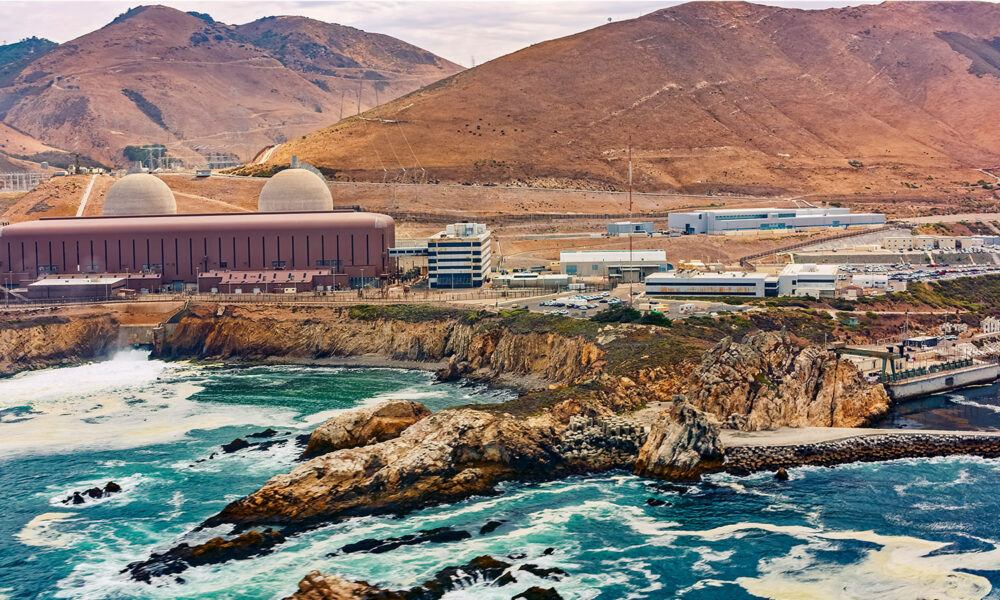

Should California allow the Diablo Canyon nuclear power plant to operate beyond its scheduled closure in 2030? Does the state need the plant to reliably meet California’s energy goals? Would extending its life save Californians money?
Some would like to keep the nuclear power plant open all the way to 2045. While there’s no proposal or legislation yet, people are again talking about the plant’s fate, including California lawmakers.
Originally scheduled to shut down last year, Diablo Canyon was given a lifeline in 2022 when California’s legislature extended that deadline to 2030 in response to rolling blackouts and ongoing grid reliability concerns. Since then, the plant has gotten all the approvals it needs to continue operating, including the recent go-ahead from the Nuclear Regulatory Commission to continue operating through 2045. Now the main thing standing in the way of Diablo Canyon continuing to operate past 2030 is the California legislature.
I’ll walk through the pros, the cons, and the unknowns of keeping Diablo Canyon running through 2045. In the end, I think Diablo Canyon should shut down in 2030 as planned. But should California decide to allow the plant to run longer, I’ll also highlight a few pitfalls the state should avoid.
The clean energy transition would be easier
One particularly compelling argument in support of keeping Diablo Canyon open beyond 2030 is that it would help California achieve its clean energy and emissions reduction goals.
The California Public Utilities Commission (CPUC) recently conducted analysis to understand how keeping Diablo Canyon online through 2045 would affect California’s clean energy transition. The analysis found that, while the state will still need to build over 120 GW of new clean resources even with Diablo Canyon online, keeping the plant operating could reduce the amount of solar, storage, and wind the state needs to build by 8-12 GW. The need for new in-state transmission could also decline by as much as 2 GW, and the state could retire an additional 1.5 GW of gas power plant capacity.
Those numbers are significant. Especially since California has already been struggling to build wind and the historical pace of the state’s solar buildout falls far short of the pace required by the state’s most recent clean energy planning. No matter what, California will need to pick up the pace to meet its clean energy goals, and I think it’s fair to say that keeping Diablo Canyon online through 2045 would make those goals easier to achieve.
It would help with grid reliability
Thankfully, California’s grid reliability situation has improved dramatically since the beginning of the decade. After the California rolling blackouts in 2020, the state has added a tremendous amount of new capacity to the grid, particularly energy storage. As a result, the state’s grid operator hasn’t had a close call since 2022.
Back in 2022, when California’s legislature authorized Diablo Canyon to run until 2030, the grid reliability situation was still dire. That’s not the case today. From a grid reliability perspective, keeping Diablo Canyon running past 2030 is more of a “nice to have” than a “need to have.”
In the long term, keeping Diablo Canyon online could help ensure grid reliability through the clean energy transition. For example, as I mentioned earlier, the CPUC analysis found that keeping Diablo Canyon online would allow for the retirement of an additional 1.5 GW of gas power plant capacity. So while it’s not strictly necessary to keep Diablo Canyon around for grid reliability, the nuclear power plant could reduce reliance on fossil-fueled power plants, which will continue to be a part of the grid for years to come.
Safety is still a concern
There have been serious seismic safety concerns around the Diablo Canyon nuclear plant since the very beginning. The plant is near multiple earthquake fault lines, and to complicate matters further, one of those fault lines wasn’t discovered until 2008, decades after Diablo Canyon was designed and constructed. The Union of Concerned Scientists has written extensively about the seismic safety risks at Diablo Canyon, warning that the seismic safety systems at the plant are insufficient. The plant’s owner and operator, Pacific Gas & Electric (PG&E) has long argued the plant can safely withstand earthquakes, and the Nuclear Regulatory Commission (NRC) has consistently sided with them.
Further adding to the safety concerns is that the NRC, which oversees the safety of commercial nuclear power plants, isn’t exactly an independent agency anymore. The current federal administration has completely reshaped the agency by firing commissioners, instituting a process for White House review of major new NRC rules, and empowering the Energy Department to secretly rewrite safety rules for new nuclear reactors. The NRC has also slashed safety and security inspections and weakened enforcement at operating plants, which will have immediate safety impacts at Diablo Canyon. With the independence of the nation’s nuclear safety regulator in question, California should think twice before continuing to operate its last nuclear power plant.
Ecosystem damage would continue
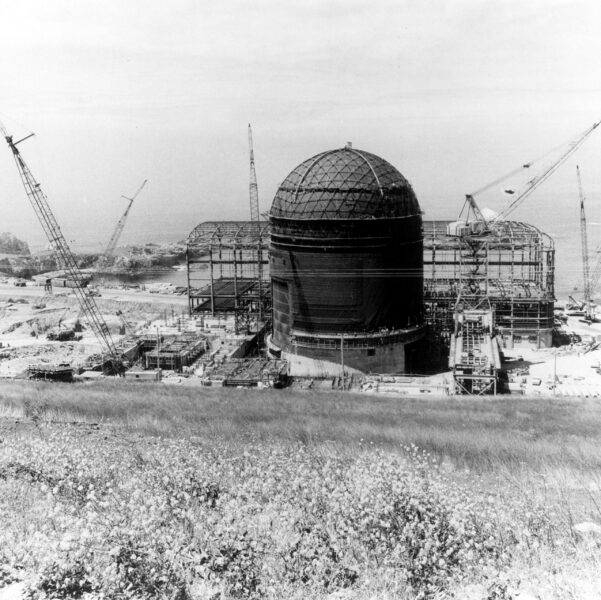
Diablo Canyon uses a once-through-cooling (OTC) system to cool the power plant. In short, the power plant consumes up to 2.5 billion gallons per day of ocean water to cool the power plant, then that warm water gets discharged right back into the ocean. The problem is that California has been striving to phase out OTC systems at power plants because the warm water discharge is harmful to marine life. PG&E went through an extensive study process over a decade ago to study alternative cooling technologies for Diablo Canyon, but PG&E ultimately decided not to pursue any of the alternatives.
However, ignoring the problem won’t make it go away. Continuing to operate Diablo Canyon for another 15 years past 2030 would surely cause significant further damage to local aquatic ecosystems.
Effects on ratepayers depend on the details
One of the biggest questions surrounding Diablo Canyon’s extension is: would it save Californians money to keep the plant open? The answer depends on the details. And more specifically, it depends on how much money California legislators offer PG&E to keep it running.
In 2022, when the California legislature voted to extend Diablo Canyon operations, the last-minute deal included a $1.4 billion loan which PG&E will likely never repay to the people of California, at least not in full. And the deal also included hundreds of millions of dollars in incentives for PG&E. For example:
- $100 million per year “fixed management fee” that goes straight to PG&E shareholders.
- $260 million per year “volumetric performance fee” that’s spent on grid expenses unrelated to Diablo Canyon, but it functions more like a slush fund that might actually be benefitting PG&E shareholders.
- $300 million “liquidated damages fund” reserved for paying for replacement power if Diablo Canyon has an unplanned outage, but it effectively means that ratepayers will pay for replacement power even if PG&E negligence leads to the outage.
If this sounds to you like a pretty sweet deal for PG&E and a kick in the pants for the people of California, you’re right. This is not normal. The legislature threw way more money at PG&E than what was required to keep Diablo Canyon open. As a result, Californians have been paying up to keep the plant open.
But it doesn’t have to be this way. Diablo Canyon doesn’t need all those ridiculous incentives to turn a profit during extended operations. The CPUC analysis I mentioned earlier indicates that, in the long term, Diablo Canyon extended operations through 2045 could save hundreds of millions, if not billions, of dollars in energy system costs each year.
So, will Diablo Canyon save Californians money? It’s possible. It just depends.
Should Diablo Canyon operations be extended?
Putting it all together, I think the answer is no. Diablo Canyon operations should not be extended beyond 2030. It’s certainly a balance, but the persistent nuclear safety concerns, along with a weakened NRC, present too much risk. And while it’s true that keeping the plant operating through 2045 would help with the clean energy transition and grid reliability, there are emerging clean energy technologies (e.g., advanced geothermal) that could play a similar role on the grid, but without risk of a catastrophic nuclear accident.
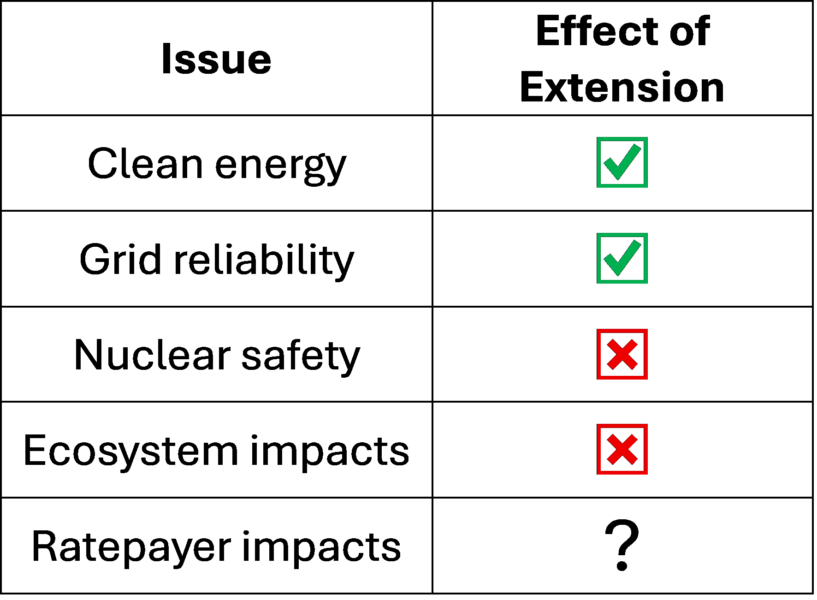
However, different folks could reasonably come to a different conclusion. It all comes down to the values and risk tolerance of Californians. Some folks may be comfortable with the theoretical (and highly uncertain) low probability of a catastrophic nuclear incident and the sustained damage to local ecosystems in order to get the clean energy, grid reliability, and (potential!) ratepayer benefits of extended operations. I just think it’s not worth the risk when so many better solutions are readily available.
How to protect Californians from extended operations
If policymakers do seriously consider an extension, it needs to be very different this time. The 2022 deal was rammed through the legislature at the last minute. It left Californians holding the bag, and PG&E pocketed the cash. Here’s what should change:
- An extension deal should go through the full legislative process. That means a bill should be introduced at the beginning of the legislative process. It should go through all relevant committee hearings and be fully vetted by legislators and the public. This is important because it will help prevent another PG&E cash grab and protect California ratepayers. (This also means the legislature really shouldn’t take up the issue this year, since the legislative process is already half-way done.)
- An extension deal should not further subsidize PG&E. That means the ridiculous incentives from the past deal that have lined PG&E’s coffers should be a thing of the past. If Diablo Canyon continues operating, PG&E shouldn’t get a special deal.
- An extension deal should benefit ratepayers. That means that Diablo Canyon should only continue operating if it helps facilitate California’s clean energy transition at least cost. Ratepayers shouldn’t pay extra to keep this risky plant operating.
- The CPUC should make the final decision. There’s a normal regulatory process whereby the CPUC scrutinizes utility decisions to operate or retire their power plants. If the legislature allows Diablo Canyon to continue to operate, the plant should be treated like any other power plant and go through the full CPUC process to determine if it is truly in the interest of ratepayers to keep the plant open beyond 2030.
California should let Diablo Canyon shut down in 2030. But if legislators want to consider extended operations, they shouldn’t repeat past mistakes.