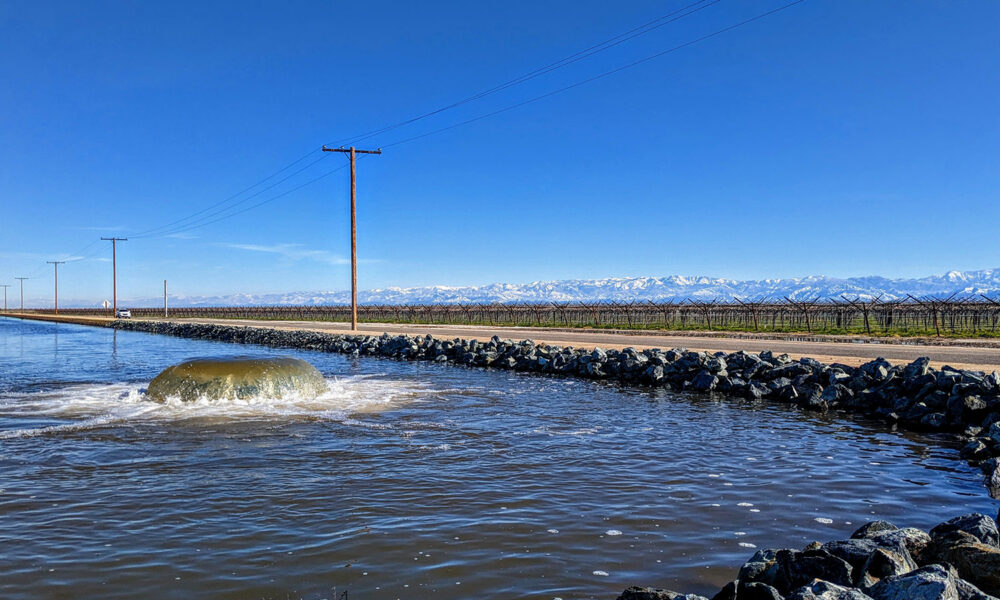

Even if you have never been to L.A., you probably have seen the L.A. River. It is that wide concrete trench that Hollywood loves to film: drag races, chase scenes, countless commercials shot on the bare slab… But it’s strange. This river doesn’t look like a river.
After catastrophic floods about one century ago, the river started to be lined with concrete for most of its 51 miles. The river became a single-purpose concrete channel to flush stormwater from the mountains to the sea as fast as possible.

But in three stretches, the river couldn’t be lined with concrete. And in those stretches, something happened that no one had planned. Cottonwoods and willows came back. Herons, egrets, and the Santa Ana sucker (an endangered fish species) came back. And people came back too to enjoy the river that had become their neighborhood park, to ride their bikes or to use their kayaks.
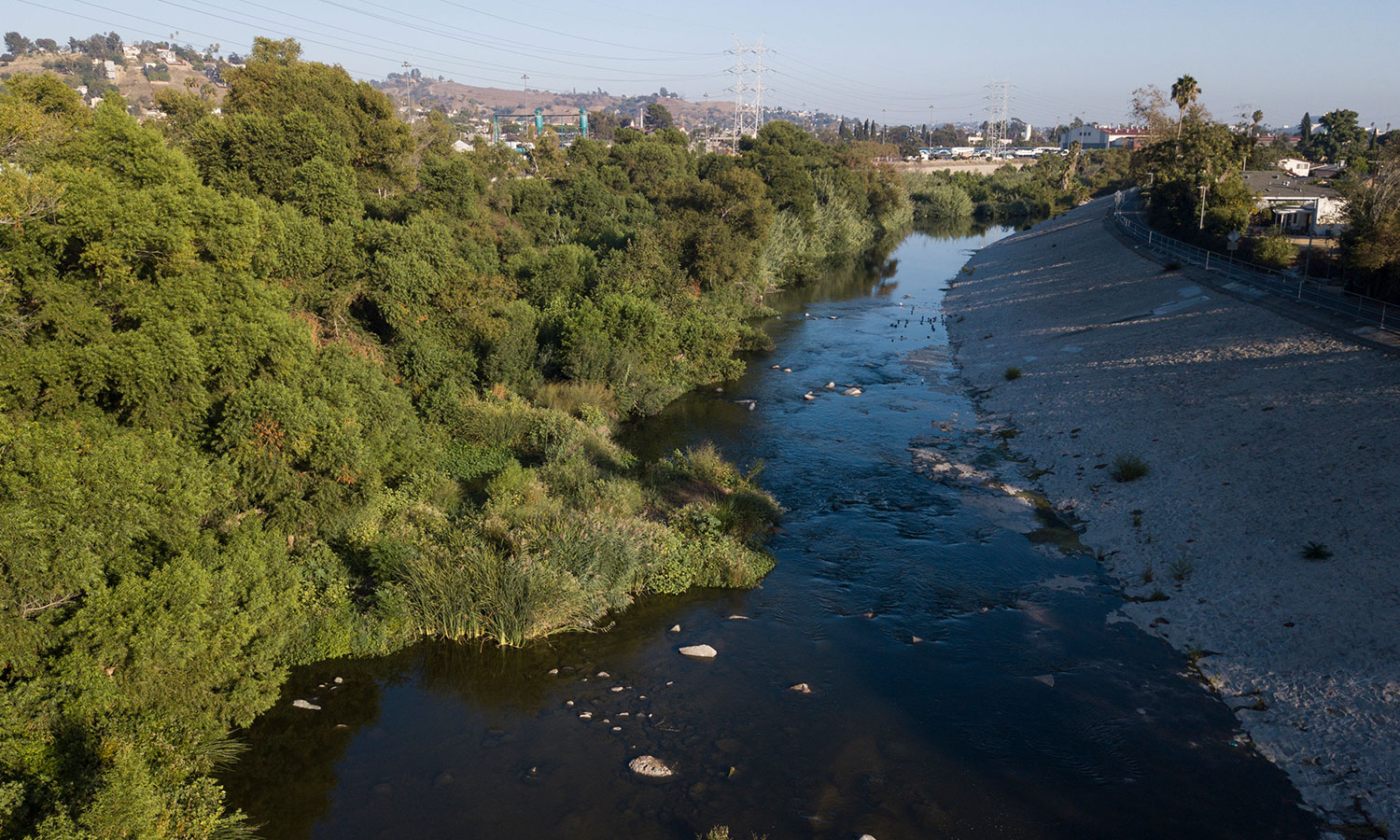
Same river, two realities. Gray concrete infrastructure does one job at a very steep price. The soft-bottom stretches do multiple things at once: flood protection, habitat, public health, recreation, urban cooling, water quality… And the river runs through neighborhoods where nearly a million Angelenos live within a single mile. Luckily for our L.A. friends, the L.A. River is undergoing a restoration that will bring back many of the multiple benefits of the river such as habitat, cleaner air, and green areas in the city while improving water quality, reducing erosion, and of course, maintaining (or even improving) the much-needed flood risk control.
This restoration project in the L.A. River is an example of a nature-based solution. Nature-based solutions are approaches to adapt to challenging environmental conditions in ways that work with nature, not against it. Traditional infrastructure is often more expensive and provides fewer benefits with more negative impacts. Nature-based solutions are often cheaper and always more natural than concrete infrastructure to tackle the same problems but with many more benefits and positive side effects.
This is the first post in a series about what using nature-based solutions looks like in California. You can read our guide Working with Nature to Protect California’s Agricultural Regions: How Nature-Based Solutions Can Build Resilience, and you can also see our related first Instagram video below.
A whiplash climate
Many public health and environmental problems we experience in California and in other parts of the world come from a legacy of unsustainable land management exacerbated by climate change. Extreme events that swing from one end to the other like a whiplash are now the new normal.
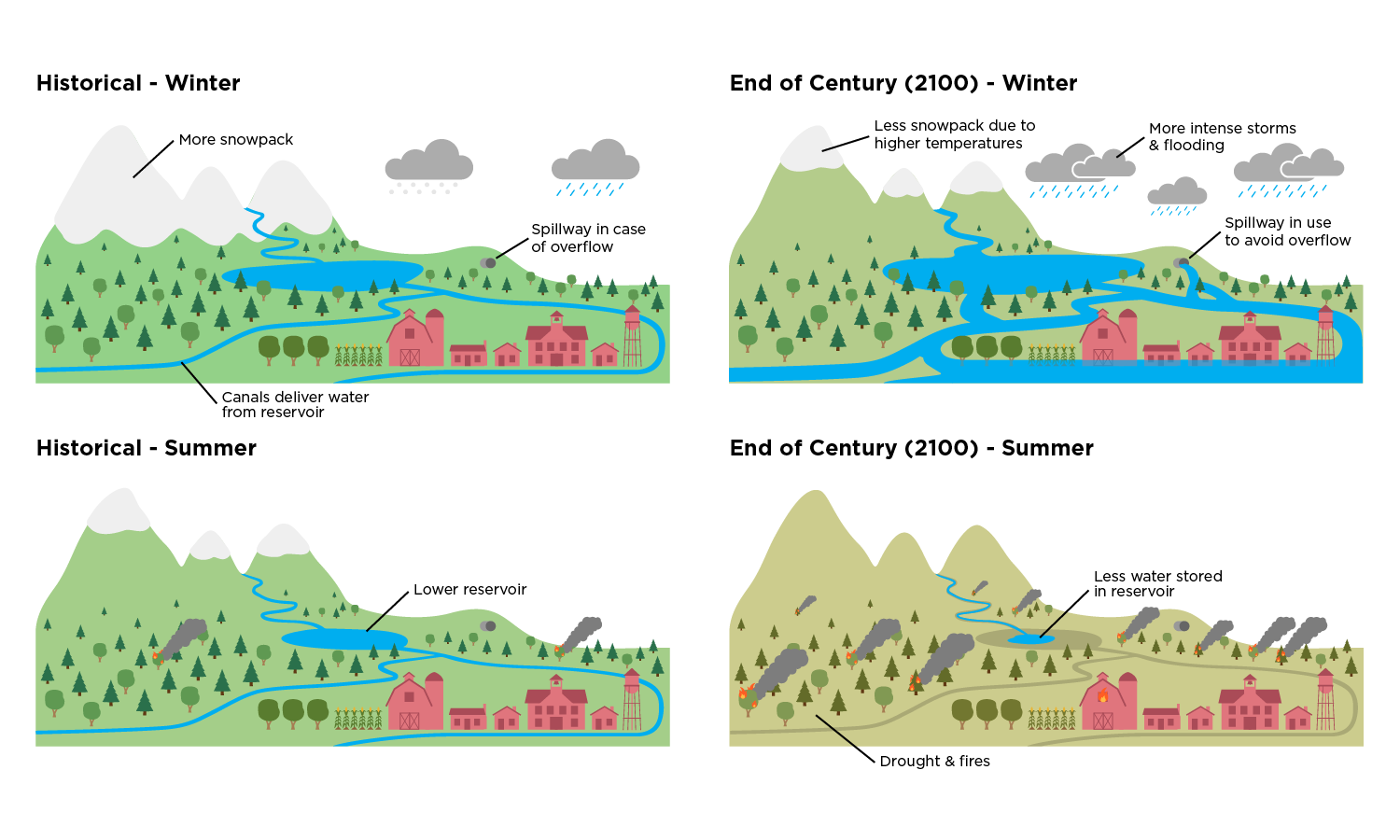
Gray infrastructure was originally designed to control nature instead of working sustainably with the environment, as most Indigenous communities do. Climate change is making destruction more frequent and more expensive, and gray infrastructure cannot adapt to the new conditions in many cases. And our traditional response has been to react rather than prevent. California spends billions on fires, floods, and droughts after they happen, which is far more expensive than preventing them in the first place. Every dollar we do not invest in resilience today, we end up paying many times over in the near future.
And those costs are not paid equally. All Californians pay them through taxpayers’ money in disaster relief and emergency response. But frontline communities with limited infrastructure pay also with their health, their wellbeing, and the quality of their daily lives.
We need to prepare California for what is coming, but the answer is not just more gray infrastructure. Concrete dams, levees, and storm drains are expensive, brittle, and built to fight nature instead of working with it.
Nature-based solutions are a better (and cheaper) way.
Nature-based solutions and cropland repurposing in agricultural regions
Here where I live in Merced, in the middle of California’s San Joaquin Valley, agriculture is one of the main economic engines and represents the identity of a lot of people. But agriculture in California hasn’t been sustainable for more than a century, especially because of an inadequate water management and inadequate agricultural practices (like dry tillage of idle land, excessive pesticide use, monoculture, or irrigation of marginal lands), problems aggravated by climate change. Part of my work is to understand this system and find solutions that don’t create new problems. And since I love agriculture and the environment, and I have many friends who live in farmworker communities, I have been thinking of nature-based solutions for agricultural regions since years ago.
My work orbits around cropland repurposing to achieve a just land transition. Current water law in California requires local agencies to sustainably manage groundwater and avoid what the law defines as “undesirable results,” such as dry wells, soil sinking, and seawater intrusion. This legal framework has the potential to become a transformative power to change a system that wasn’t working. And to achieve water sustainability, California may need to repurpose about one million acres of irrigated agriculture to decrease our water footprint.
While this is a huge task, it is also a huge opportunity to correct a legacy of problems that started more than a century ago while adapting to climate change, adopting sustainable agricultural practices, and managing public resources sustainably. Nature-based solutions can tackle water sustainability in multiple ways, including aquifer recharge, floodplain restoration, and sustainable agricultural practices. And they can also take care of public health issues, such as flood prevention, erosion, dust prevention, pollution reduction, lack of green areas, and extreme heat. Nature-based solutions can also create local employment during the construction, for maintenance, or even tourism and other new, out-of-the-box ideas. However, Nature-based solutions are not a solution for everything, and we will need to create pathways to foster local, non-extractive economies to bring complete sustainability to agricultural regions. We call this a Just Land Transition, and along with on-the-ground grassroots partners like Allensworth Progressive Association, with nonprofits like Community Water Center and Environmental Defense Fund, and with agencies like the California Department of Conservation, we are supporting science-based policy and science-driven actions to bring sustainability to agricultural regions in California.
In this blog series, we will show the potential of nature-based solutions to become the best to-go tools to address cropland repurposing and to tackle climate justice in agricultural areas.
If you want to know more, you can read our guide: Working with Nature to Protect California’s Agricultural Regions: How Nature-Based Solutions Can Build Resilience. And if you want to know more about best practices in land repurposing for a just land transition beyond nature-based solutions, you can check UCS’s webpage Guiding California’s Land Transitions Toward Justice and Equity.
California has the tools, intellectual knowledge, and the funding to make this better choice happen. Proposition 4, the Climate Bond, has provided billions of dollars to use in climate resilience and land repurposing, and nature-based solutions can be one of the best ways to invest our taxpayer’s money to create sustainability and transform the system to work for everyone.