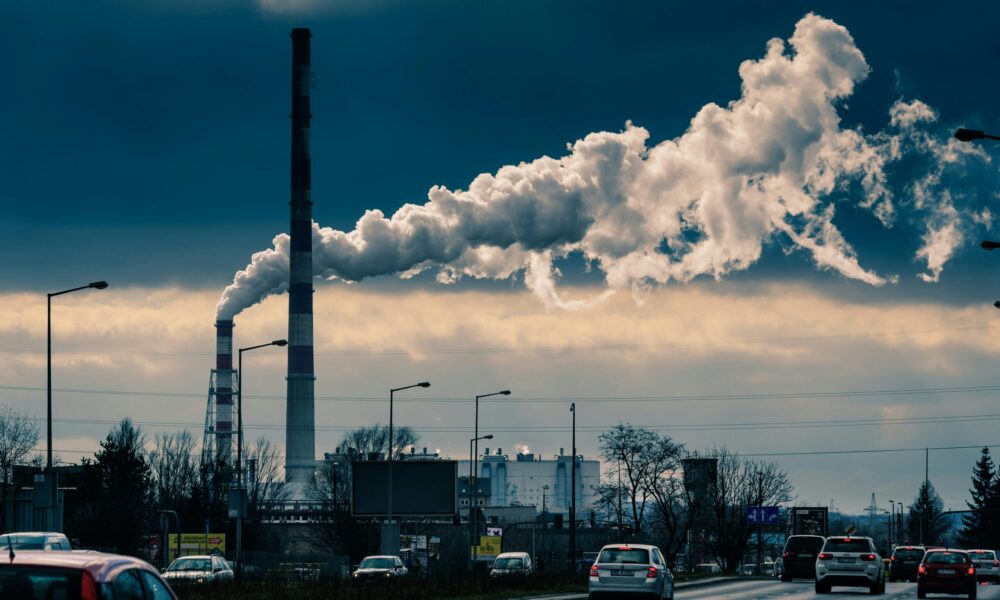

Right before the holidays, Senators Lisa Blunt Rochester and Tammy Duckworth re-introduced the Public Health Air Quality Act, a federal bill that would increase monitoring of, and accountability for, air pollution in the United States. This legislation comes at a time when the Trump administration is eliminating regulations intended to limit toxic air pollution (see our new interactive map here), deleting and distorting climate science, and weakening vehicle standards, among many other destructive actions. Increasingly, the public is being cut out of decisions that impact their health, communities, and livelihoods—and, unfortunately, we are also seeing this play out at the state level.
Last month, I was fortunate to join my colleagues at the American Geophysical Union’s annual meeting, where I presented new research on an insidious and concerning trend: state efforts to ban community science. Community, or participatory, science is defined as “research and monitoring efforts that depend on knowledge, insights, or observations from members of the public.” Whether it is taking photos of birds to upload into an identification app while on a hike or reporting concerning pollution odors in your neighborhood, all of us can engage in community science for the public good.
Democratizing science
Community science is a way to democratize science eliminating barriers to entry to enable all of us to engage in the scientific process. Community science can be educational; it enhances public participation; it can increase engagement in scientific research and policy decisions, helping fill gaps left by government agencies; and in some cases, it can warn people of potential threats in their communities. The data collected by community scientists can also catalyze policy change. For example, in a previous role, I helped design a community science initiative to test drinking water wells on Maryland’s Eastern Shore, where drinking water is impacted by industrial agriculture. Our findings included more than 100 drinking water tests done by Maryland residents, and supported advocacy pushing the state legislature to pass a law strengthening protections for private well users.
Evidence suggests that state, local, and Tribal governments have used community-generated data, especially water quality data, in decision-making, but this is happening less directly at the federal level. Landmark investments in 2022 by the Biden-Harris administration, offering community air monitoring grants to more than 130 groups, signaled an openness to considering high quality community data. The US Environmental Protection Agency’s (EPA) Air Sensor Toolbox, another resource to ensure that community scientists have the information they need to produce high-quality data, remains available, even as the EPA’s Office of Research and Development (ORD) has been dismantled by the Trump administration.
The effort also aimed to fill a major gap in our nation’s air monitoring network. EPA currently oversees a network of more than 4,000 air monitors across the country that measure six “criteria” pollutants, including soot and ozone. However, these monitors are unevenly distributed across the country, and may not adequately characterize the specific hazards in communities at the fenceline of industrial pollution. In recent years, low-cost particulate matter (PM2.5) sensors called Purple Air monitors have grown in popularity, costing just a few hundred dollars compared to EPA-approved equipment that costs tens to hundreds of thousands of dollars. These monitors serve as an accessible screening tool for pollution in a community where deeper investigation may be needed. However, efforts to expand investments in community science may be in peril now under the Trump administration.
Cutting out science—and the public interest
For nearly a year, we have documented the ways in which the second Trump administration has weaponized, attacked, distorted, and sidelined science to achieve political goals. While the administration has not explicitly attacked community science, many of the administration’s actions have directly or indirectly inhibited the use of community science or collection of community-generated data: Top of Form
- Issuing the deceptively-named “Gold Standard Science” executive order, which borrows from the tobacco industry’s playbook, using the language of scientific principles in a misleading way to justify policies that will significantly limit the type of research and data that can inform government decisionmaking.
- Bypassing legally required notice-and-comment in rulemaking, robbing the public of the opportunity to share their stories, data, and recommendations on draft regulations that govern our environment, infrastructure, communities, and health.
- Interfering with and terminating federal advisory committees, many of which include community members or may consider community science in the guidance they provide to federal agencies.
- Major cuts to federal grants, including those that fund community air monitoring.
While many federal datasets and tools have been eliminated, as of now, the EPA’s AirNow Fire and Smoke map showing health-harming PM2.5 from low-cost sensors remains online. Despite the broad attacks on science across the government, these data remain online. This community-generated data for wildfire air monitoring is still available to help people make safe choices for themselves and their families.
States attempting to silence community scientists
Unfortunately, the attacks on community science do not end there. In recent years, as community air monitoring has become more accessible, some states have begun banning it. So far, four states have attempted to pass, or successfully passed, laws to censor the use of community science in government decisionmaking. In some cases, community groups are being banned from even talking about their monitoring efforts. These include:
- Louisiana: Passed a law in 2024 that bans state regulators from considering community air quality data in oversight and enforcement decisions unless the monitoring used EPA-approved techniques and equipment, and is analyzed at state-certified labs. The law also imposes penalties from $30,000 to up to one million dollars a day on groups that publicly discuss their use of low-cost pollution monitoring devices.
- Kentucky: Passed a law in 2025 that bans state regulators from considering community air quality data in air pollution enforcement, similarly requiring the use of EPA-approved equipment.
- West Virginia: Attempted, but failed, to pass bill that prohibits the use of community air quality data in administrative proceedings, including fines and sanctions for noncompliance, and in third-party lawsuits.
- Ohio: Attempted, but failed, to include appropriations bill language that would restrict the use of community air quality data in enforcement actions, such as violations or fines.
These aren’t the only state-level efforts to ignore community data and lived experience, including consideration of community science, in policymaking. In 2022, Virginia nearly passed a law that eliminated permitting power from the state’s community air and water pollution boards. The “citizen” board members included on these boards are appointed by the governor and add a layer of accountability and transparency for regulatory decisions made by the state’s Department of Environmental Quality.
These actions not only cut the public out of decisions that impact their health and safety, but also further erode trust between the public and regulators and leave major data gaps that often-underfunded state agencies are not able to fill. It also means that state regulators may over-rely on industry-collected data, which is likewise subject to underreporting and data quality issues. Furthermore, denying the public the opportunity to share their lived experiences flies in the face of both democratic principles and state government agency obligations to protect public health and welfare.
Fortunately, advocates are fighting back, starting in Louisiana. Grassroots groups in Louisiana have sued the state for passing the law, claiming that it infringes on their right to free speech. Furthermore, a task force convened by Louisiana’s state legislature has called for greater investments in the state’s air monitoring network. As research by the Environmental Data and Governance Initiative shows, the current state air monitoring network in Louisiana is insufficient, with major gaps in heavily industrialized areas. But lawmakers have yet to make those investments, leaving Louisiana residents and advocates in a no-win scenario: the state won’t expand air monitoring, and they are barred from doing it themselves.
Federal protections can override barriers in states
That brings us back to the newly reintroduced Public Health Air Quality Act, which UCS endorsed alongside numerous environmental justice and public health advocates. The bill, if passed, would require EPA to use fenceline monitoring for toxic air pollutants that harm people’s health; ensure that fenceline and emissions monitoring are integrated into air pollution regulations; expand the National Ambient Air Quality Standards (NAAQS) monitoring network; deploy additional air quality sensors to enhance national monitoring; and expand public access to monitoring data.
Roughly two-thirds of US counties lack any air monitors. This bill will help fill critical data gaps, including for the nearly three million people who live in areas that are in PM2.5 hotspots that are not covered by the national air monitoring network. As the Trump administration targets both public health rules and the science they’re based on, it’s more important than ever to support pollution monitoring. Contact your representative today to urge them to support the Public Health Air Quality Act!