
This post was co-authored by Yamilín Rivera-Santiago.
Y el político grueso
nos convida al progreso,
trayendo la amnesia total;
sustituye el alma
por concreto, con calma,
trayendo la amnesia total.
-Roy Brown, Yo no sé cual es la verdad
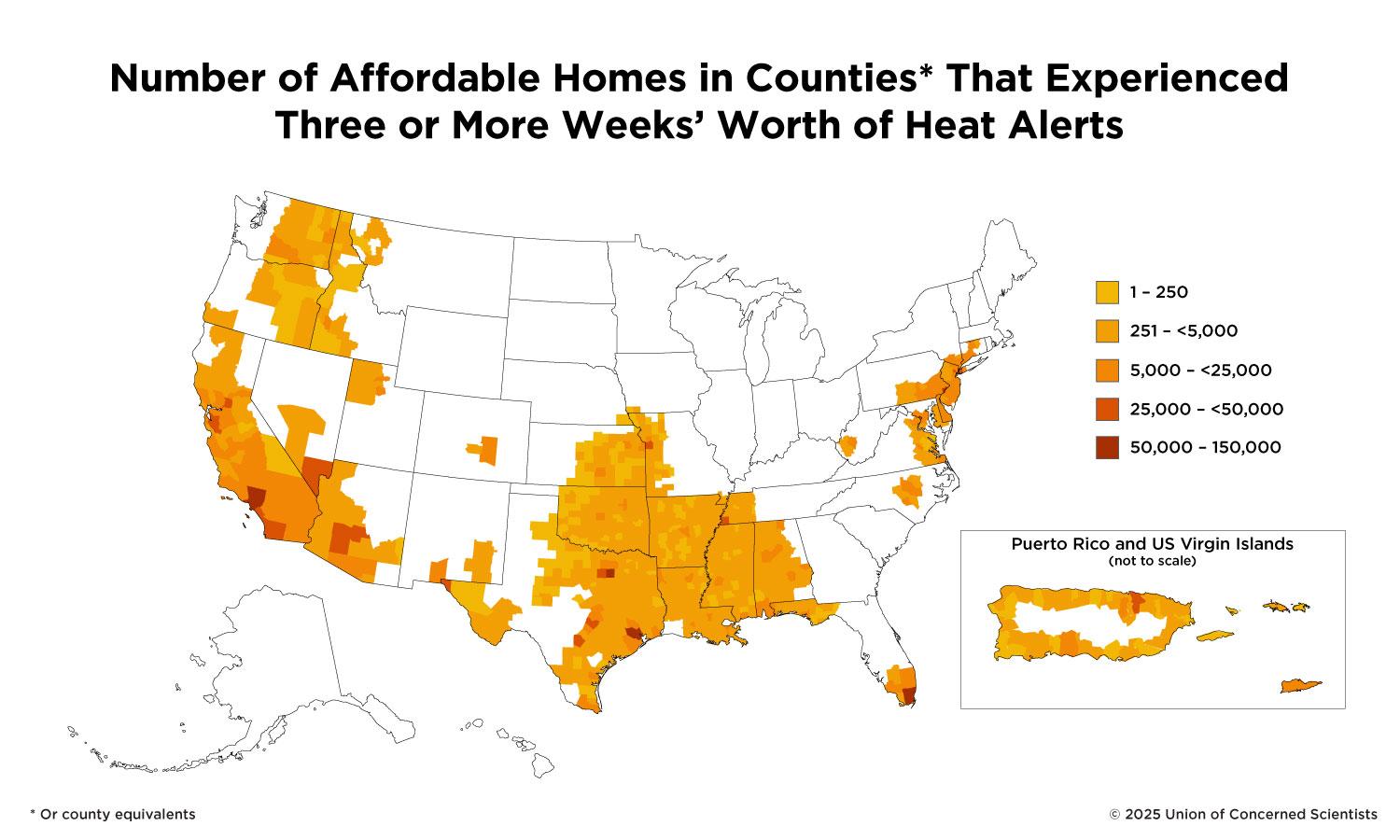
The Caribbean—and Puerto Rico in particular—is at the intersection of multiple, overlapping crises: climate, energy, economic, and political. These crises are not isolated; they compound one another dynamically, increasing vulnerability and dispossession for people and places in ways that are not accidental, but structural. Some of these crises are colliding: in 2024, climate-fueled extreme heat exposed nearly all affordable housing residents in Puerto Rico to multiple days of dangerous heat. By 2050, an alarming number of critical infrastructure assets on which Puerto Ricans depend to live their lives could be underwater at least twice per year due to flooding from sea-level rise alone. Compounding this dire climate reality is the historical context of colonial subordination: for more than a century, the key decisions that affect Puerto Ricans are made outside of Puerto Rico.
Now, a proposed bill in the Puerto Rico legislature threatens to dispossess Puerto Ricans of their cultural and constitutionally protected coastal heritage. This bill will restrict public access to beaches and facilitate maladaptive private coastal development at a time when the climate, energy, and affordable housing crises require safeguarding coastal assets.
The climate and energy crises in Puerto Rico cannot be ignored
Sea level rise, accelerated coastal erosion, and powerful hurricanes worsened by climate change are reshaping the Puerto Rican archipelago. Coastal and inland flooding are no longer an exception; they are becoming the norm, threatening homes, critical infrastructure, and ecosystems. These changes carry direct consequences, such as displacement of coastal communities, loss of habitable land, contamination of aquifers and sanitation systems, impacts on fisheries and food security, and compromised evacuation routes during emergencies.
At the same time, reliance on fossil fuels for energy generation exacerbates these multiple crises. Burning fossil fuels not only contributes to the emissions driving climate change, but also imposes disproportionate social and economic costs: high electricity rates, grid instability, and persistent vulnerability following extreme weather events.
In the aftermath of Hurricane María in 2017, Puerto Rico experienced significant property devaluation, especially in vulnerable areas. Combined with a mass outmigration of Puerto Ricans, this created conditions ripe for accelerated land and property acquisition.
Beaches and other coastal zones: a new front of dispossession
While real estate investors—both local and foreign—and so-called “digital nomads” acquire property and land on the island, Puerto Rican government officials create policies that favor outside investors and disadvantage Puerto Ricans, distorting the real estate market and increasing barriers to affordable housing. Now a new front in the Puerto Rican legal landscape has been opened that threatens to deny Puerto Ricans access to their coastal zones and accelerate dispossession.
In Puerto Rico, coastal zones have historically been in the public domain, accessible and usable by all, and are culturally significant spaces that also provide protection from climate impacts. These sites are now a battleground between Puerto Rican communities and investors, and a government that often prioritizes investors over the wellbeing of Puerto Ricans. Struggles over coastal areas are linked to the worsening social and economic situations in the aftermath of María, the COVID-19 pandemic, and the 2019-2020 earthquake sequence. As the cost of living—in particular, housing and energy—continues to rise, Puerto Ricans are being displaced from their homes, excluded from decision-making, and left at the mercy of real estate speculation.
Puerto Rico’s House Bill 25 (PC 25), which proposes to redefine and reduce the Maritime-Terrestrial Zone (MTZ), seeks to considerably shrink the MTZ, giving the public domain away to private property owners. It is driven by a growing demand for coastal luxury developments, whose developers and investors seek to change legal and constitutional protections to the public’s access to beaches and other coastal areas. Indeed, the bill was authored by the Puerto Rico Builders Association. PC 25 emerges amid intensifying climate impacts and mounting coastal development pressure. Coastal areas are no longer just ecological or recreational spaces; they have become a colonial fault line, where access, control, and belonging are being renegotiated.
What is the Maritime-Terrestrial Zone?
The Maritime-Terrestrial Zone (MTZ) is a coastal asset in Puerto Rico’s public domain protected by the constitution of the Commonwealth of Puerto Rico. It is defined by a 1968 law as “the coastal zone of Puerto Rico—washed by the sea in its ebb and flow, where the tides are perceptible [i.e, measurable], and by the greatest waves during storms in those places where the tides are not perceptible” (Google translation). This means that the MTZ:
- Includes all land reached by the tides, but also by waves from tropical cyclones
- Belongs to all people and is not subject to private use
- Cannot be purchased, sold, titled, or impounded
In addition, there are restrictions on permanent construction inland from the MTZ that provide buffers of protection against climate impacts.
Currently, the MTZ includes the portion of the coastline that is washed by the tides, as well as by waves from tropical cyclones. The Puerto Rico Department of Natural & Environmental Resources (DRNA in Spanish) is the state agency tasked with the conservation and protection of the MTZ. The DRNA also establishes the boundaries of the MTZ with respect to private property. Puerto Rican law also establishes a series of consecutive easements 50 meters long inland from the MTZ where no permanent structures may be built (see this planning law blog for an excellent explanation in Spanish).
The Maritime-Terrestrial Zone provides social, economic, ecological, and climatic benefits
The MTZ is the reason why Puerto Ricans and visitors have been able to freely enjoy and make use of the many beaches, rivers, and coastal areas of the archipelago. Free access to navigation along waterways, tourism, and food security from fishing and other coastal and riverine economic activities in Puerto Rico’s blue economy (worth $2.3 billion in 2022 according to NOAA!) are made possible by the MTZ. Mangroves, coral reefs, and other natural barriers help buffer climate impacts, including coastal erosion and storm surge—all thanks to the protections of the MTZ. The MTZ protects the Puerto Rican shorelines from private, haphazard, and maladaptive development. Sites of archaeological importance along the coastal areas are also protected from development by the MTZ.
PC 25 ignores climate science to reduce the MTZ
PC 25 proposes to change the legal definition of the MTZ by using the reach of the astronomical tide as its criterion—based on NOAA’s tide gauges—and eliminating the second criterion of using the reach of the waves during cyclonic storms. With this change, the public domain of the MTZ would end where the tide reaches the shore, typically identified by where sargassum, seaweed, or other debris is washed ashore by the tides. If this bill were to pass, the only part of the beach that beachgoers could place their chairs on would be the wet sand that the tides have reached. But reducing the public coastal zone is not just problematic for beachgoers. It would also deprive Puerto Rico of critical protections against flooding from storm surge, sea-level rise, and coastal erosion, and would likely result in privatized access to coastal areas, with negative impacts for public beach access, housing affordability, tourism, and the blue economy.
What’s the problem with using only the tides to redefine the MTZ? The coastal environment in Puerto Rico is microtidal, barely reaching a vertical range of 0.3-0.4 meters (so it does not contribute much to shaping the coastline). What really accounts for shaping the Puerto Rican coastline are waves, swells, tropical storms, storm surge, and climate variability—processes with much larger magnitudes than tides, according to testimony submitted by Dr. Miguel Canals, director of the Center for Applied Ocean Science & Engineering of the University of Puerto Rico, Mayagüez campus, and a tidal dynamics expert. In a world without sea-level rise, without powerful hurricanes, without catastrophic storm surge, or widespread coastal flooding and erosion, an MTZ defined only by tides would increase private property boundaries—as the authors of the bill (again, the Puerto Rico Builders Association) no doubt are counting on in order to facilitate coastal development. Redefining the MTZ based on tides will legally shrink the MTZ, effectively rendering it entirely a maritime zone with no terrestrial component. The portion that will be underwater will be unsuitable for many users, namely beachgoers (who don’t generally set up their chairs in wet sand!) and to homeowners who buy and then lose to the sea the properties built by the same developers that authored the bill.
Excluding cyclonic storms from a new definition of the MTZ will have the effect of ignoring not only wave height, but also storm surge that could reach higher and further inland with sea-level rise. Clearly, the proposed redefinition of the MTZ willfully ignores the very real impact of climate change in reshaping the Puerto Rican coastline. For example, a study found that most beaches experienced loss of elevation and width following María in 2017. And no consideration of future sea-level rise (projected for Puerto Rico to range between 0.33-3.75 meters by 2100 across low to extremely high emissions scenarios) or coastal erosion is included in PC 25.
PC 25 says it intends to conserve and protect—but does the opposite
Another mind-boggling aspect of PC 25 is its invocation of Regulation 4860 of the DRNA to justify its choices for including and excluding certain scientific data. Regulation 4860 pertains to the administration and conservation of territorial waters, submerged lands within, and the MTZ. It was adopted in 1992 to provide guidance to update the MTZ according to “scientific breakthroughs, environmental public policy, and current needs related to conservation and preservation of the MTZ” (our translation). But as we have seen, PC 25 does exactly the opposite of that. It excludes the latest science on climate-worsened cyclonic storms from the proposed MTZ definition, is out of tune with the constitutional principle of preservation and conservation of natural resources, and ignores the current (and future!) need to protect the entire MTZ from climate impacts.
PC 25 could have far-reaching consequences for coastal management and development under a changed climate. This proposed change requires a comprehensive discussion that includes the opinions of experts and community members from multiple areas of civil society. But the proposed bill is not informed by key scientific voices—and multiple Puerto Rican scientific institutions and professional societies have registered their concerns about the lack of adequate scientific data in the PC 25 draft.
And who stands to benefit from the reduction of the MTZ? It is telling that the Puerto Rico Builders Association drafted the law. An MTZ redefined as proposed in PC 25 would facilitate maladaptive and haphazard coastal development by private developers, who would reap short-term profits from the sale of coastal investments that would be chronically flooded and eroded in years, and swallowed in decades by the encroaching seas.
The MTZ needs to be expanded, not reduced
Reducing the MTZ as proposed by PC 25 ignores the scientific evidence of climate change and contradicts the fundamentals of climate-resilient planning. It also violates the Puerto Rican constitution’s mandate that natural resources be protected. Shrinking these zones exposes communities and common resources to greater risk.
Building infrastructure in coastal zones that will be encroached by the seas will result in the loss of investments and potentially lives. Puerto Rican geomorphologist and UPR professor Dr. José Molinelly Freytes said recently that the MZT needs to be extended inland because climate change is resulting in ever-more dramatic coastline losses. Similar opinions were shared by Pedro Cardona-Roig, an urban planner who served on the Puerto Rico Planning Board: “What is being proposed is reckless and illogical, because what we should be doing is the exact opposite: enlarge the [MTZ] space in order to have a buffer zone and ensure that the encroaching waves do not affect life and property”.
The MTZ should be understood as a dynamic, shifting boundary—not a fixed line—whose definition must incorporate sea-level rise projections, storm surge potential, coastal erosion rates, flood risk assessments, and adaptation needs for critical infrastructure.
Civic organizations are mobilizing to stop PC 25
Scientific societies are not the only ones who are taking action to stop PC 25. Community-based organizations like Murciélagos Beach Defenders (MBD)—whose mission is to safeguard public and free access to Puerto Rico’s beaches— have outlined a set of grounded, justice-oriented recommendations that should serve as a baseline for responsible policy:
- Review and adapt the definition of the Maritime-Terrestrial Zone to expand and conserve it
- Guarantee public, free, safe, and equitable access to Puerto Rico’s coastal zones
- Establish binding community participation in all public policy decisions
- Require the use of scientific criteria and empirical evidence, including climate impacts, in policymaking
- Adopt a comprehensive, multidisciplinary planning approach in environmental policy, legislation, and land-use and permitting regulations
These are not aspirational goals; they are necessary conditions to protect lives, local economies, and ecosystems. Research and advocacy from the Union of Concerned Scientists conveys a similar tone by consistently underscoring that resilience cannot exist without justice. In Puerto Rico, this means:
- Transitioning to distributed renewable energy systems
- Centering equity in post-disaster recovery
- Integrating community-based and feminist frameworks into planning
- Aligning public policy with the best available science on how climate change is reshaping the present and future
So: let’s recap. Why is this bill bad?
- Restricts the coastal public domain which will dispossess Puerto Ricans from enjoying their constitutionally protected beaches and other coastal areas
- Increases the potential for maladaptive private coastal development that will likely be chronically flooded anyway in a few decades—which can lead to increasing impacts of sea-level rise and storm surge flooding, which already getting worse due to climate change
- Does the opposite of what is needed, which is to increase the MTZ to create buffers that will protect the coast from worsening climate impacts.
The evidence is unequivocal: meaningful resilience will remain out of reach as long as structural inequalities in access to land, coastal areas, energy, and resources persist. Puerto Rico stands at a critical juncture. Decisions made today about coastal management, energy systems, and land use will define not only our ability to adapt to climate change but also the kind of society that emerges from it. The question is not whether the territory will continue to change; that is already happening. The question is who bears the costs and who benefits from those changes.
The coast is not a commodity. It is memory, sustenance, protection, and the future. To defend it is, fundamentally, to defend life.
If you live in Puerto Rico, take action here to say NO to PC25.