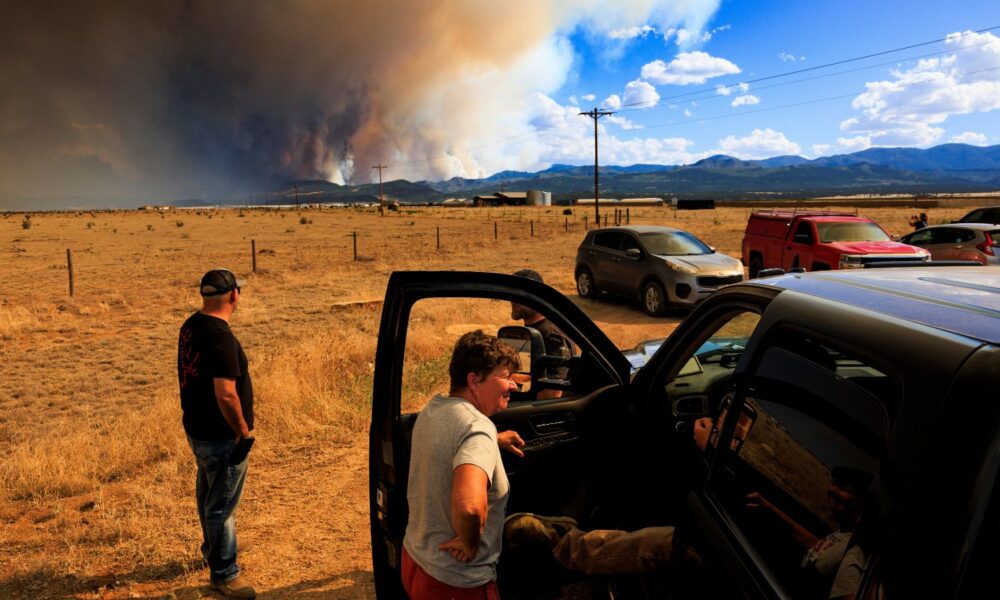

Unusually hot, dry conditions across many parts of the world—including in Algeria, Canada, France, Greece, Morocco, Spain, Tunisia, and the western United States—have set the stage for the catastrophic wildfire season underway now. Just over this weekend, rapidly spreading wildfires have exploded around Spokane, Washington, forcing nearly 65,000 people to evacuate thus far. Unrelenting hot dry weather, supercharged by climate change, is contributing to the dangerous conditions causing these fires.
The images of these fires are stunning, their scale terrifying, the human toll enormous already and mounting. And while the proximate causes of the fires, the types of vegetation burning, and nearby settlements differ greatly, the abnormal climatic conditions looming in the background everywhere are unmistakably clear.
Many lives have been lost, and precious communities razed to the ground. Hundreds of thousands of people have had to evacuate from fire zones and millions more have experienced dangerous levels of exposure to wildfire smoke. And, unfortunately, more heat is on the way—a deadly hazard on its own, and one that will also continue to fan the flames of this extraordinarily destructive wildfire season.
If these infernos don’t bring policymakers to their senses and force necessary changes to grapple with the fossil fueled climate crisis, what will?
Wildfire conditions in the United States
The 2026 wildfire season got off to an early above-normal start in the U.S. Thus far this year, nearly 5.3 million acres of land have burned across the country, well above the 10-year average of 3.7 million acres for this time of year. On July 18, the National Preparedness Level was raised to 5, the highest level, a sign of the extreme fire dangers and high level of resources committed to fight fires.
Colorado, Nebraska, and Utah are among the states that have experienced an incredibly challenging wildfire season this year. The Aspen Acres fire, covering nearly 102,000 acres in Colorado, has been burning for over a month now. And recent rains have led to heavy flash flooding in the burned areas, carrying ash and debris across roads and into waterways.
As of last week, Oregon had 31 large fires burning, across 1.6 million acres. They include the Rowe Creek Complex fire currently covering over 320,000 acres, the Big Grass fire with over 337,000 acres and the Coleman Creek fire covering over 251,000 acres. Despite the state being in such a dire situation, the Trump administration has denied FEMA Fire Management Assistance Grants (FMAGs) for two wildfires: the East Evans Creek Fire and Rowe Creek Fire Complex. State Senators Merkley and Wyden have strongly criticized the action and demanded answers from the agency.
Washington had 13 large fires burning over nearly 204,000 acres as of last week, including the Kaiser Canyon fire, which has burned over 128,000 acres.
The latest fuels and fire advisory for the Pacific Northwest notes that low snowpack and drought conditions in the region have led to fuels (i.e. vegetation) drying out much earlier than usual—all of which is ‘producing extreme fire behavior.’ This means intense fires that spread rapidly and are hard to control, putting people and infrastructure in danger.
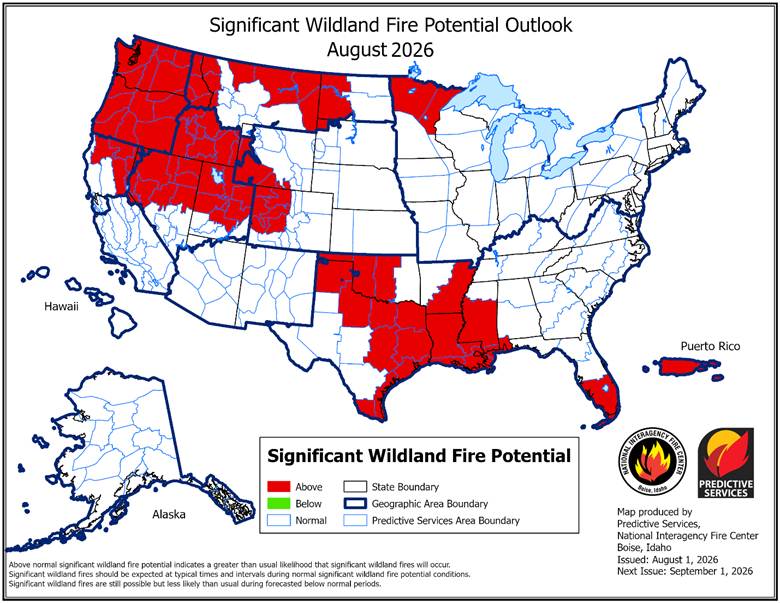
And the most recent wildfire outlook for August shows continued elevated fire risks in the Northwest, the upper Midwest, as well as Texas, and southern Florida.
The world in flames
Numerous large wildfires (nearly 900) are also burning across Canada. Over 9 million acres (3.76 million hectares) have burned thus far this year as the nation experiences one of its worst seasons (with the province of Ontario experiencing its worst-ever season).
France and Spain are also in the throes of their worst wildfire seasons on record, with little let-up in sight as yet another intense heatwave rolls through Europe, the fastest-warming continent globally. Approximately 300,000 people have been displaced by the fires thus far, which are now approaching major cities. Firefighters have lost their lives. Homes and livelihoods are going up in smoke. New research from World Weather Attribution shows that climate change is increasing the likelihood of the kind of hot, dry conditions preceding the extreme fire weather that led to the wildfires in France and Spain.
Northern Africa, which has received far less attention, is also seeing major wildfires which have caused deaths, prompted evacuations, and are putting a big strain on local firefighting resources in Algeria, Tunisia, and Morocco.
And earlier this year, Southern hemisphere countries, including Australia, Chile, and Argentina, experienced intense wildfires during their summer season.
While year-to-date carbon emissions from biomass burning in wildfires were at record lows in the first half of the year, that could change rapidly depending on how the next couple of months of peak fire season in the northern hemisphere go (especially boreal fires).
Dangerous wildfire smoke
Repeatedly this year, smoke from wildfires in Canada and the western U.S. has blanketed areas up to hundreds of miles to the east and south, reaching as far south as Florida last week. At times, over 100 million people were under alerts for pollution from wildfire smoke. Numerous cities—including Chicago, Detroit, Toronto and Milwaukee—experienced hazardous levels of particulate matter pollution, which can cause heart and lung ailments, worsen or trigger asthma, cause cancer, and even lead to death.
Research shows that the contribution of wildfires to PM2.5 pollution has been steadily growing in the U.S. One recent research article on the health impacts of wildfire smoke, driven by climate change, estimates that cumulative excess deaths caused by PM2.5 pollution could be as high as 1.9 million between 2026 and 2055.
Firefighters who spend extended periods of time exposed to hazardous smoke, often with little to no protection, face some of the most acute health risks. A 2025 investigative series by Hannah Dreier of the New York Times showed the harrowing toll this is taking on young firefighters who are getting sick and dying from the toxic substances they’re exposed to. The Forest Service and the Department of Interior have finally been forced to respond and start providing N95 respirator masks to frontline firefighters in 2026.
Fossil fuel companies and the Trump administration: making things much worse
Even as wildfires are raging, fossil fuel companies are raking in record profits, aided by craven politicians all too eager to give them free rein to burn down the planet. Fossil fuel companies and their political allies are now pushing for legislation to grant them immunity from legal and financial accountability for the climate damages they have caused. Join us in fighting back: Tell Congress: No Immunity for Big Oil!
And the Trump administration’s cuts to the US Forest Service staffing and budget, closure of research stations, and chaotic reorganization plans for federal firefighting efforts are also hampering efforts to address wildfire threats. News stories indicate that DOGE’s destructive actions also delayed grants for forest thinning and fuels management efforts in Minnesota, in an area that has now experienced major fires.
The climate future we feared is here
Whether it’s catastrophic wildfires or unrelenting heatwaves, this year has brought home the realities of climate change in ways that are hard to comprehend. Tens of thousands of people have died from extreme heat this year alone, with the highest toll in Europe and Asia. We’ve seen searing images of people fleeing for their lives, and firefighters bravely risking theirs, in the face of towering wildfires. Otherworldly, murky yellow skies and smoke-refracted sunsets signaling dangerous air quality have become all too common.
It’s almost unbearable to think that we knew the scientific facts decades ago and policymakers could have taken action to limit the harms so evident around us today. We can’t let greedy fossil fuel companies and spineless politicians decide our future. We owe it to people reeling from climate-fueled disasters today, and to the generations to come that will live in the shadow of our choices, to do what it takes to chart a different, safer path ahead.