
This (lightly edited) post was originally published via Science And Freedom Alliance.
America’s global leadership in science has been built over decades through bipartisan investments in research, universities, and a federal workforce of scientists, physicians, and public health experts whose work has led to major medical advances and protection against disease.
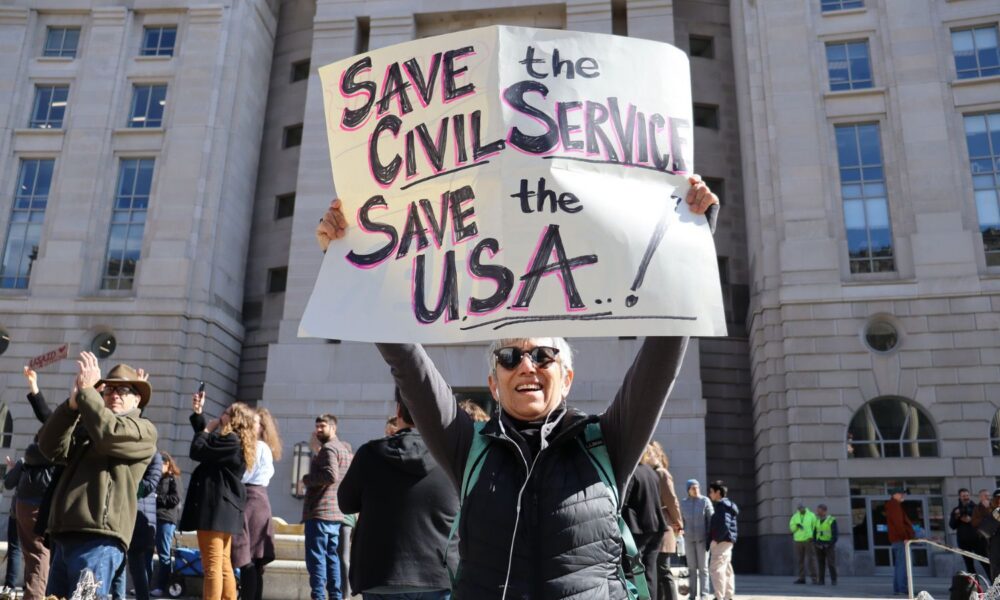
This foundation is now being weakened, with thousands of federal scientists and public health professionals having been jettisoned by the Trump administration during the past year and a half, along with reductions in funding and the elimination of vital programs, research grants and clinical trials.
The costs of cutting American science are significant and will result in fewer life-saving treatments, diminished disease surveillance, slower responses to public health emergencies, reduced food and drug safety, and a declining ability to protect Americans from threats we cannot yet foresee.
One of the most alarming consequences that cannot easily be repaired is the loss of scientific talent and expertise that has taken decades to build up—a major brain drain of accumulated experience and leadership that has disappeared.
Between September 2024 and May 2026, the arbitrary workforce cutbacks totaled 21.6% at the National Institutes of Health, 22.2% at the Food and Drug Administration, 28.1% at the Centers for Disease Control and Prevention, 35.3% at the National Science Foundation, and 72.1% at the Agency for Healthcare Research and Quality, according to analysis of data from the Office of Personnel Management. This loss of staffing includes senior leadership positions at many of these agencies, including the CDC and the NIH, where a majority of the top jobs have no permanent officials.
At the same time, morale at public health agencies has plummeted, with the Partnership’s Public Employee Viewpoint Survey showing that Department of Health and Human Services, where most of the public health agencies are located, registered an employee engagement score of just 20.4 out of 100 last year, placing it among the lowest-scoring large agencies.
This is because the day-to-day of the HHS employee has shifted from working to improve the health of Americans to censoring ideas, excluding already marginalized groups from the benefits of NIH programs, and endangering the American public. For many, whether to stay at the agency has become an impossible choice: abandon their mission and careers or risk degrading their integrity.
In addition, the Partnership analysis of USA spending data shows that project grant funding from public health and disease prevention agencies fell by 11.1% during fiscal year 2025. Even more striking, research and development contract funding from these agencies dropped by 49.4%. And at NIH, accounting changes—a shift to multiyear or forward funding, which puts the full grant amount on the government’s books in year one, instead of year-by-year as in the past—has resulted in NIH funding 24% fewer new research studies in 2025, with fewer scientists receiving project grants compared to 2024. All these NIH cuts also disproportionately affected women and racial, ethnic, and gender minority scientists who were already underrepresented in research.
When federal agencies lose scientists, physicians, epidemiologists, statisticians, and laboratory experts—and when medical research and public health funding is cut—the effects ripple throughout the entire scientific ecosystem.
The loss of this expertise has been accompanied by fewer research projects, fewer partnerships with universities and medical centers, fewer clinical studies, and fewer opportunities for scientific innovation, all of which will take many years and enormous resources to recover from, if recovery is even possible. It also has meant fewer experts monitoring emerging health threats before they become national crises. Another pandemic isn’t a matter of politics, it is just a matter of time.
Science often succeeds quietly. Vaccines prevent illnesses that never occur, food inspections stop outbreaks before families become sick, researchers identify dangerous pathogens before they spread widely, and drug reviewers ensure medicines reaching patients are both safe and effective. When prevention is weakened, the consequences eventually become painfully visible.
The recent outbreaks of cyclosporiasis, the resurgence of measles, the outbreak of hantavirus aboard a cruise ship, as well as the spread of Ebola in Africa remind us of the dangers we face as well as the importance of both having the ability to prevent, identify, and halt infectious disease outbreaks—responsibilities that have become more challenging with reduced staffing and fewer experts.
In the long term, the significant loss of scientific expertise and federal support will be measured in discoveries and medical advances never made, lives that might have been saved, and a nation less prepared for whatever public health challenge comes next.
The declining federal investment in science also will have a major impact on American economic competitiveness and our national security. Discoveries originating in federally supported laboratories have fueled biotechnology, pharmaceutical innovation, and countless medical advances that have improved lives, strengthened the economy and made America the world’s leading destination for scientific talent.
This American leadership is now being undermined, and rebuilding a lost generation of scientific expertise and investment will be far more difficult than dismantling it.