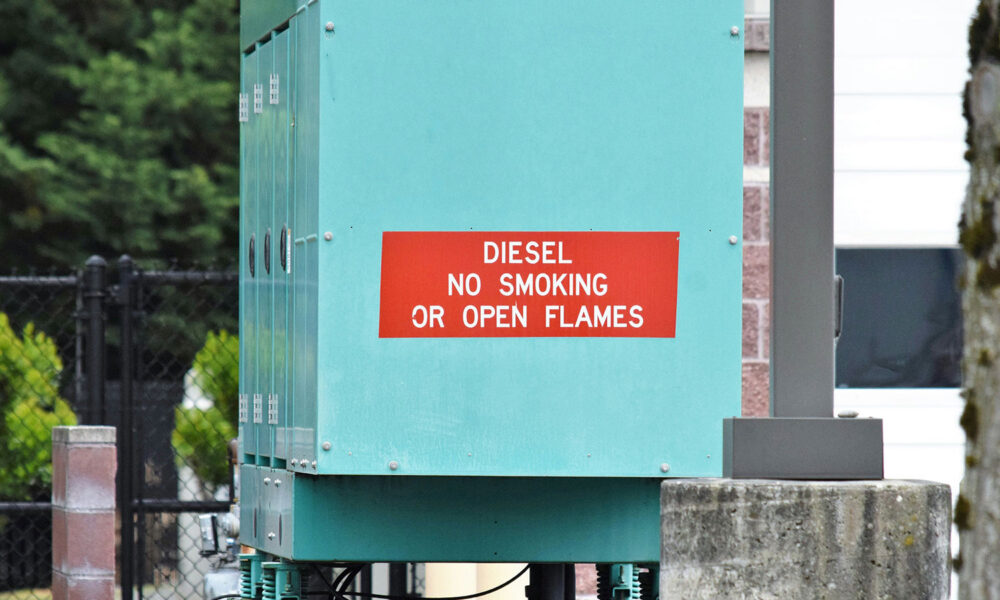

The loud drone of a backup generator is a familiar sound to most people. The power goes out and within seconds you can hear generators—usually diesel—in the neighborhood kicking on.
Backup generators support critical services in the case of power outages. Hospitals, fire stations, folks with medical needs, and others rely on backup generation to keep the power running for important and lifesaving purposes.
Another entity that also heavily relies on backup generation is data centers. A common refrain in the industry is 99.999% uptime meaning data centers are essentially expected to always be running. In the case of power outages, data centers rely on backup generators to supply their power.
The majority of backup generation for data centers is powered by diesel, which is the industry norm despite being highly polluting. That is increasingly concerning as the rapid growth in data centers is similarly producing a growing backup generation fleet. Luckily, backup generation technology is evolving and cleaner alternatives to diesel are available. These cleaner solutions need to become more common as the backup power option for data centers.
All diesel is bad, some diesel is slightly less bad
Diesel-fueled generators are the primary technology for backup generation at data centers. There are benefits to using diesel – it has high power density, the technology is mature and considered cost-effective, and fuel can be stored onsite.
But surrounding communities bear a steep burden—diesel combustion emits extremely harmful pollutants, such as nitrogen oxides and particulate matter, which are linked to respiratory and cardiovascular problems. These pollutants tend to linger locally and since data centers are often geographically clustered, they can have health impacts on nearby residents that worsen with time. Multiple studies have raised concerns about emissions from diesel backup generators at data centers and their health impacts on local communities. Incidences such as diesel spills are also raising environmental concerns and the need for stronger oversight of diesel backup generation at data centers.
The health impacts of diesel pollutants are well known and there have been efforts to regulate emissions and improve technology. The Environmental Protection Agency has defined four tiers of diesel generators with Tier 4 being the least polluting. The difference is quite big with Tier 4 having over 90% lower emissions limits than Tier 2 for certain pollutants. While Tier 4 is generally the standard when diesel generators are running as the main source of power, the lower tiers are still often allowed for backup generation. Some states and local governments have set stricter limits for backup generation as well, such as California’s Bay Area Air District which as of 2024 requires Tier 4 for all new emergency backup generation applications, although this practice is still very limited across the country.
While backup generators run relatively little, between the testing, maintenance, and emergency operations, emissions from backup generators are still quite concerning given how polluting diesel is. There have also been instances in the mid-Atlantic region of the US and in California where diesel backup generators were allowed to run during times of grid stress, such as potential power outages, overriding emissions regulations. If the data center buildout continues at its projected rate, relying on diesel backup generation and especially earlier tiers (very few states require Tier 4 for backup generation) raises notable emissions and public health concerns.
Cleaner solutions for backup generation are here
While the vast majority of data centers use diesel backup generators, cleaner solutions do exist and are gaining traction.
Battery energy storage systems have proven themselves critical for a clean and reliable grid, and can be a clean solution for backup generation as well. They don’t produce emissions and have additional local benefits such as reduced noise. From a usage perspective, batteries do not need fuel and generally require less maintenance. Data centers have begun deploying batteries as backup power, especially as battery technology continues to improve and becomes more economical.
Batteries have the added benefit of supporting the grid when their backup services are not needed. They can charge during times of excess renewable generation or when electricity demand is low, and then be used to power the data center when electricity demand is peaking to help reduce demand. Batteries can also be used to mitigate rapid power fluctuations from data centers which stress the grid, potentially leading to outages.
Hydrogen fuel cells are another potential avenue for cleaner backup generation, although this depends largely on how the hydrogen gas is produced – some of it is much cleaner than others. Hydrogen fuel cells use hydrogen gas to produce electricity in a chemical reaction that only produces water and heat as byproducts. It’s a cleaner solution that also has potential for prolonged outages and is being tested by tech companies like Microsoft and Google.
These cleaner solutions are promising even though they do still have barriers to widespread deployment. Battery systems are often shorter duration, require a large footprint that may be difficult in urban areas, and lithium-ion batteries can have a fire risk. Hydrogen fuel is expensive and distribution infrastructure is limited. But these technologies do have the significant advantage over diesel generation in that they do not emit pollutants that harm the health of local communities or contribute to climate change.
Methane gas generators are still problematic
Methane gas as backup generation is still limited in its deployment at data centers although it is being touted as a cleaner alternative to diesel generators. That doesn’t mean methane gas doesn’t have major drawbacks, it’s still quite problematic in terms of its emissions that contribute to climate change and public health concerns.
At a high level, switching to gas backup generators risks locking in more polluting fossil fuel infrastructure, a concerning direction for the clean energy transition. Even from a practical standpoint as backup generation, there are issues with using gas generation. Fuel for these generators is supplied through gas utilities and the gas system can be unreliable in extreme weather events shuttering services when backup generation is most needed.
Diesel should not be the norm for data center backup generation
The number of data centers is projected to grow significantly across the country, and the associated wave of diesel-fueled backup generators is deeply concerning for air quality and public health of nearby communities. This is especially notable in urban settings, where data centers are often concentrated and where backup generators would fire up simultaneously in the event of a power outage.
Cleaner technologies to diesel exist, and continued innovation can increase the scale at which they are deployed. For example, batteries increasingly have longer duration storage abilities, and improvements in technology and management of battery systems can reduce fire risk. There are also increasingly creative battery systems, such as new battery technologies, using recycled electric vehicle batteries, and pairing batteries with other resources such as solar and hydrogen, that could better suit the needs of data centers.
Policy incentives for these clean solutions will be critical for speeding up the transition away from polluting diesel and minimizing air quality and health impacts. For data centers with diesel backup generation, increasing scrutiny of when these data centers are allowed to run their backup generation is important. Instances where data centers have switched to backup generation during non-emergencies, such as grid disturbances and not actual outages, reveal major gaps in data center regulations.
It’s alarming how quickly the development of data centers is moving forward unchecked. While states have started passing legislation around data centers such as reporting requirements, these have not included policies on diesel backup generation. One of the consequences of this buildout could be a large fleet of highly-polluting diesel backup generators with serious air quality and public health impacts. There are cleaner solutions for backup generation at data centers and now is the time to incentivize and continue innovating these new technologies.