
I know what it’s like to experience housing insecurity. Shortly before the financial crisis of 2008 we lost our family home due to financial hardship after my parents divorced. I was in high school, and despite my dad’s hard work and begging the bank for options, our home was foreclosed on. We had to move 14 years of our lives over a single weekend.
We ended up in a rental house we couldn’t afford, as many Americans do. To keep a roof over our heads, we had to make hard decisions between keeping the lights or the water on or paying for groceries, and sometimes we had to go without. Public benefits and other programs that may have helped us scrape by existed, but they were hard to navigate when my family was busy working and trying to get through each day.
It’s because of these formative experiences that I understand the necessity of housing justice. According to the Urban Institute, housing justice means: “Increasing access to safe, affordable housing and promoting wealth-building by confronting historical and ongoing harms and disparities caused by structural racism.”
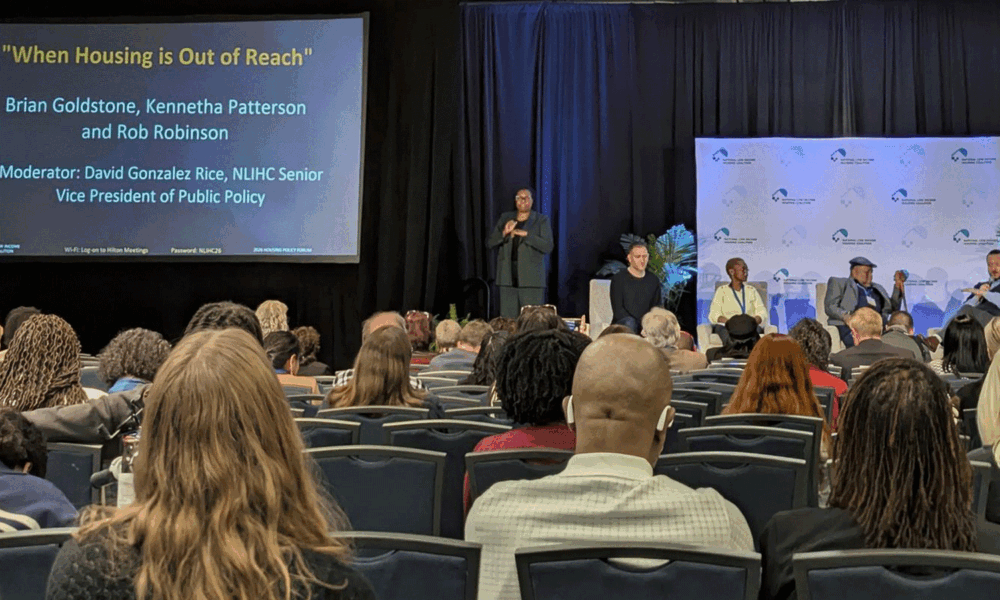
In March, I was excited to attend the National Low Income Housing Coalition’s (NLIHC) annual Housing Policy Forum in Washington, DC for the first time. UCS is a member organization of NLIHC because our climate resilience team knows that we must solve the climate crisis and the affordable housing crisis at the same time to ensure people are safe wherever they call home and advance a human right to housing as climate change transforms our communities through disasters and slower-moving climate impacts like sea level rise.
Here’s what I learned at the forum and what I think all climate justice advocates should know as we work toward housing justice.
1. We are stronger together
Working toward a more just, healthier world requires all movements to link arms and bring in our neighbors if we are to have a chance against an authoritarian government. As Quiana Fisher, executive director of Texas Housers, said in a panel conversation on building local power, “our silos are falling.” Advocates for social and climate justice can no longer pretend to work in an insulated bubble (a silo)—our work is interconnected and all of it is under attack by the Trump administration. For example, Fisher said, “housing is health care,” meaning that inadequate, unsafe, or the lack of housing puts peoples’ health and well-being at risk. And we know that climate change also affects health.
A 2025 UCS study found that people living in affordable housing experienced several days to several weeks’ worth of heat alerts during the hottest summer on record in 2024, with households headed by people of color facing disproportionately high risks.
If people don’t have access or can’t afford to cool themselves where they live, they’re at risk of heat-related illness and death. Our work on affordable, safe housing and climate change is not separate. To achieve climate resilience for all, we must advance solutions with partners in housing justice.
2. There is value in lived experience
Sometimes academics (and others) can fall into a trap of valuing theory over lived experience, Tracy Beard, Coalition Coordinator at Housing for All Tennessee said, talking about her work as a housing justice advocate and PhD candidate. Denying someone’s expertise unless they have an advanced degree or what Ms. Beard humorously called “certified brains,” shuts out important insights that could lead to valuable, practical solutions.
We talk about centering equity and justice in our climate work, and we know that the people most impacted must guide the development of the solutions. After all, they know best what they need to move from surviving to thriving. Beard advised folks with “certified brains” to work intentionally with people with lived experience; know when to step back and let them lead; and—for those who work at well-resourced organizations—share resources, expertise, and power. Simply “amplifying the voices” of those most marginalized isn’t enough: building trusted partnerships and working in collaboration together is the way forward.
3. Housing is a human right
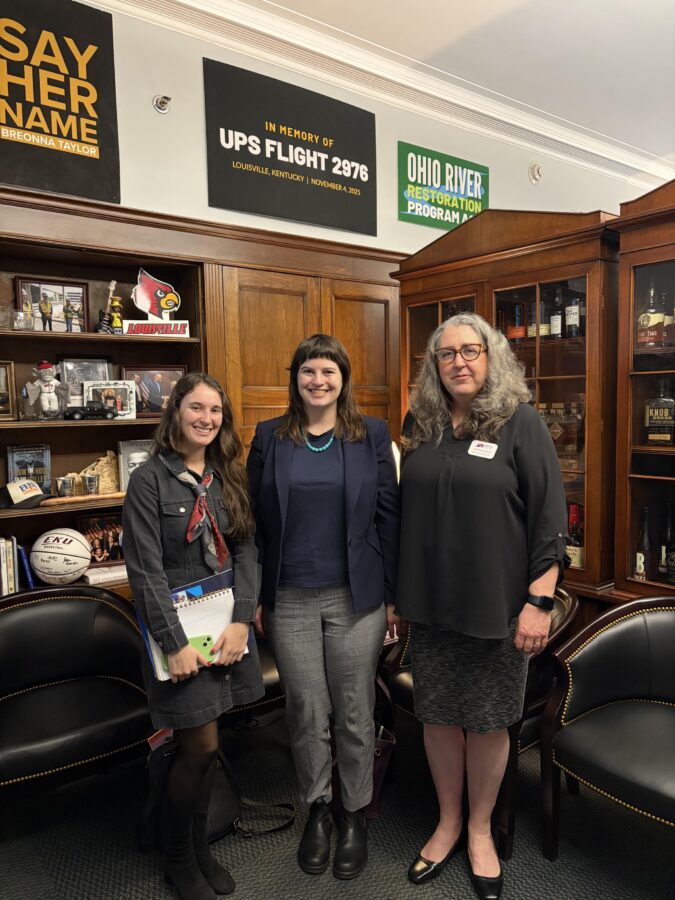
The same week of the conference, President Trump allegedly said, “Nobody gives a ‘bleep’ about housing.” That’s simply not true, especially for the 300+ people who attended NLIHC’s lobby day at Capitol Hill on March 13 to tell our congresspeople how essential investment in housing is in the face of a “national shortage of 7.2 million homes affordable and available for extremely low-income renters,” according to NLIHC’s newest report. And to further refute President Trump’s claim, a few days after his out-of-touch comment, the Senate passed a major bipartisan housing bill. But wait there’s more…the White House then announced two housing-related executive orders that are problematic (read my colleague Zoe Middleton’s blog for more on this).
Housing is a human right. The United Nations’ 1948 Universal Declaration of Human Rights states, “Everyone has the right to a standard of living adequate for the health and well-being of himself and of his family, including food, clothing, housing and medical care and necessary social services, and the right to security in the event of unemployment, sickness, disability, widowhood, old age or other lack of livelihood in circumstances beyond his control.”
But in the US, wages are not keeping up with costs of living: rent, utilities, groceries, and people are struggling through no fault of their own. My experience with housing insecurity inspired me, first to be an organizer and then a policy advocate, because everyone deserves access to the knowledge and resources to make the change they need to live their fullest lives.
The climate crisis and the affordable housing crisis must be addressed at the same time to ensure people are safe where they live in a climate-changed world. Most of us in the US are susceptible to wildfires, tornadoes, floods, hurricanes, or extreme heat that can damage or destroy where we live and threaten our health and safety. With Danger Season starting next month, we urgently need stable federal funding for housing and the passage of major housing legislation.
Whether people rent, buy, or seek shelter from the streets every night, all families deserve safe and affordable housing, and those homes must be able to literally weather the storms ahead.