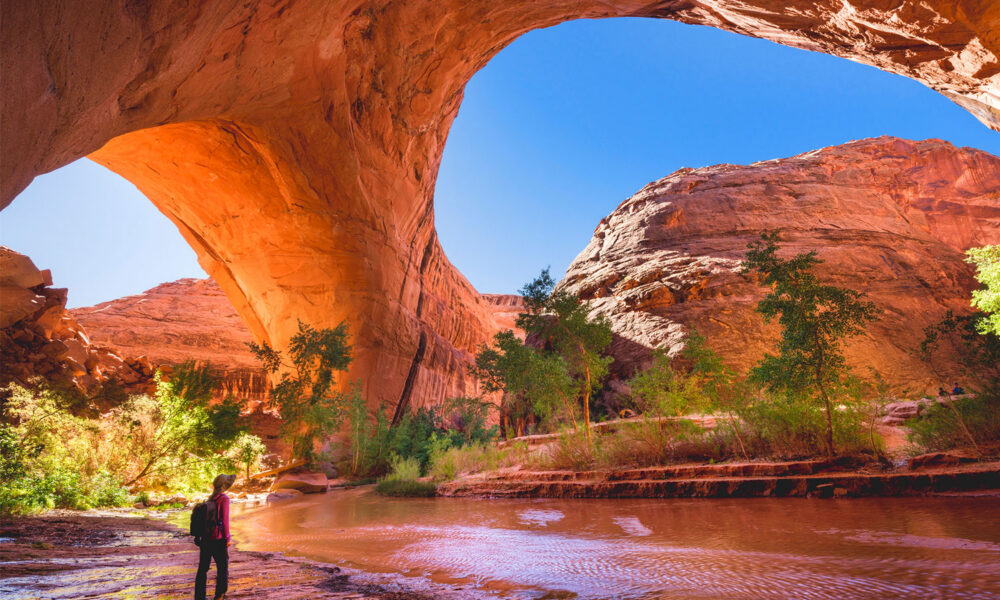

US Forest Service founders Gifford Pinchot and President Teddy Roosevelt would be rolling in their graves knowing what has become of the world’s largest wildland fire research organization, the very institution they helped build. Teddy Roosevelt helped establish 230 million acres of public lands during his presidency and in 1905 designated Gifford Pinchot as the first chief of the newly formed US Forest Service. Today, the Trump administration continues to take a chainsaw to forestry research, federal land management agencies, and the scientific workforce that supports effective decision making.
Science is—and always has been—the foundation for responsible public lands management and effective conservation. While many people recognize attacks on public lands when they see a mining, drilling, or development project, fewer see the attacks on the science and scientific workforce that help manage these lands.
We at the Union of Concerned Scientists (UCS) have been documenting the second Trump administration’s attacks on science, which are inextricably linked with its attacks on our beloved public lands. Of the 609 attacks on science that UCS has documented, at least 43 of them directly affect the US Department of the Interior, which oversees nearly 250 million acres of public lands including national parks, wildlife refuges, and cultural heritage sites, as well as the US Forest Service.
September is National Public Lands Month, which we should all be celebrating by visiting a national park to learn about the site’s cultural and natural heritage, hiking our national forests, or hunting and fishing in national wildlife refuges. Instead, these treasured landscapes and pastimes are at risk under an administration dead set on selling our public lands for industrial development. That’s why we continue to call out the administration’s weakening of the science and safeguards that protect America’s cultural and natural heritage.
Forest Service, but without the service and science
The Forest Service has a long history of depending on science to meet its mission. A recent Forest Service news article celebrates how the agency has shaped America’s public lands for over 121 years, describing how integral science is to Forest Service’s past and present. When forestry science was still in its infancy, the Forest Service set up scientific explorations, experiments, and studies to better understand forest ecosystems. Even months into this administration’s so-called Forest Service re-organization, the drip-drip of news calls out the dismantling and its severe harm to the scientific enterprise. These cuts have hobbled agency efficiency and performance and delayed critical services to the public, according to a Partnership for Public Service analysis.
Earlier this year, I called out the Trump administration for dismantling the world’s premier wildfire research organization—US Forest Service Research and Development (R&D)—under the guise of “reorganization.” If I had more hours in a day, week, or even year, I could tell more stories of Forest Service scientists doing critical research on wildfires and climate change, fire and smoke modeling, long-term ecological monitoring, as well as adaptation and resilience to extreme weather, and more. Their work has had an impact. And thankfully, some of this research has been spared.
Still, the Trump administration’s cuts to the Forest Service have critical implications for future wildfire preparedness and resilience. As I wrote in May, President Trump’s plan to diminish our knowledge about wildfires—especially in a super El Niño year with significant drought risk when wildfire risk, climate impacts, and economic losses are accelerating—isn’t smart.
Trump’s cuts have also impacted mandated research like the Forest Inventory and Analysis (FIA) program. FIA is the “only comprehensive, long-term, field-based inventory of forests and trees across all ownerships in the United States,” according to the Forest Service itself, and the program has been a world leader in national-scale forest inventories for almost a century. FIA data—derived from more than 300,000 plots nationally—is used to look at long-term trends in forest health and productivity, land cover and land use change, and changing demographics of forest landowners.
The Trump administration’s staffing cuts don’t just negatively affect the FIA program, they also hurt its own goals on timber production. That’s because, when scientific capacity is weakened, land managers lose the information they need to make good science-informed decisions about severe wildfires, water quality, and unchecked pests and diseases. Ultimately, local communities lose because direct collaboration between scientists and managers is key to reducing the aforementioned risks.
Bureau of Land Management, but without the land management
Another casualty of the administration’s attack on federal lands is the Bureau of Land Management’s (BLM) Assessment, Inventory, and Monitoring (AIM) program, which conducts science-based monitoring of hundreds of millions of acres of federal rangelands. This program, which has monitored these lands for 15 years, provides critical data on land health, invasive species, and native plant communities across entire states and regions. Its data, which has shown a 19% reduction in lands classified as healthy between 2022 and 2024 according to Public Employees for Federal Responsibility (PEER), are essential for detecting trends, planning adaptive management, and evaluating grazed lands. But the program may be cut back after the Trump administration cut BLM staff by 20% over the past year, reducing the scientific and technical capacity for effective monitoring and analysis of rangeland health.
Halting the collection of critical land health data during a period of decline violates the Public Rangelands Improvement Act, which calls for an inventory of rangeland conditions and trends given that degraded rangelands pose harm to livestock industries, as well as environmental risks such as soil loss, desertification, and undesirable climatic conditions.
Likewise, cutting AIM’s rangeland monitoring efforts conflicts with the National Environmental Policy Act (NEPA)—also under attack by the Trump administration—which requires federal agencies to integrate science into land-use planning and environmental reviews to ensure decisions are grounded in credible evidence. Without the collection of new data, it’s unclear how good public land decisions can be made without relevant ecological, biological, or physical information. As a former BLM scientist who worked at headquarters as recently as 2024, it’s personally upsetting to me to see this program possibly gutted.
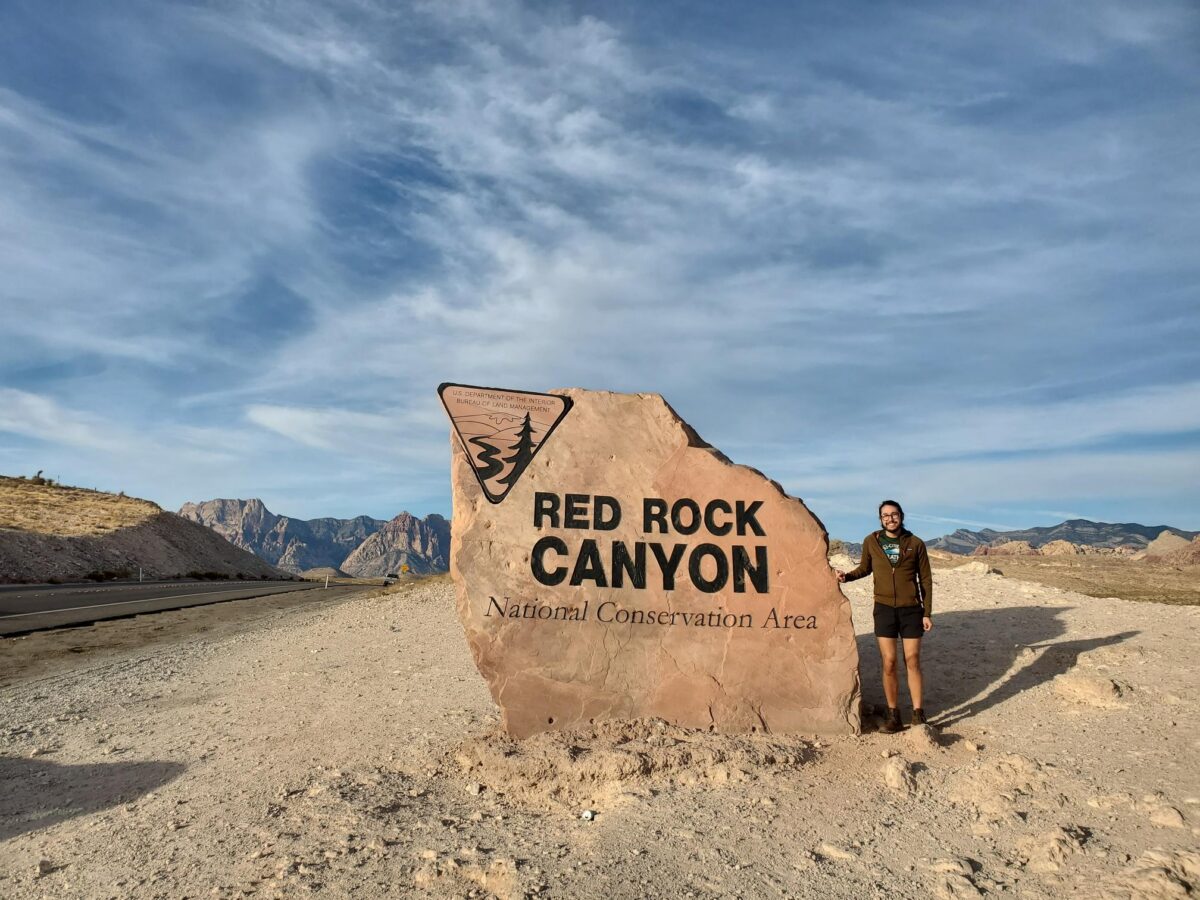
In yet another blow, the BLM rescinded the Conservation and Landscape Health Rule (better known as the Public Lands Rule) in May. The rule not only ensured conservation was on equal footing with other uses of public lands like grazing and energy extraction but also put forth a core management principle to use science and data, including Indigenous Knowledge, as a “foundation for management decisions.” It is ironic that the rescission claimed that the BLM can continue monitoring through the AIM program mentioned above (which has been understaffed and undervalued). Yet again, this administration berates critical scientific and monitoring programs as burdens on effective land management, while also paradoxically leaning on the very same programs to deliver on their extractive priorities.
The Trump administration’s land legacy: extraction and destruction
The administration isn’t just taking a chainsaw to our forests and rangelands, but also treasured landscapes with unique historic, cultural, and natural resources. Bears Ears and Grand Staircase Escalante National Monuments are two notable examples that are hard to stomach.
Bears Ears National Monument protected more than 8,000 recorded archaeological sites, and possibly more than 100,000 sites, when it was designated by President Obama in 2016. In July of this year, President Trump shrank Bears Ears by 91%—which amounts to nearly 1.3 million acres. He also disbanded the Bears Ears Commission, which was established to ensure Tribes would have a role in managing their ancestral lands. Trump later outlined a plan to open the lands to mining minerals critical to “national security.”
But reducing public lands to their extractive value ignores their broader public value. Bears Ears is a national treasure that holds ecological, cultural, and scientific significance, as much as some national parks. It is one of the best landscapes in the west to protect fragile ecosystems and sensitive habitat and preserve environmental assets.
Just next door in Southern Utah, Grand Staircase-Escalante National Monument (also known as the ‘science monument’) was the first BLM monument to prioritize conservation of cultural, ecological, and scientific values. The core of the monument’s creation was the critical scientific research and paleontological artifacts, including the rich ancient fossils, extensive archaeological remains from Ancestral Puebloans and Fremont peoples, and 1400-year-old piñon-juniper forests.
This was an opportunity to learn from the past that we seem doomed to repeat with the Trump administration shrinking this protected landscape (again). In 2018, UCS highlighted this monument with the first Trump administration’s efforts to cut the size of this national monument. As a unique living record of geologic time, the monument plays a critical role in scientific research to better understand how wildlife and plant communities have remained resilient over time. Ignoring the monument’s important scientific and historical value deprives people across the nation of experiencing our collective natural and cultural heritage at Grand Staircase.
Last month, the Trump administration proposed rescinding the 2001 Roadless Area Conservation Rule (Roadless Rule), removing critical protections for millions of acres of pristine wilderness, and potentially opening them up for roads, logging, mining, and drilling. Human activity is responsible for 84% of all wildfires in the continental US, suggesting that rescinding this rule could increase the likelihood of human ignited fires in these areas. President Trump’s proposal to end the Roadless Rule on top of the Forest Service R&D cuts are real threats given future drier and hotter conditions and increasing severity of wildfires.
In another harmful move, the Trump administration last week fast-tracked oil and gas exploration while reducing environmental review requirements for Alaska’s North Slope, an area comprising the state’s entire Arctic coastal plain with coastal tundra. The BLM issued a proposal to quickly approve oil and gas drilling in the National Petroleum Reserve in Alaska (NPRA). The Trump administration in December had reopened more than 80% of the reserve to drilling, reversing previous administrations’ attempts to protect it. The emissions produced by these projects in Alaska only further exacerbate the impacts of fossil fuel-driven climate change. Drilling at the NPRA, which was set aside as an emergency oil supply for the Navy in 1923, also raises concerns about wildlife protection.
Also known as the “Heathrow at the top of the world,” the NPRA is a global hub for millions of birds that migrate here to nest, mate, lay eggs, and raise chicks. Beyond wildlife, the North Slope is home to brilliant (and more often than not, pristine) Alaskan landscapes like the Gates of the Arctic National Park, Arctic National Wildfire Refuge, and Noatak National Preserve (home to the last remaining complete river system untouched by human activity).
Public lands need science
Throughout my career, I have worked alongside federal scientists, foresters, land managers, ranchers, farmers, and local communities who rely on science to make difficult decisions. The public rarely sees the monitoring plots, weather stations, water gauges, and research programs behind those decisions. But when those systems disappear, we all feel the consequences.
America’s public lands are among our nation’s greatest treasures. Protecting them requires more than celebrating them. It requires defending the science, scientific workforce, and public institutions that make stewardship possible. And that is what we are doing here at UCS.
We are suing the Trump administration for censoring science and US history at our national parks.
We are tracking the egregious attacks on science and potential scientific integrity violations, including at the Department of the Interior.
We are sounding the alarm on the critical wildfire and forestry research that may be lost in the Forest Service reorganization.
If you also love our public lands, we invite you to take action too:
Tell Congress to protect the US Forest Service.
Speak out on the Forest Service proposed rescission of the Roadless Rule that would remove critical wilderness protections and may increase wildfire ignitions.
Join our Science Network, a community of more than 26,000 fellow scientists, economists, engineers, and other technical experts.
This National Public Lands Month, let’s remember that protecting public lands means protecting the science that helps us understand, conserve, and pass them on to future generations.