
We’re in the middle of Danger Season, a time that spans May through October, when the worst extreme weather events and fossil-fueled disasters happen in a concentrated period. There are currently 86 large wildfires burning across 14 states, large swaths of the United States are experiencing another heat dome, and heavy rains have flooded multiple locations. Last week, Climate Central announced that the nation has already experienced 12 billion-dollar weather and climate disasters during the first half of 2026, which have caused $32 billion in damages and a loss of 183 lives—ranking fifth for the number of such events during this time frame since recordkeeping began in 1980.
The nation has also gone the entire 18 months of the second Trump administration without a permanent administrator for the Federal Emergency Management Agency (FEMA), and with major chaos plaguing the agency thanks to President Trump. The president failed to appoint an administrator, instead leaning on four plainly unqualified “senior officials performing the duties of the administrator” (SOPDA), one of whom was Cameron Hamilton, until he was fired on May 8, 2025. In the chaotic fashion typical of this administration, he was renominated to lead the agency a year after being fired. This week, the Senate voted to confirm him as the first permanent FEMA administrator under this administration.
Hamilton’s rocky road to permanently leading FEMA
Hamilton worked as FEMA’s SOPDA for roughly 3.5 months at the start of the second Trump administration until he was fired for supporting the existence of the agency during a congressional hearing a year ago (instead of calling for its elimination, which was the Trump administration’s preferred stance at the time).
While his tenure was brief, Hamilton implemented several controversial policies at FEMA including:
- Increasing the threshold by which the federal government would declare a disaster, meaning a reduction in critical federal assistance that states rely on for disaster response
- Halting the automatic approval of funds under the Hazard Mitigation Grant Program, limiting crucial funding that would help communities prepare for extreme events
- Canceling funding for the incredibly popular Building Resilient Infrastructure and Communities (BRIC) grant program. A FEMA statement called the program “another example of a wasteful and ineffective FEMA program. It was more concerned with climate change than helping Americans effected [sic] by natural disasters.” After multiple court orders, FEMA reversed this decision and BRIC was reinstated on March 25. However, the program hasn’t been fully reinstated; grant awards that had funds already allocated to them can expend those funds, but grants that were selected but did not have funds allocated prior to the cancelation of the program have not seen those funds restored.
Since his nomination in May, Hamilton has been working at FEMA as a senior adviser. This allows the Trump administration to sidestep the Federal Vacancies Reform Act, which in most cases prohibits a nominee from serving in an acting role for the same position for which they’ve been nominated. This law is why the Trump administration created the SOPDA role.
Hamilton’s Senate testimony was short on substance
We’re dealing with a low bar when it comes to President Trump’s agency nominees. Even though it could be worse when it comes to Hamilton as FEMA administrator (think back to missing-in-action David Richardson and “the enforcer” Karen Evans), he will be the first FEMA administrator who lacks the qualifications and the five years of experience required by the Post Katrina Emergency Management Reform Act of 2006. Since that law was enacted, all five former FEMA administrators, including David Paulison, Craig Fugate, Brock Long, Peter Gaynor, and Deanne Criswell, had years or even decades of emergency management experience.
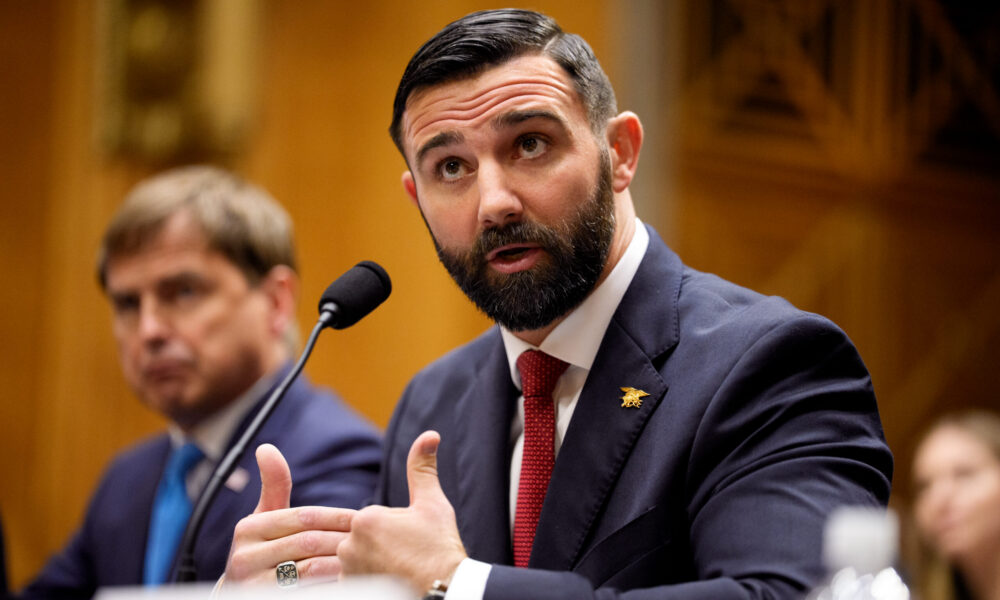
During the Senate Committee on Homeland Security & Governmental Affairs hearing on June 17, Democrats grilled Hamilton on multiple issues and Hamilton promised to conduct a review within the first 30 days on “areas where FEMA can reform.” Unsurprisingly, the committee voted largely along party lines to advance his nomination to the full Senate, with the exception of Senator John Fetterman (D-PA), who joined the Republicans.
Hamilton was well coached by two former FEMA administrators, Brock Long and Peter Gaynor, in preparation for his nomination hearing. His responses to senators’ questions, while respectful, were vague and noncommittal. Although Hamilton expressed his commitment to FEMA’s mission, it’s unlikely he’ll defy the vision of his bosses, Department of Homeland Security Secretary Markwayne Mullin and President Trump.
There are several points to highlight from the nomination hearing, including the objections raised on process, Hamilton’s brief and inadequate written testimony, and his noncommittal answers to the senators’ questions.
Hamilton’s written testimony is brief—a total of two pages. The first page expresses his gratitude for his family, President Trump, and the two former FEMA administrators who provided him with support and counsel. On page two, Hamilton outlines what he’ll accomplish in his role as FEMA administrator. He echoes the tired mantra of the Trump administration: “We must return to our roots where disaster response is locally executed, state led and federally supported.” As has been pointed out by emergency managers, this is what FEMA already does.
He also promises to “deliver assistance to survivors rapidly” with the caveat “when Federal assistance is warranted.” These two statements conveniently balanced Hamilton’s need to appease senators on the committee but also show allegiance to President Trump’s politicization of disaster aid and his campaign to push more of the disaster response and recovery burden onto local, state, Tribal, and territorial governments.
Democrats highlight broken process leading to a “rubber-stamped” nominee
In the first opening remarks of the nomination hearing that included 11 nominees, Committee Ranking Member Gary Peters (D-MI) spoke powerfully on the many problems with the hearing, including a rushed process, overcrowded panel, and harmful lack of transparency. Senator Peters pointed out that the chairman did not allow each nominee to make a public statement, and that the ranking member had not received the nominees’ written testimonies prior to the hearing.
Senator Peters also noted that Hamilton had not completed his FBI background investigation, calling it “unprecedented” that nominees were advancing without meeting the minimum requirements of a typical vetting process. Chairman Rand Paul (R-KY) promised that the committee would vote on the nominees only after the ethics and FBI review were complete, but it is not clear if that promise has been kept.
During the hearing, Democrats focused on several important concerns with the administration’s handling of FEMA and Hamilton’s past decisions.
- The politicization of disaster assistance. Senator Maggie Hassan (D-NH), among other Democratic senators, asked whether disaster survivors from blue states should be treated differently and receive less help than red-state survivors. She called the politicization of disaster assistance “shameful and unamerican.” Senator Hassan pressed Hamilton on what he would do if the president ordered him to withhold assistance to blue states. Hamilton replied that he would be sure that FEMA is “objective,” “fair and reasonable,” that he would “follow the law,” and would be “consistent in how [FEMA] adjudicates claims.” Senator Hassan closed her questioning by challenging Hamilton, noting that he was going “to have to think about what you are going to do when he (President Trump) reverses your recommendations.” Hamilton, however, did promise to speed up answers to disaster declaration decisions and reimbursements with the caveat of keeping a “close eye” on how states spend the assistance. The Trump administration has brazenly denied FEMA assistance to blue states and is continuing to do so.
- Hamilton’s April memo. Senator Richard Blumenthal (D-CT) addressed an April memo in which Hamilton recommended raising the threshold for disaster assistance. Senator Blumenthal spoke to how this change would disqualify a lot of families in Connecticut and asked him whether he still supported this policy. Hamilton responded that the memo reflected a “pre-deliberative” and “pre-decisional” process for areas where disaster assistance could be reformed and that it was not ready for adoption. Hamilton’s evasive answer ignores the fact that the Trump administration has been advancing both unwritten and written policies that reduce disaster assistance to communities, including Trump’s preparedness executive order and the final report by Trump’s FEMA Review Council.
- FEMA staffing cuts. Senators also asked Hamilton about staffing cuts at FEMA and FEMA’s readiness. Hamilton’s response was noncommittal, stating he had “full faith and confidence in the FEMA workforce” but that “we can do better.” Missing from the answer was a commitment to fully staff up the agency in a timely manner.
Unfortunately, additional important issues, such as Hamilton’s position on climate change (which is directly contributing to worsening disasters), and his lack of qualifications for the job were not adequately explored by the committee.
Actions Administrator Hamilton must take in his first month in office
In January 2025 I wrote about the five things the nation needs from the next FEMA administrator, and these remain true today. While Hamilton’s pledge to update FEMA’s antiquated IT system is important, this will take time and there are other pressing needs. In the immediate future, here are the top five actions he must take in his first month in office:
- Advance a robust hiring process to shore up the agency’s ability to deliver for the public and disaster survivors. Unfortunately, during the nomination hearing Hamilton praised the opening of 350 FEMA positions but did not commit to a more robust hiring effort as was outlined in a recent Government Accountability Office report. The GAO found that FEMA reduced more than 4,300 employees in fiscal year 2025, causing a loss in institutional knowledge and experienced personnel, and was told by FEMA officials that “they have been operating in uncertainty and confusion while still trying to meet the mission with the staff they have.” The GAO raises serious concerns about FEMA’s ability to meet its mission in the case of a catastrophe such as the back-to-back hurricanes in 2024, Helene and Milton.
- Stop President Trump’s politicization of disaster assistance and ensure disaster relief is equitable and nonpartisan.
- Ignore the Trump administration’s biased FEMA Review Council report recommendations and instead develop a strategic plan based on the latest science and staffing analysis, and work with members of Congress on bipartisan policies that can actually improve FEMA.
- Reinstate FEMA advisory committees, including its National Advisory Council, Technical Mapping Advisory Council, and National Dam Safety Review Board, so the agency’s work will be informed by the best available science and expertise.
- Defend against mis- and disinformation about disasters and advocate for robust funding for FEMA, the Disaster Relief Fund, and preparedness programs that will help communities get back on their feet in more resilient ways.
Cameron Hamilton is expected to bring stability to FEMA. But the nation deserves and needs more than just the bare minimum of bringing stability to a broken agency. We’re witnessing back-to-back fossil-fueled disasters on top of the affordability crisis. Communities that are still recovering from last year’s disasters—like the tragic Texas Hill Country floods—are being hit again this Danger Season.
Congress must continue its oversight of FEMA and press Administrator Hamilton to implement immediate actions that ensure FEMA is ready to serve people across the nation this Danger Season, and in the months and years ahead.