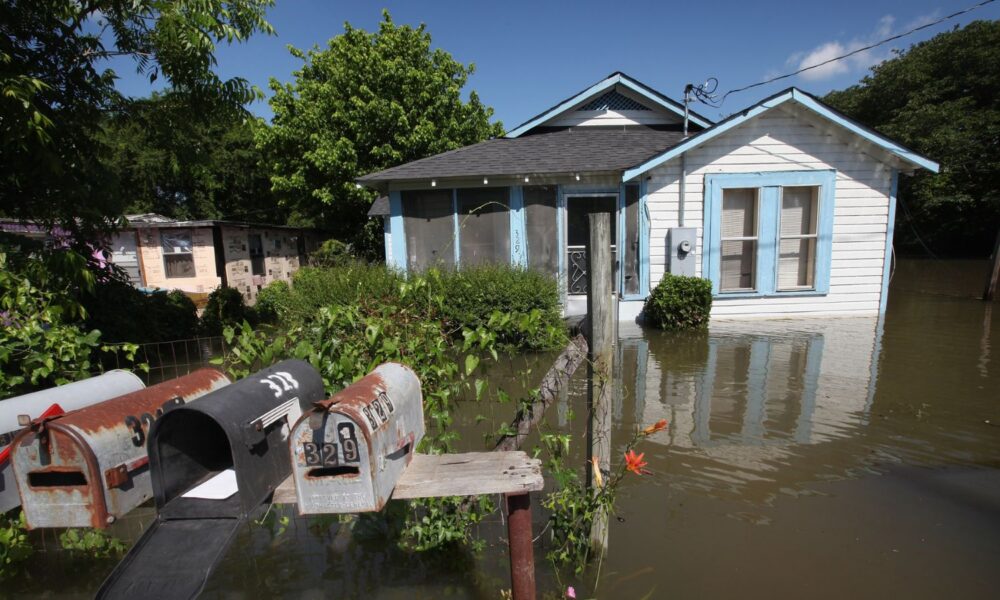

Earlier this summer, after a year of negotiation, a massive, bipartisan, bicameral package of federal housing legislation became law (despite President Trump’s refusal to sign it). At a time when housing affordability is top-of-mind for many people, this bill is a sign that progress is possible. Much more is needed—including investments in making homes more resilient to extreme weather and climate-fueled disasters—but this is an important step forward.
The 21st Century ROAD to Housing Act is the biggest package of housing legislation passed since the Cranston-Gonzalez Affordable Housing Act became law in 1990. It sets the stage for more housing to be built by working across a suite of federal agencies: to change federal housing programs to enhance financing for housing production; support state and local governments’ initiatives to plan for more housing; and encourage states to re-think their approach to land use. Although resilience to climate impacts was not the primary focus of this legislative package, some important progress was made on improving the resilience of manufactured housing, expanding repair programs for homeowners and landlords of existing housing, and speeding up funding for disaster recovery efforts in low-income communities for the next three years.
A package combining 60 bills, the 21st Century ROAD to Housing now requires dozens of next steps for the implementation of its provisions, which you can find in a section-by-section summary. In this post, I’ll unpack two federal processes—appropriations and rulemaking—which, together with actions taken at the state and local level, will shape the outcomes of this legislation for communities across the nation in the years to come.
Appropriations shape impact
As passed, the 21st Century ROAD to Housing funded a few pilot programs but was budget-deficit neutral. Instead, this legislation overwhelmingly focused on policies that encouraged the private market to put more homes on the ground. This will certainly have an impact on the number of homes in a nationwide housing shortage, but the resilience of those homes and the impact on overall affordability for lower and fixed income households is still unknown.
For this legislation to have maximum impact, federal lawmakers must demonstrate continued bipartisan commitment to addressing the housing crisis through the annual appropriations process. Subcommittees in the House and Senate authorize federal funding through the appropriations process each year by setting funding levels, rescinding previous appropriations or transferring unspent balances. Unless a meaningful level of funding is provided during the appropriations process, programs authorized by the legislation—such expanded home repairs, studying the impact of deadly residential extreme heat in public and subsidized housing, and planning grants to state and local governments to support housing development—will lack the resources needed to preserve and expand our housing supply.
Rulemaking amidst rollbacks
The 21st Century ROAD to Housing Act will kick off several rule-making processes managed by different federal agencies, including several branches of the Department of Housing and Urban Development (HUD). Rulemaking involves substantive public engagement and can have an important impact on policy implementation, grounding government action in the public interest, fairness, and the best available science. Rules that guide where and how housing is built will last far beyond any presidential administration or Congress, and this process will be an opportunity to enshrine climate resilience policies and standards for the long term—instead of rushing to build without accounting for the risks of mounting climate extremes. Any new rules also need to rely on the best available climate science, and account for the myriad ways fossil fuel-driven climate change will re-shape our natural resources and built environment in the years to come.
A few of the rule-making processes detailed below will be particularly important in shaping the climate resilience and energy efficiency of the new housing that this legislation will spur. One of the rules that will be developed pursuant to the new law will identify circumstances under which federally-funded housing projects will be excluded from the National Environmental Policy Act (NEPA). Changes to NEPA have long been suggested to speed up the construction of housing. The final rule must ensure that these exceptions, known as categorical exclusions, made today don’t exacerbate the harms of the past—a concern made all the more urgent given the attacks of the second Trump administration on federal environmental justice commitments.
Another new rulemaking requires new energy efficiency standards for manufactured housing to be developed by the US Department of Housing and Urban Development (HUD). Unlike other types of housing for which building standards are set by state and local governments, the code for manufactured homes is set by the federal government. This process could shape the long-term affordability of manufactured housing amidst volatile energy prices and worsening heatwaves. For this sector of the housing market to be deployed at scale to fulfill its potential to provide safe and affordable housing, HUD must develop a rigorous standard that reflects the long-term benefits of energy efficiency for residents of manufactured housing.
The three-year authorization of HUD’s Community Development Block Grant for Disaster Recovery (CDBG-DR) program, intended to speed up and reform long-term funding to low- and moderate-income communities, after disasters occur, will also require a rule-making process by next summer. It’s an important step forward, and Congress should go further and permanently authorize this crucial program. As disasters grow in frequency and complexity, rules developed by the federal government must also require programs to address the long-term harms of disasters and use rigorous data to incorporate future conditions into their recovery programs.
These and other rulemaking processes kickstarted by 21st Century ROAD to Housing are occurring at the same time as the federal government pursues repeal of the Federal Flood Risk Management Standard (FFRMS) across agencies. As my colleague Shana Udvardy has previously detailed, the HUD version of these standards ensured that HUD’s federally funded projects would be built to withstand current and future flood risks. The repeal of HUD’s FFRMS rule will mean that new buildings, facilities and homes could be at an increased risk of flooding from hurricanes and sea level rise: increasingly severe weather that is supercharged by climate change.
Much of the rulemaking required by 21st Century ROAD to Housing will be spearheaded by HUD, an agency besieged by staffing cuts and struggling with capacity as it operates billions of dollars of critical programs. The rulemaking process requires a well-resourced and accountable federal agency to ensure that programs serve the public interest. HUD and other agencies must be funded not only to support their core mission and programs, but to shape much-needed new policy and programs such as those in the 21st Century ROAD to Housing Act.
Congressional leaders must act to ensure this legislation benefits us
After decades of neglecting our housing crisis and ignoring clear warnings from climate science, no single legislative package from one level of government could have addressed our many needs. As communities, policymakers, and advocates begin to make the most of this historic legislation, we must also fundamentally shift how we approach housing policy. We can’t afford to wait decades for the next major housing legislation and public investment. The climate crisis will increasingly require leaders to fund transformations in the built environment and social safety net to keep communities safe and manage the growing economic risk of climate change on our housing market.
We should consider the implementation of the ROAD to 21st Century Housing an essential and welcome opportunity for laying the groundwork for further progress. That this legislation was passed in the current political environment—despite the many threats to climate science, resilience programs, and a growing effort by the fossil fuel industry to avoid any accountability for its role in a climate crisis that destroys homes, contributes to homelessness, and decimates communities—demonstrates the necessity of climate resilient housing for all.