
This year’s corporate annual general meetings are taking place amidst geopolitical conditions that developed long after shareholders had the opportunity to submit proposals for meeting agendas. The US war in Iran and coup in Venezuela have administered a major shock to the global energy system, pushing some countries to reconsider their dependence on oil and gas and accelerate the transition to renewables.
Investors who have long understood these risks proposed resolutions that would request companies to show how they will protect investors if oil and gas demand declines. But those resolutions won’t appear on the proxy tickets of the biggest publicly-traded oil and gas companies due to longstanding corporate efforts to silence shareholders. US-based corporations were particularly emboldened to reject proposals this year thanks to permission granted by the government’s financial regulator. Shareholders, however, are pushing back with lawsuits demanding that companies honor shareholders’ legal rights.
BP: Canary in the corporate coalmine
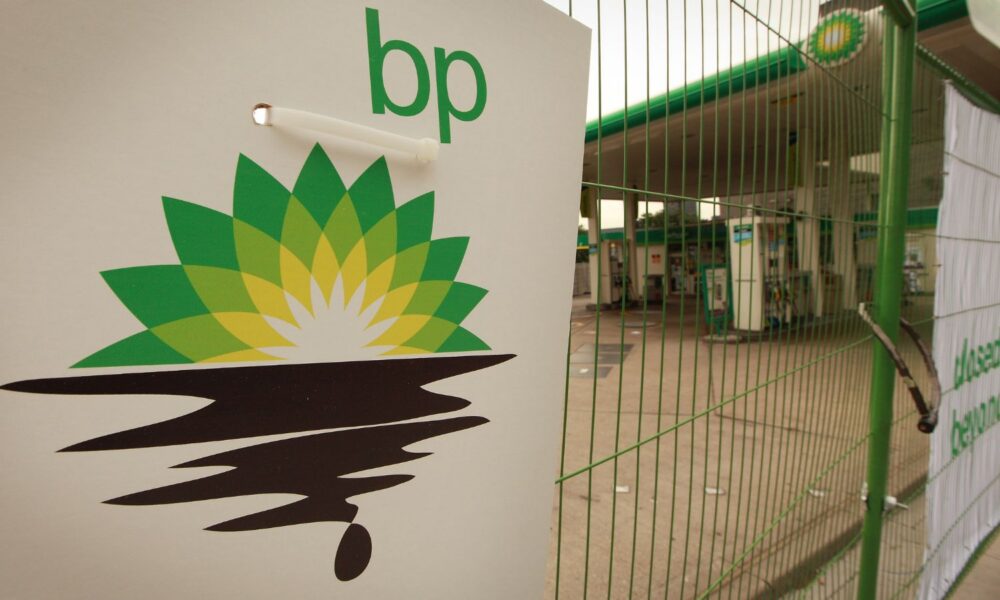
The drama playing out this shareholder season is especially high at BP, which suffered a sharp decline in stock value in recent years. Though many factors contributed to the company’s woes—including the Deepwater Horizon oil disaster—some investors blamed the company’s previous investments in renewable energy. In response, BP appointed a new CEO and board chair tasked with refocusing company strategy on oil and gas, while retaining its pledge to achieve net-zero emissions by 2050.
In keeping with its renewed focus on fossil fuels, BP committed two sins of omission on its on its proxy ticket: first, by refusing to include a climate-related resolution, and second, by seeking to nullify previously-approved resolutions on greenhouse gas emissions.
The first instance involves a resolution filed by sixteen institutional investors, including large pension funds, asking BP to report on how it will generate returns for shareholders if demand for oil and gas declines. This is not a rhetorical question: Even before Iran, scenarios modeled by organizations such as Rystad Energy and the International Energy Agency projected demand peaking between 2030 and 2035.
BP excluded the resolution, claiming it attempts to boss around the company’s board, though Shell included an identical resolution filed by the same investors on its proxy statement. Oddly, BP accepted a similar resolution filed by the Australasian Centre for Corporate Responsibility calling on the company to report on how its plans to increase oil and gas investment squares with declining-value trends in oil and gas exploration. BP asked shareholders to reject the proposal, raising the ire of shareholders like the gigantic California State Teachers Retirement System (CalSTRS) pension fund. CalSTRS recently announced it had moved $600 million out of oil and gas majors to reduce the fund’s exposure to climate risk.
In the second instance, BP’s management is asking shareholders to revoke two older resolutions—one from 2019 and one from 2015—asking the company to report emissions from its operations, among other metrics. BP says recent government policies make the reporting unnecessary, but investors say the loss of information diminishes accountability, particularly given BP’s climate commitments.
Investors published an open letter earlier this month criticizing BP’s rejection of the demand-related resolution and the move to end the disclosures, calling for the deposition of BP’s board chairman to boot. “This is, ultimately, a question about whether the commitments a board makes to its shareholders are upheld,” the investors wrote.
Regulators’ neglect drives shareholders to court
The biggest US oil companies are aided in the boardroom this year by the US Securities and Exchange Commission (SEC), the government’s financial regulator, abdicating its foundational responsibility to mediate resolutions.
The 1934 law that created the SEC states that companies must vote on shareholder proposals that follow the law’s guidelines. If companies and shareholders disagree on whether a proposal followed those guidelines, they historically appealed to the SEC to review the proposal. SEC Chair Paul Atkins said in November 2025 the agency will no longer fill that role, allowing companies to reject proposals at will—and forcing disenfranchised shareholders to sue.
Many companies targeted resolutions related to climate change. The investor advocate As You Sow filed a resolution in January asking the insurance company Chubb to study whether subrogation—a legal process allowing insurers to recover costs from at-fault parties—could reduce losses resulting from climate change. Insurance premiums have climbed in the wake of climate-related disasters as companies pass losses on to homeowners.
The resolution pointed out that attribution science “has developed sufficiently to assign responsibility for climate change to responsible parties,” forming the basis of recent legislative proposals in California and Hawaii. When Chubb refused to include the resolution on its proxy ticket, As You Sow filed a lawsuit alleging Chubb violated the 1934 law.
Big Oil CEOs and anti-regulatory crusaders will likely call these lawsuits excessive. They should pause and recall the lawsuit ExxonMobil filed against shareholders in January 2024 to block a resolution asking the company to set global warming emissions reduction targets. Though the SEC’s adjudication process was still in effect, ExxonMobil bypassed it to send investors a message, pushing ahead with the lawsuit even after the proponents dropped the resolution. The lawsuit created such a chilling effect that ExxonMobil shareholders have not had the opportunity to vote on any climate-related resolutions since.
Energy shocks show resolutions’ relevance
Given President Trump’s illegal war of aggression against Iran, resolutions demanding that companies address a lower-demand future seem prescient. Prior to the war, energy outlooks by BP, Shell, and ExxonMobil projected an increase in oil and gas demand, and their production plans reflect that optimism. Surveys comparing corporate and non-corporate energy outlooks show that corporate scenarios generally project higher demand for fossil fuels, in part because they tend to have lower estimates of changes in consumer behavior and overlook the rapidly decreasing costs of renewable energy sources. They also neglect to mention their lobbying against policies that would reduce demand.
The new energy map created by the Middle East conflict calls those assumptions into question, adding another level of risk to an already risk-plagued industry. Though oil companies usually devote some boilerplate language in their annual filings to the risk posed by political upheaval, they do not address the fact that oil and gas are more vulnerable to geopolitical risk than other forms of energy. A global pivot away from fossil fuels and toward renewables in order to shore up energy security is a very real possibility. Such a move is already at work in Europe, and studies show that geopolitical risk depresses fossil fuel demand and increases renewable energy investment even in the BRICS economies. As high carbon emitters, oil and gas companies are also more impacted by government policies and litigation related to addressing the harms of climate change to people and the economy.
The resolutions blocked by oil and gas companies this year attempt to address this reality: “Transparent disclosure of how BP would navigate declining demand scenarios is…essential not only for assessing company-level resilience, but also for understanding risks to shareholders’ diversified holdings,” resolution sponsors stated in their letter.
Among those reckoning with reality, a consensus is building that the risks associated with the fossil-fuel status quo are too high—for people’s health and pocketbooks, the economy, and for the climate. CEOs can battle with investors in the boardroom and courtroom, but they can only keep that reality at bay for so long.